
Mobile Toilet Winter Insulation Guide
Winter insulation for mobile toilets requires a comprehensive approach involving equipment selection, basic insulation, pipe freeze prevention, active heating, system maintenance, and emergency measures. The specific operations are as follows:
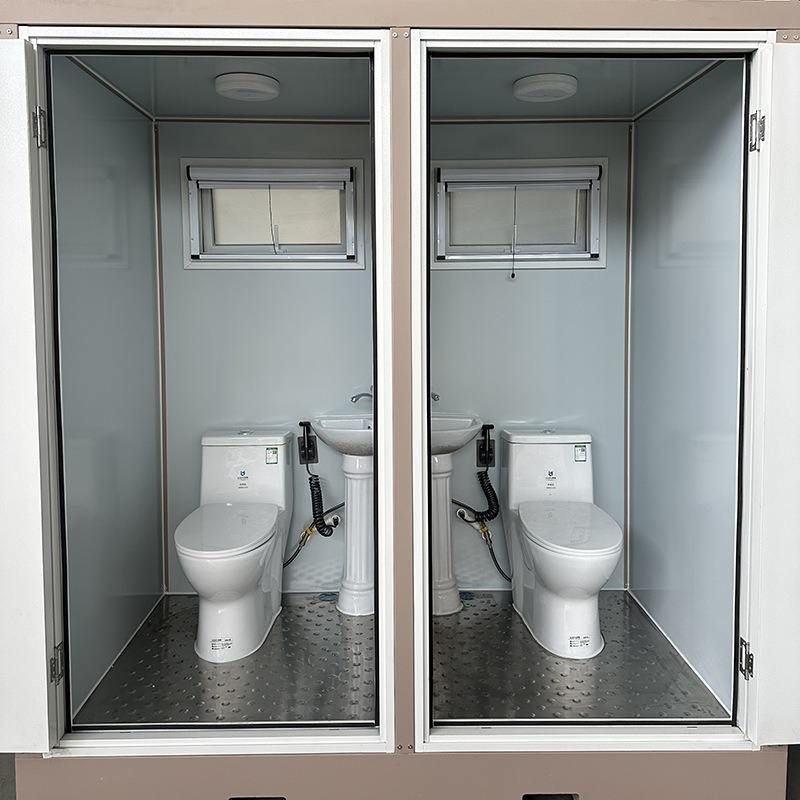
I. Equipment Selection and Preliminary Inspection
Prioritize mobile toilets with built-in heating functions or ensure the equipment has insulation layers and freeze-resistant designs for the drainage system. Before installation, inspect the main structure for any damage, ensure drainage pipes are unobstructed, and that valves open and close smoothly to prevent insulation failure due to equipment defects.
II. Basic Insulation Measures
- Foundation Reinforcement: The ground where the equipment is placed must be level, with the foundation raised 15-20 cm above the ground to prevent snow and water infiltration.
- Double-Layer Wall Structure: Adopt a composite design with an outer layer of color-coated steel plate and an inner layer of fireproof board, filled with 5 cm of polyurethane foam or rock wool. The thermal conductivity is as low as 0.024 W/(m·K), improving insulation performance by three times compared to traditional materials.
- Fine Sealing: Install EPDM rubber strips around doors and windows for sealing, and upgrade ventilation openings with temperature-controlled louver devices to reduce heat loss by more than 60%.
- Drainage System Treatment: Fill the trap of the squat toilet with expanded perlite, wrap drainage pipes with a 50 mm thick insulation layer, and form a three-dimensional insulation system.
III. Pipe Freeze Prevention Measures
- Pipe Insulation: Wrap exposed drainage pipes with insulation cotton and seal joints with sealing tape.
- Electric Tracing System: Wind self-regulating heating cables (8 W/m power) around the pipes, equipped with an intelligent temperature control box that automatically activates when the temperature drops below 5°C. An aluminum foil heat conduction layer ensures the pipe surface temperature remains above 5°C in environments as cold as -15°C.
- Auxiliary Insulation: Cover pipelines with rubber insulating sleeves and overlay double-layer insulation materials at key nodes such as valves.
- Drainage Design: Install freeze-proof valves, promptly empty pipe water after use, or add antifreeze.
IV. Active Heating Systems
- Electric Heating Solution: PTC ceramic heating elements raise the temperature by 15°C in 5 minutes, with the surface temperature controlled below 60°C; air conditioning systems are paired with temperature sensors for automatic constant temperature control.
- Fuel-Fired Hot Air System: In extreme weather below -20°C, activate a 30,000 kcal/h fuel-fired hot air blower to raise the temperature by 15°C within 30 minutes.
- Municipal Heat Source Utilization: Scenic areas with conditions can connect to a centralized heating system for continuous heating through radiators.
- Radiator Configuration: Some equipment is equipped with built-in radiators to prevent water pipes from freezing at temperatures as low as -20°C.
V. Power Supply and Heating System Maintenance
Check the stability of the external power supply and equip it with leakage protection devices; regularly test the electric heating or gas heating functions to ensure automatic activation at low temperatures.
VI. Daily Use and Emergency Measures
- Regular Inspections: Check the water tank and pipes daily for freezing, and address any abnormalities promptly.
- Extreme Weather Response: Below -5°C, close non-essential drainage outlets or lay anti-slip and anti-freeze mats.
- Emergency Freeze Prevention: In sudden cold spells, add antifreeze to the water tank or wrap the equipment body with insulation blankets.
VII. Innovative Technology Applications
Utilize the residual heat (50-60°C) from aeration fans to preheat water, or integrate an intelligent control system for temperature sensing, power regulation, and fault alarms to enhance insulation efficiency.



