
How Does a Mobile Toilet Store Water
Mobile toilets typically use water storage tanks specifically designed for this scenario to store water. Here is a detailed introduction to the water storage equipment for mobile toilets:
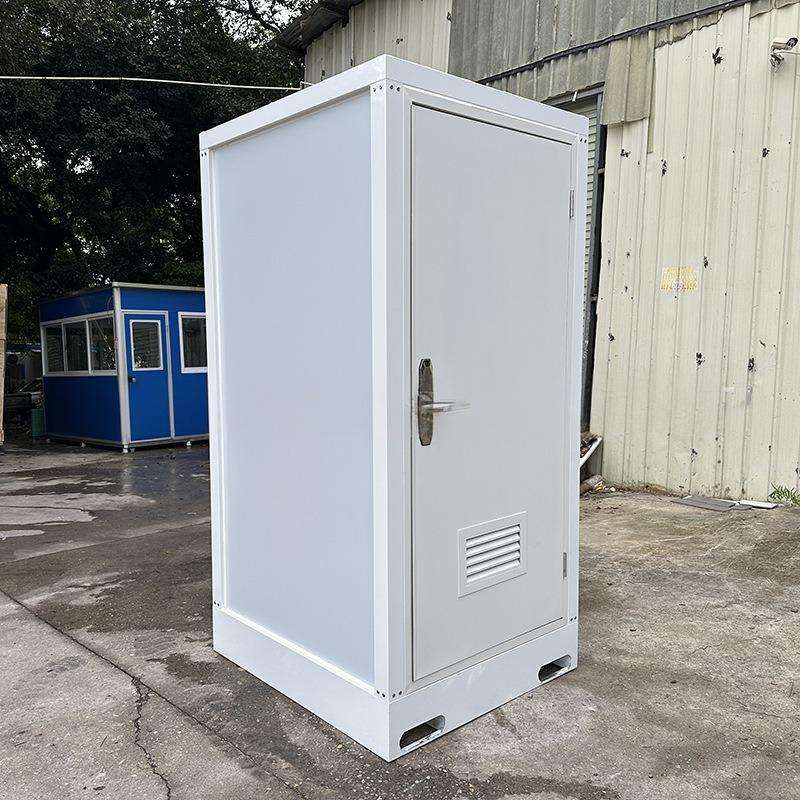
The core of the water storage equipment in mobile toilets is the water storage tank, and the choice of material is crucial. PE (polyethylene) is the mainstream material for water storage tanks. This material is resistant to acids and alkalis and has anti-aging properties, enabling it to store domestic water stably for a long time. At the same time, PE material is non-toxic and odorless, meeting hygiene standards and not causing pollution to the stored water quality, ensuring the health and safety of users.
In terms of manufacturing process, rotational molding and one-piece forming technology are widely used in the production of water storage tanks. Through this process, the tank body can achieve a seamless structure, greatly improving its leak-proof performance. During the use of mobile toilets, the water storage tanks may undergo frequent movement and jolting. The seamless design can effectively avoid water leakage problems caused by vibrations or collisions, ensuring the stability and reliability of water storage.
The choice of the capacity of the water storage tank needs to be determined according to the specific usage scenario and the number of people. Its capacity range is usually between 500L and 10 tons. For small mobile toilets, such as those used for temporary events or small construction sites, a water storage tank with a capacity of 500L to 1 ton may be sufficient to meet the demand. For medium-sized mobile toilets, for example, those used in scenic spots and parks, a water storage tank of about 3 tons is more appropriate. A typical choice is the 3-ton plastic water tower produced by Linyi Jingye Environmental Protection Container Co., Ltd., with dimensions of 189016001520mm. For large mobile toilets, such as those used in large-scale exhibitions and sports events with a large number of people, a water storage tank with a larger capacity, even up to 10 tons, may be required to ensure an adequate water supply during peak usage periods.



