
Two-Story Mobile Toilet
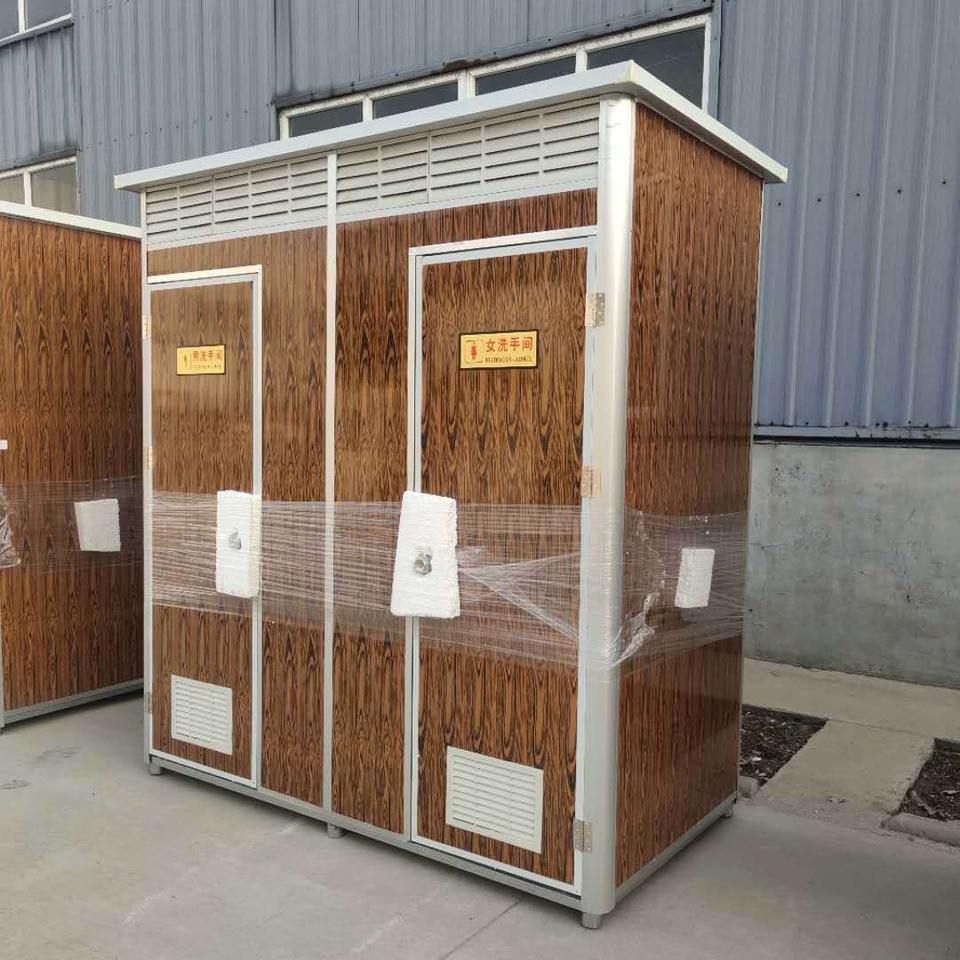
Mobile toilets can be designed with a two-story structure, and there are design cases featuring double-layer roofs. The following provides an introduction from the aspects of design features, structural advantages, and practical applications:
Design Features
Double-layer roof mobile toilets achieve functional optimization through the upper and lower roof panel structures. The upper roof panel typically uses lightweight, high-strength materials (such as metal sheets or composite materials) to primarily provide rain and sun protection. The lower roof panel, in direct contact with the interior space, often employs thermal insulation materials (such as carved metal panels or polyurethane sandwich panels) to form an air gap that reduces heat conduction. For example, the classic double-layer mobile toilet from Dezhou Hongtu Metal Products Co., Ltd. combines the durability of the metal upper roof with the comfort of the insulated lower roof. Additionally, it features translucent windows on the front wall to enhance natural lighting, a well-organized layout with separate areas for men and women, and a public handwashing area to improve the user experience.
Structural Advantages
The double-layer roof structure significantly enhances the stability and durability of mobile toilets. Taking light steel mobile toilets as an example, their double-layer roofs are connected through light steel keel frames, forming an integrated load-bearing system that effectively resists external forces such as wind and snow loads. A certain 8m × 3m light steel double-roof toilet adopts red brick and gray brick exterior wall decorations, which not only look aesthetically pleasing but also meet the structural strength requirements for long-term outdoor use. Moreover, the double-layer roof design achieves thermal insulation through the air gap, reducing the interior temperature by 3-5°C in summer and minimizing heat loss by over 20% in winter, significantly improving user comfort.
Practical Applications
Double-layer roof mobile toilets have been widely used in scenic spots, construction sites, temporary events, and other scenarios. Their spatial layout is flexible and can be configured with different numbers of squatting and standing positions according to needs. For example, a certain light steel double-roof toilet has 4 squatting and 4 standing positions in the men's area and 4 squatting positions in the women's area to meet peak usage demands. The classic double-layer toilet, through its separate areas for men and women and a public handwashing area, optimizes functional zoning and sanitation management. These designs not only ensure basic usage functions but also enhance environmental adaptability through structural innovation, becoming an important development direction in the field of mobile toilets.



