
How to Transport Mobile Toilets
The transportation of mobile toilets requires a professional process to ensure safety and integrity, mainly divided into three stages: pre-transportation preparation, loading and transportation, and on-site hoisting.
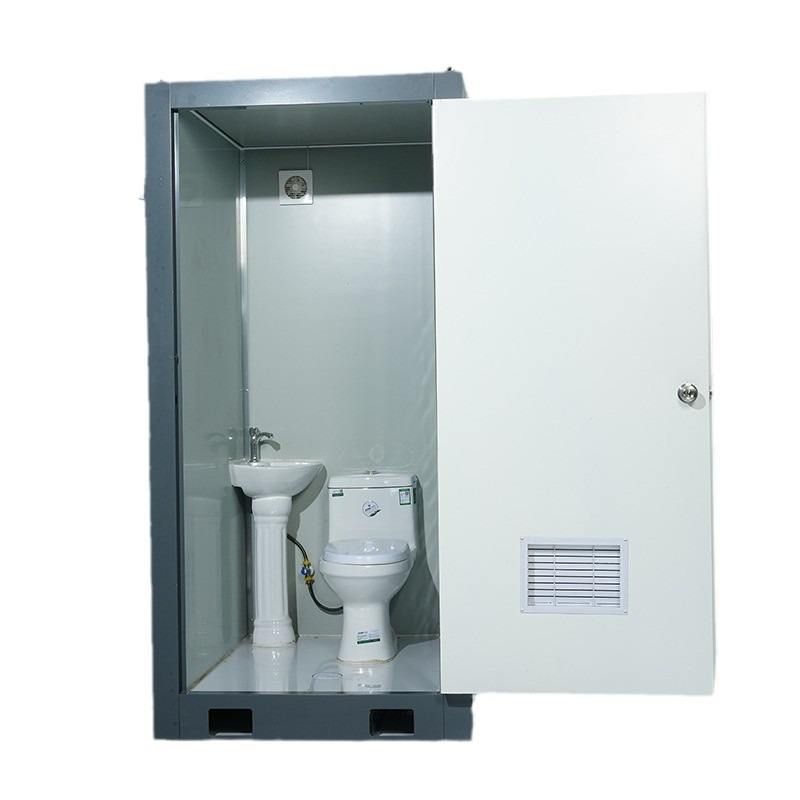
Pre-transportation Preparation: Finished Product Protection and Equipment Inspection
Mobile toilets must complete all production processes in the factory and pass quality inspections before entering the transportation phase. Finished toilets must be fully protected, such as wrapping the main body with anti-collision foam, wooden frames, or specialized packaging materials to prevent deformation of the outer shell, damage to internal facilities, or breakage of fragile components like glass during transportation due to bumps or collisions. At the same time, it is necessary to check whether the fixing devices (such as bolts and buckles) of the toilets are secure to ensure structural stability during transportation. If the toilets are equipped with附属设备 (ancillary equipment) such as water tanks and sewage systems, the liquids should be drained in advance, and the pipes should be sealed to prevent leakage from contaminating the cargo or corroding the equipment.
Loading and Transportation: Truck Selection and Fixing Methods
The transportation process usually involves loading with flatbed trucks or enclosed trucks, with the specific vehicle type selected based on the size, weight, and transportation distance of the toilets. For example, small single-unit mobile toilets can be transported using ordinary flatbed trucks, while large combined toilets or multi-story toilets require low-bed trailers to lower the center of gravity and enhance transportation stability. When loading, the toilets should be placed steadily in the center of the truck bed, and they should be firmly connected to the truck bed using steel wires, straps, or specialized fixing frames to prevent displacement or overturning during transportation due to sudden braking, turning, or bumps. If transporting multi-story toilets, they should be fixed layer by layer and anti-slip mats should be added to prevent surface material damage from inter-layer friction.
On-site Hoisting: Professional Operation and Safety Regulations
After the truck arrives at the installation site, it needs to cooperate with a crane to complete unloading and positioning. Before hoisting, professional personnel should assess the weight and center of gravity of the toilets, select appropriate lifting points (usually the top frame or specialized lifting rings of the toilets) and fixing points (such as the bottom support beams) to ensure uniform force during the hoisting process. During hoisting, it is essential to strictly comply with construction safety regulations, for example:
- No personnel are allowed to stay within the operating radius of the crane to avoid the risk of falling objects from height;
- After the toilets are lifted off the ground, pause to check whether the lifting slings and fixtures are loose, and continue lifting only after confirming they are secure;
- The foundation ground should be flat and hard. If it is soft soil, steel plates or concrete pads should be laid in advance to prevent tilting of the toilets after positioning due to foundation settlement;
- After hoisting is completed, check the levelness of the toilets and whether the fixing bolts are tightened again to ensure long-term use safety.
Through the above process, mobile toilets can be transported and installed efficiently and safely to meet temporary or long-term usage needs.



