
Complete Specifications of Mobile Toilets
Mobile toilets come in a variety of specifications, covering dimensions, number of squatting positions, structural forms, mobility methods, and sewage treatment methods, among other aspects.
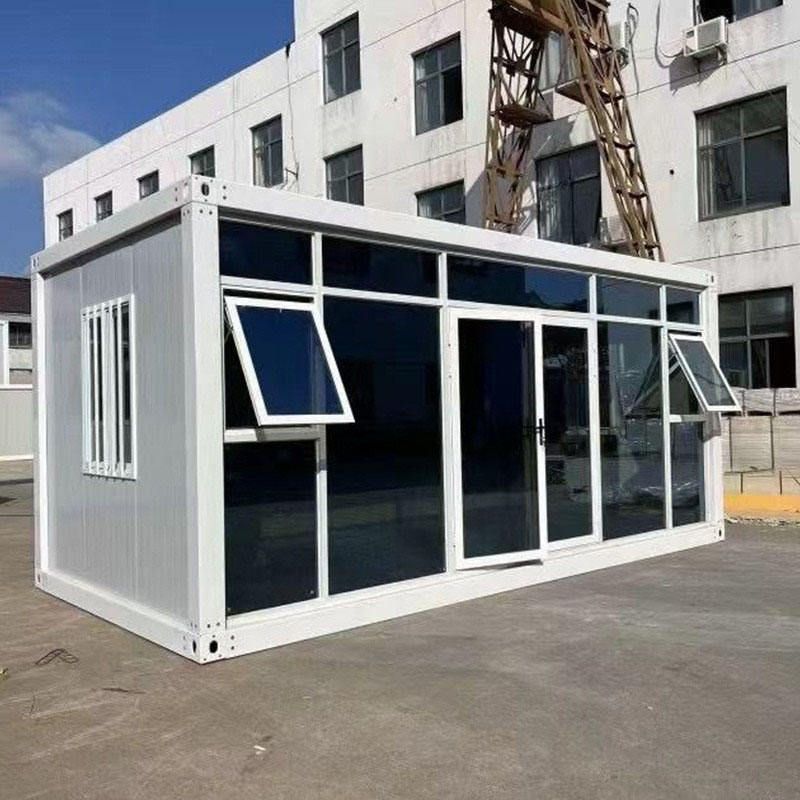
In terms of dimensions, there are mobile toilets of different sizes. For example, there is a container-type mobile toilet that is 14 meters long, 3 meters wide, and 2.8 meters high. Such large-sized mobile toilets are generally suitable for places with high foot traffic and a high demand for toilet capacity, such as large event venues and construction sites, and can meet the needs of many people simultaneously.
Regarding the number of squatting positions, there is an economical and practical mobile toilet designed with 8 squatting positions, suitable for medium-sized crowd usage scenarios, such as some community events and small markets. It ensures a certain usage capacity while taking into account economy and practicality. There is also an outdoor mobile public toilet designed with 6 squatting positions, commonly used in outdoor places like parks and scenic spots, and can well meet the basic needs of tourists.
Divided by structural form, mobile toilets can be classified into single-structure mobile toilets and composite-structure mobile toilets. Single-structure mobile toilets are relatively independent and simple, with convenient installation and mobility, suitable for areas with low space requirements and relatively single usage scenarios. Composite-structure mobile toilets are composed of multiple parts, may have richer functions, and have a more complex structure, able to meet some special usage needs.
From the perspective of mobility methods, there are hoisting and handling-type mobile toilets, which mainly rely on hoisting equipment or manual handling to move positions, suitable for scenarios with low mobility frequency and short moving distances. Powered and towed-type mobile toilets have their own power systems or can be moved by vehicle towing, offering more flexible and convenient mobility, suitable for situations requiring frequent mobility or long-distance movement.
Classified by sewage treatment methods, there are water-flushing and non-water-flushing suction-type mobile toilets, circulating water-flushing mobile toilets, and dry-packing mobile toilets. Water-flushing and non-water-flushing suction-type mobile toilets can effectively treat excrement and keep the interior of the toilet clean. Circulating water-flushing mobile toilets achieve the goal of water conservation by recycling water resources. Dry-packing mobile toilets do not require water and package excrement in a dry form, suitable for water-scarce areas or places with high environmental protection requirements.



