
Mobile Toilet Sheet Metal Shell
The design and manufacturing of the sheet metal shell for mobile toilets require comprehensive consideration of three core elements: material selection, processing technology, and structural design.
In terms of material selection, common materials include stainless steel and galvanized steel sheet. Stainless steel, with its excellent corrosion resistance, high strength, and easy-to-clean properties, is the preferred material for high-standard scenarios (such as scenic spots and high-end event venues), especially in humid or coastal environments, where it can maintain its appearance and structural stability for a long time. Galvanized steel sheet provides rust protection through a surface zinc coating, offering both high strength and cost advantages. It is suitable for large-scale production needs and is commonly used in ordinary scenarios that are sensitive to cost. The choice between the two materials should be comprehensively evaluated based on the usage environment, budget, and maintenance requirements.
In the processing technology stage, materials undergo strict inspection upon arrival at the factory to ensure that their thickness and material composition meet design standards. Subsequently, large-scale shearing machines, bending machines, and laser cutting machines are used for precise cutting and initial forming. This process requires extremely high dimensional accuracy, with errors controlled within millimeters to ensure smooth subsequent assembly. The forming of metal sheets primarily employs sheet metal processing techniques, shaping the shell contour through bending and stamping processes, and then completing component connections through welding or riveting. Welding processes need to control thermal deformation to ensure structural strength, while riveting processes are suitable for scenarios requiring quick disassembly and assembly, such as modular mobile toilets.
At the structural design level, the sheet metal shell needs to be reliably connected to the internal frame using methods such as welding or high-strength riveting to ensure overall sealing and wind and earthquake resistance. When designing, the following details should be emphasized:
- Functional optimization: The door should open and close smoothly without jamming, windows should balance ventilation and lighting, and the internal space layout should conform to ergonomic principles to avoid narrowness or operational inconvenience.
- Environmental adaptability: For extreme weather conditions, thermal insulation design should be strengthened, such as using double-layer steel sheets with filling materials; coastal or windy areas should optimize structural wind resistance, such as adding stiffeners or adopting streamlined designs.
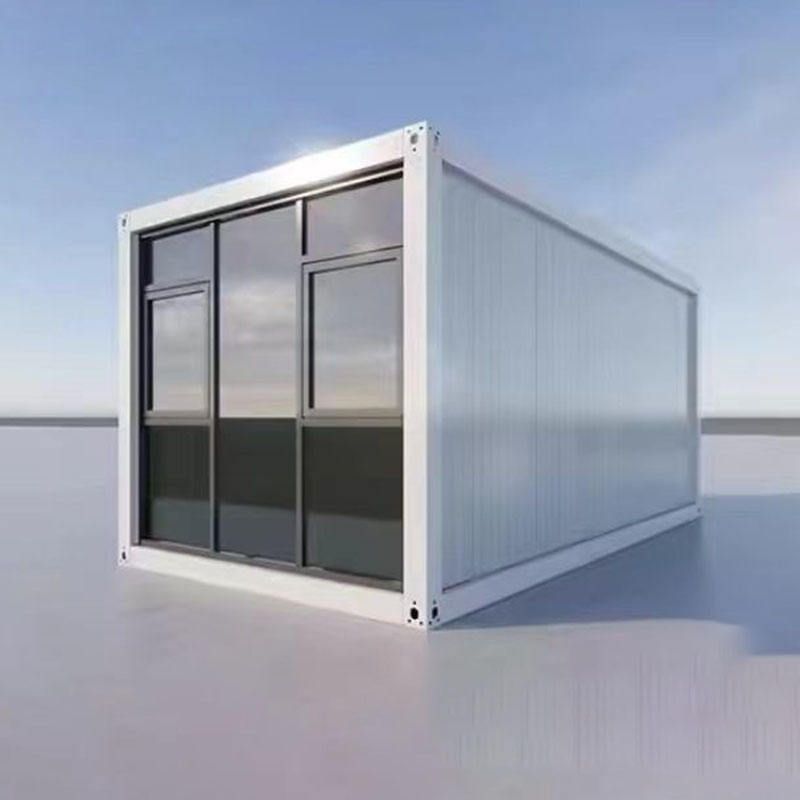
- Modularity and transportation: Some manufacturers adopt standard container modular designs, with shell dimensions compatible with containers, facilitating lifting, stacking, and long-distance transportation, while also supporting quick disassembly and assembly to expand application scenarios.
Through the collaborative optimization of materials, processes, and structures, the sheet metal shell for mobile toilets can achieve a balance of durability, functionality, and cost-effectiveness, meeting the diverse needs of different scenarios.



