
Criteria for Selecting Mobile Toilets
The criteria for selecting mobile toilets mainly include choosing the model based on the usage scenario, paying attention to the material and structural workmanship, selecting the sewage discharge method according to the site's pipeline network conditions, emphasizing odor and slip resistance design, and evaluating after-sales and customization capabilities.
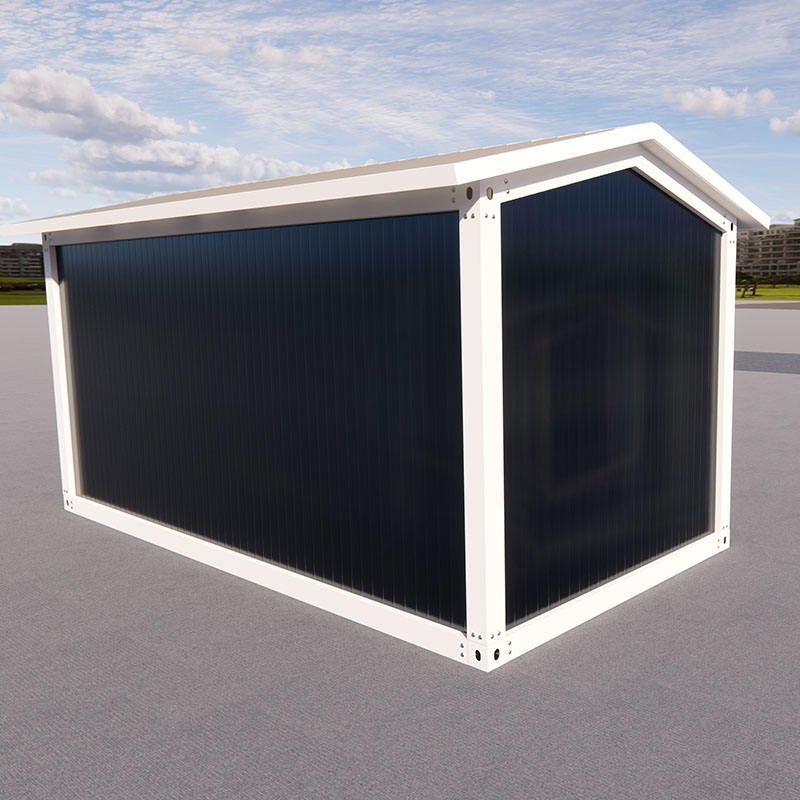
Choosing the model based on the usage scenario is the primary consideration. Different usage sites, durations, and foot traffic have varying requirements for the model of mobile toilets. For example, construction sites, temporary construction sites, and short-term events, where foot traffic is relatively concentrated and usage time is short, simple steel-structured mobile toilets can meet the needs. Public places such as scenic spots and parks, which emphasize aesthetics and practicality, are more suitable for prefabricated landscape mobile toilets. In rural outdoor areas and camping sites without pipeline networks, pipeline-free ecological mobile toilets can solve sewage discharge problems. For large-scale temporary events such as sports competitions and exhibitions with high foot traffic, multi-unit mobile public toilets can better cope.
Material and structural workmanship are also crucial. The main frame is mostly made of hot-dip galvanized square steel welded frames, which are stable and have strong wind, sun, and corrosion resistance. Exterior wall panels include metal carved panels, color steel panels, and landscape modeling panels, which should be selected according to the usage scenario. In terms of internal configuration, slip-resistant and wear-resistant floors, odor-resistant ceramic sanitary ware, and ventilation equipment are essential, while attention should also be paid to sealing workmanship and odor-resistant design. Among common materials, stainless steel is corrosion-resistant and easy to clean but has a high cost; fiberglass is waterproof and moisture-proof with high cost-effectiveness; metal sandwich panels have a low cost but poor corrosion resistance.
The sewage discharge method should be selected according to the site's pipeline network conditions. Common methods include pipeline-free packaging type, ordinary water flushing type, water-saving flushing type, high-pressure water-air flushing type, foam sealing type, microbial degradation type, and vacuum self-priming water flushing type. If the site has no pipeline network, pipeline-free packaging type or microbial degradation type are good choices; if there is a pipeline network and the water usage requirements are not high, ordinary water flushing type is sufficient; if water conservation is required, water-saving flushing type or foam sealing type are more appropriate.
Odor and slip resistance design should not be overlooked. Odor-resistant design should focus on the ventilation system, sewage discharge method, and internal structure sealing; slip-resistant design should focus on the floor material and slope to ensure usage safety.
Finally, after-sales and customization capabilities are also important bases for selection. Reliable manufacturers can provide subsequent maintenance, transportation, and installation services, as well as customization capabilities for product size, color, and function. They can also offer nationwide warranty, door-to-door delivery, and rapid response.



