
Mobile Toilet Relocation
The relocation of mobile toilets is primarily achieved through modular design, integrated mobile devices, and rapid deployment systems, with specific methods as follows:
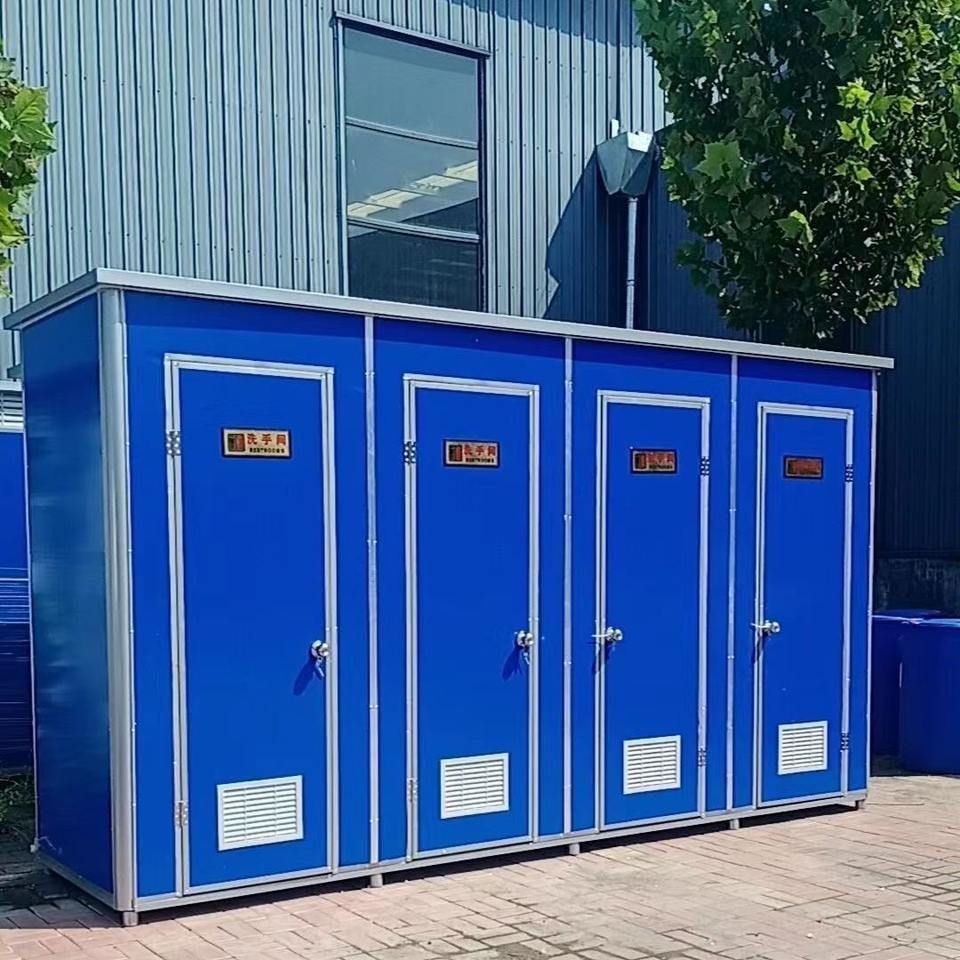
1. Mobile Devices and Chassis Design
The mobility of mobile toilets depends on their chassis structure:
- Wheeled Chassis: Standard models are equipped with heavy-duty universal or directional wheels (wheel diameters ranging from 200-400mm, made of polyurethane or rubber), with each wheel capable of bearing 300-500 kilograms. These toilets can be manually pushed or short-distance towed on hardened surfaces, concrete floors, or flat grassy areas. High-end models feature additional towing hooks, allowing them to be towed by small forklifts, tractors, or pickup trucks.
- Lifting and Forklift Interfaces: Most products are designed with forklift slots (with opening heights of 140-200mm) or lifting rings, enabling 15-ton forklifts to directly transport standard-sized toilets (1.2m×1.2m×2.3m), suitable for crossing obstacles or long-distance transfers.
2. Rapid Connection and Fixing Systems
During relocation, both rapid assembly/disassembly and stability must be considered:
- Quick-Connect Sewage/Water Supply Systems: Standardized quick-connect fittings (such as clamp-type or quick-plug types) are used to rapidly connect to municipal sewage networks or septic tanks. Self-contained toilets feature bottom collection tanks with capacities of 200-400 liters, equipped with trolley-style sewage outlets for easy movement to designated sewage disposal points.
- Ground Anchors and Leveling: The chassis is equipped with adjustable anchor bolts (with a adjustment range of 50-100mm) for horizontal calibration. For temporary outdoor use, expansion bolts or screw piles (with lengths of 300-600mm) are used for fixation to prevent displacement.
3. Operating Procedures and Precautions
1. Site Inspection: Before relocation, clear obstacles (such as gravel or pipes) from the path and ensure the ground bearing capacity is ≥5 tons per square meter to prevent wheel sinking or tipping.
2. Relocation Operations: For manual wheeled toilets, lock the rear wheels and maintain a pushing speed of ≤5km/h. When using a forklift, ensure the forks are fully inserted into the slots and the lifting speed is ≤0.3m/s. High-Risk Warning: Failure to lock directional wheels on slopes may result in uncontrolled sliding.
3. Fixing and Commissioning: Upon arrival at the new location, use a level to check for horizontal alignment, connect the sewage pipe, water inlet pipe, and power supply (if applicable), and finally conduct a water test to ensure no leaks.
4. Rental Service Support
Rental packages typically include a "full-service" approach: truck transportation, 30-minute rapid assembly, daily cleaning and disinfection, and site clearance (including garbage removal after dismantling). For example, Sentai Environmental Sanitation once deployed 200 toilets within three days for a 50,000-person exhibition and avoided congestion through zoning planning.
Mobile toilets are made of lightweight materials (such as fiberglass-reinforced plastic or polyethylene), combining lightness, durability, and environmental friendliness, making them reusable for construction sites, exhibitions, emergency scenarios, etc.



