
Mobile Toilet Performance Test Standard
The mobile toilet performance test standard covers multiple aspects such as architecture and structure, appearance and decoration, sealing and waterproofing, structural safety, and test methods, as detailed below:
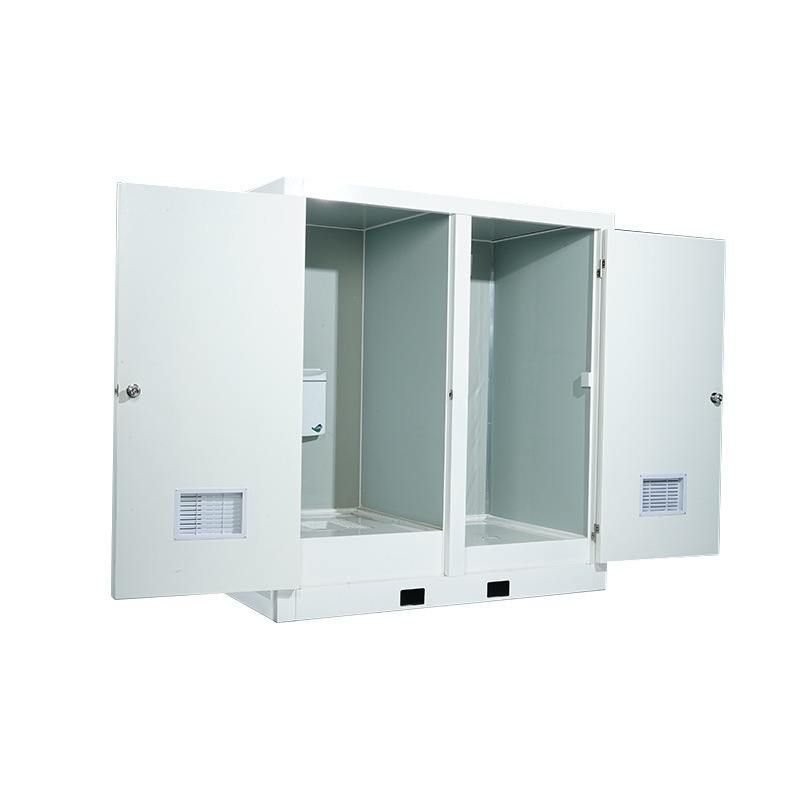
Architecture and Structure Standards: The equipment must be brand new and comply with bidding technical specifications, ensuring satisfactory performance throughout its service life, with quantities and materials meeting requirements. Steel structure welding should adhere to JGJ81 standards, while anti-corrosion and anti-rust treatments should comply with GB50212. The overall structure must be stable, with anti-overturning capabilities, wind resistance of no less than Level 10, earthquake resistance of no less than Level 8, and a service life of at least 10 years. For architecture and structure verification, a handheld laser distance meter and steel tape should be used to conduct sampling checks on the toilet's architectural layout to ensure consistency with design drawings.
Appearance and Decoration Quality Standards: Visually inspect the appearance, interior decoration, sanitary ware, and signage for completeness and effectiveness. The dimensional discrepancies between the actual appearance and interior dimensions and the design drawings should not exceed 5mm. The decorative layer should be flat without depressions, firmly attached, with a smooth, clean, aesthetically pleasing surface that is rainproof and easy to clean and rinse. Seam sealing should be well-connected, without any rain leakage or water seepage. The floor should be flat, sealed, and free from water seepage and ponding.
Sealing and Waterproofing Standards: Use a water jet to continuously spray along the exterior walls, corners, and roof connections for 15 minutes, then stop for 1 hour to check for any leakage. Box sealing performance tests include filling with water and checking for leakage in the storage tank and fecal storage tank, inspecting water supply and drainage pipelines for leakage, checking the sealing of the cleaning port and internal space partition, the action completion time for toilet fixture blocking (should not exceed 3 seconds), the isolation between the fecal storage tank and the toilet interior, and the flexibility and sealing of the cleaning port cover.
Structural Safety Standards: Conduct a comprehensive inspection of all damage and defects, focusing on the aging and deformation of main load-bearing components. Perform structural safety calculations and analyses according to relevant specifications to assess safety under various loads. Based on the owner's requirements, non-destructive testing can be conducted on the welds of steel structure parts, and the mechanical properties of the steel can be tested.
Test Method Standards: Include supervisory testing, on-site testing, operational testing, etc., and specify the preparation requirements for on-site toilets and the instruments used for testing.



