
Images Before Mobile Toilet Installation
Although it is not possible to directly provide images of mobile toilets before installation, a detailed description of their pre-installation state and preparations can be given to help understand the scene before installation.
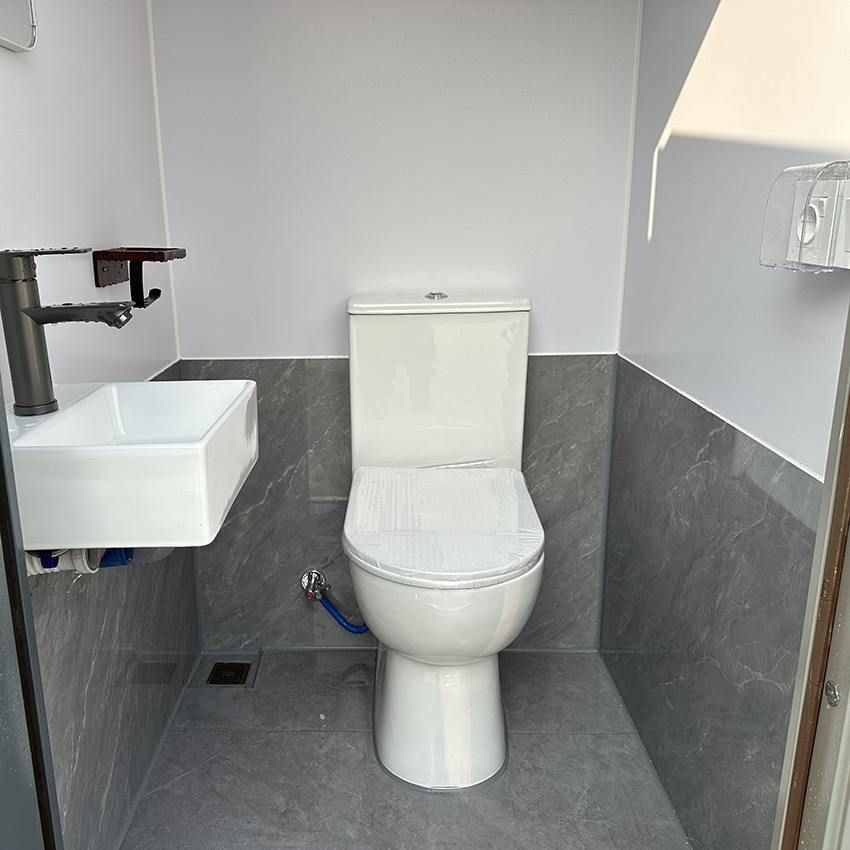
Before installation, mobile toilets are usually in an unassembled or partially disassembled state for ease of transportation and on-site installation. Their main structures may exist as loose parts, including frames, wall panels, roof components, door and window assemblies, as well as parts of internal facilities such as toilets, washbasins, water tanks, etc. These components are packaged separately according to design specifications and material requirements to ensure they are not damaged during transportation.
Basic preparations are required at the installation site, including cleaning the ground to ensure the installation area is flat, solid, and free of debris and obstacles. For mobile toilets that require fixed installation, foundation pits need to be excavated or concrete foundations laid according to design requirements to provide stable support. If the mobile toilet is designed with a drainage system, drainage pipes need to be planned and laid in advance to ensure smooth sewage discharge.
Before installation, all components need to be carefully inspected to confirm that they are complete in quantity and undamaged, and to familiarize oneself with the assembly sequence and connection methods of each component according to the installation instructions or drawings. For installation steps that require special tools or equipment, corresponding tools such as screwdrivers, wrenches, electric drills, etc., as well as necessary safety protection equipment such as gloves and safety helmets, need to be prepared in advance.
In addition, the layout and orientation of the mobile toilet need to be considered before installation to ensure they meet usage requirements and the on-site environment. For example, plan the number and location of toilet compartments reasonably according to pedestrian traffic and usage frequency; choose an appropriate orientation based on sunlight and ventilation conditions to improve usage comfort.



