
Quay lại blog
Bài viết
Configurations of Mobile Toilets
Quản trị 28 tháng 9, 2026
The configurations of mobile toilets typically include the following core modules, which vary depending on their purpose, grade, and price:
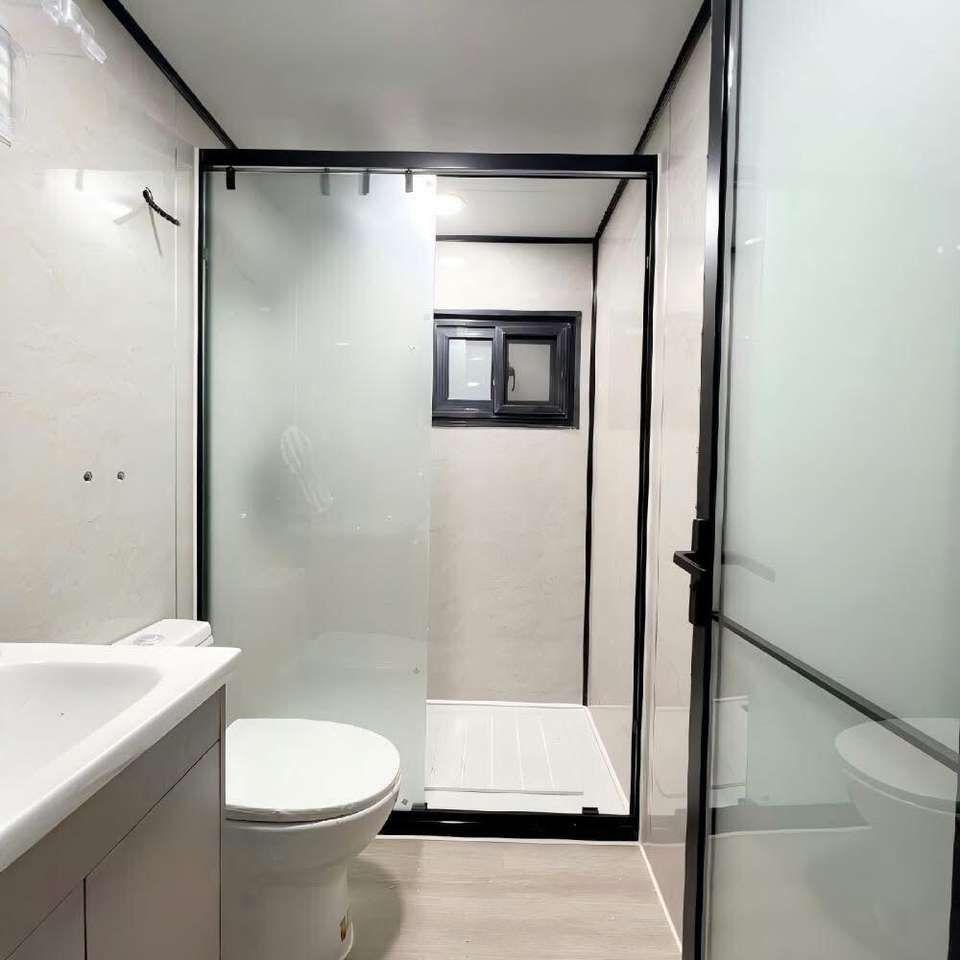
1. Core Sanitary Fixtures
The basic functions of mobile toilets rely on sanitary fixtures, which mainly include:
- Toilets: Ceramic squat toilets or sit-down toilets are common configurations. High-end products may use stainless steel to enhance durability. Some toilets are designed for children, featuring safety seats or specialized toilet seat rings.
- Handwashing Facilities: Equipped with sinks and either push-button or sensor-activated faucets, some high-end models also include mirrors, coat hooks, storage shelves, and toilet paper holders to improve convenience.
- Waste Disposal Aids: Built-in trash bins are used to collect waste, and some designs incorporate hidden structures to reduce odor diffusion.
2. Environmental Control Systems
To ensure user comfort, environmental control modules are crucial:
- Ventilation Systems: Powerful exhaust fans (with a power range of 20-50 watts) ensure 10-15 air changes per hour, quickly removing odors. In cold regions, insulation materials or electric heaters may be added, while in hot regions, ventilation skylights or small air conditioners are used to regulate temperature.
- Lighting Systems: LED energy-saving lights (with a power range of 5-15 watts) provide basic illumination, and some toilets are equipped with emergency lights to ensure safety during power outages.
- Temperature Control: Depending on the climate, toilets may integrate temperature control systems. For example, electric heaters or warm air blowers are used in cold regions, while natural ventilation or mechanical refrigeration is relied upon in hot regions.
3. Water Supply, Drainage, and Power Systems
The independent operation of mobile toilets relies on a complete water supply, drainage, and energy support system:
- Water Supply Systems: These are divided into self-contained tank types (with a freshwater tank capacity of 100-300 liters) and external water source types. The former is suitable for scenarios without a fixed water source, while the latter requires connection to municipal water supplies.
- Drainage Systems: Traditional sewage tanks (with a capacity of 200-500 liters) require regular cleaning. Modern eco-friendly models use foam sealing or microbial degradation technology to reduce sewage production and odor.
- Power Systems: These support 220V mains power access or built-in batteries (such as 12V/100Ah). Some high-end models are equipped with solar panels to provide green energy.
4. Structures and Accessories
Safety and durability are the core of structural design:
- Safety Facilities: Safety door locks, "occupied/unoccupied" indicator locks, or LED displays prevent usage conflicts. Corrosion-resistant wall panels (made of high-density polyethylene, fiberglass, or color-coated steel plates) extend service life.
- Floor Treatment: Anti-slip floors or fiberglass floor grilles prevent slipping, and barrier-free facilities (such as handrails, wheelchair turning spaces, and low-level sinks) meet the needs of special populations.
5. Other Configurations
Some mobile toilets enhance quality through material upgrades and detailed design:
- Exterior Wall Materials: Metal carved panels combine aesthetics with durability, and step and specialized door designs optimize the user experience.
- Additional Functions: Depending on the scenario, air purification devices, aromatherapy systems, or intelligent monitoring modules may be added.



