
Quay lại blog
Bài viết
How to Lift a Mobile Toilet Box with a Crane
Quản trị 11 tháng 10, 2026
The following steps and precautions should be followed when using a crane to lift a mobile toilet box:
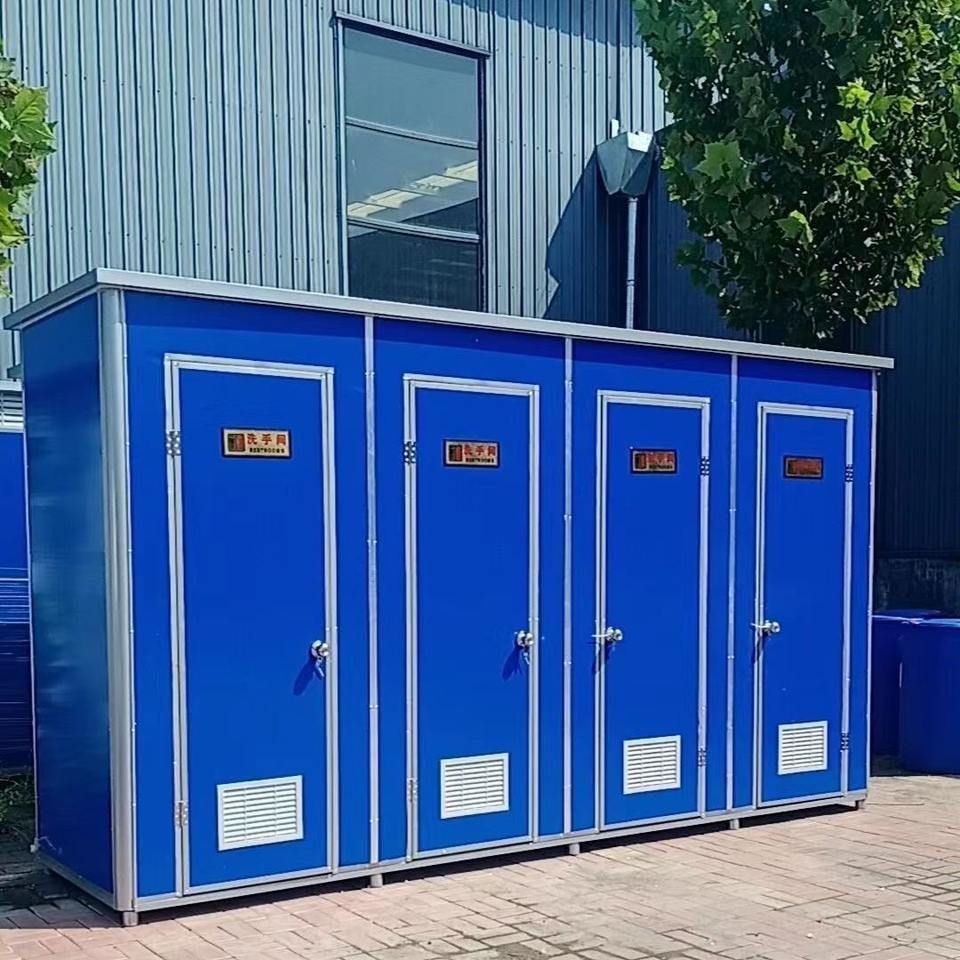
I. Preparation before Lifting
- Confirm Equipment Parameters: Measure the size and weight of the toilet box and select a crane with sufficient power. For example, for 2 - 4 toilet compartments, it is recommended to use a crane with a capacity of 12 tons or more; for 5 - 6 compartments, a 16 - ton or larger crane is required; and for 7 compartments or more, a 20 - ton or larger crane is needed.
- Check Ground Conditions: Ensure that the ground is flat and firm. If the ground is soft (such as muddy or sandy ground), steel plates should be laid to disperse the pressure of the crane and prevent settlement.
- Plan the Lifting Route: Survey the site in advance, avoid obstacles such as power lines and trees, ensure that the crane arm has sufficient rotation space, and prevent collision risks.
- Check Lifting Points: Confirm that there are 4 lifting rings on the top of the toilet box and use separate lifting straps with a length of no less than 6 meters to hook each lifting ring respectively to ensure even force distribution.
II. Lifting Process Operations
- Lift Smoothly: Drive the crane to the side of the toilet box, adjust the position of the hook, and then lift it slowly. During lifting, keep the box body horizontal to avoid tilting, which may cause the hook to come off or the center of gravity to shift.
- Hover and Check: After the box body is lifted off the ground, hover for 30 seconds to observe whether the center of gravity is stable and prevent swaying. For simultaneous commanding, use two - way radios for communication, with one person observing the balance of the box body and the other person commanding the crane operation.
- Transport Stability: During transportation, keep the crane moving at a constant speed and avoid sudden acceleration or braking to prevent the toilet box from swaying or colliding.
III. Positioning and Finalization
- Accurate Positioning: After reaching the installation location, adjust the angle in advance and slowly lower it to a position 10 cm above the foundation, pause, fine - tune to align with the embedded parts, and then fully position it.
- Fix and Check: After positioning, immediately install wind - proof fixing devices (such as ground anchors and bolts) and check whether all connection points are firm to prevent displacement.
- Shock Absorption and Anti - Corrosion Treatment: It is recommended to install rubber pads at the bottom of the box body, which can not only absorb shocks but also prevent water accumulation and corrosion.
IV. Key Precautions
- Load Safety: Confirm the load condition of the crane before construction and strictly prohibit overloading operations.
- Special Terrain Handling: If working on special terrains such as cliffs or slopes, take anti - slip measures (such as adding traction ropes) to prevent sliding.
- Regular Maintenance: Daily checks should be carried out on the structural integrity of the lifting points (such as lifting rings and welds). If cracks or metal fatigue are found, they should be repaired in a timely manner.



