
Anti-Corrosion and Rust Prevention Standards for Mobile Toilets
The anti-corrosion and rust prevention standards for mobile toilets should be comprehensively controlled from five aspects: material selection, surface treatment, painting process, drainage system optimization, and environmental adaptability, as detailed below:
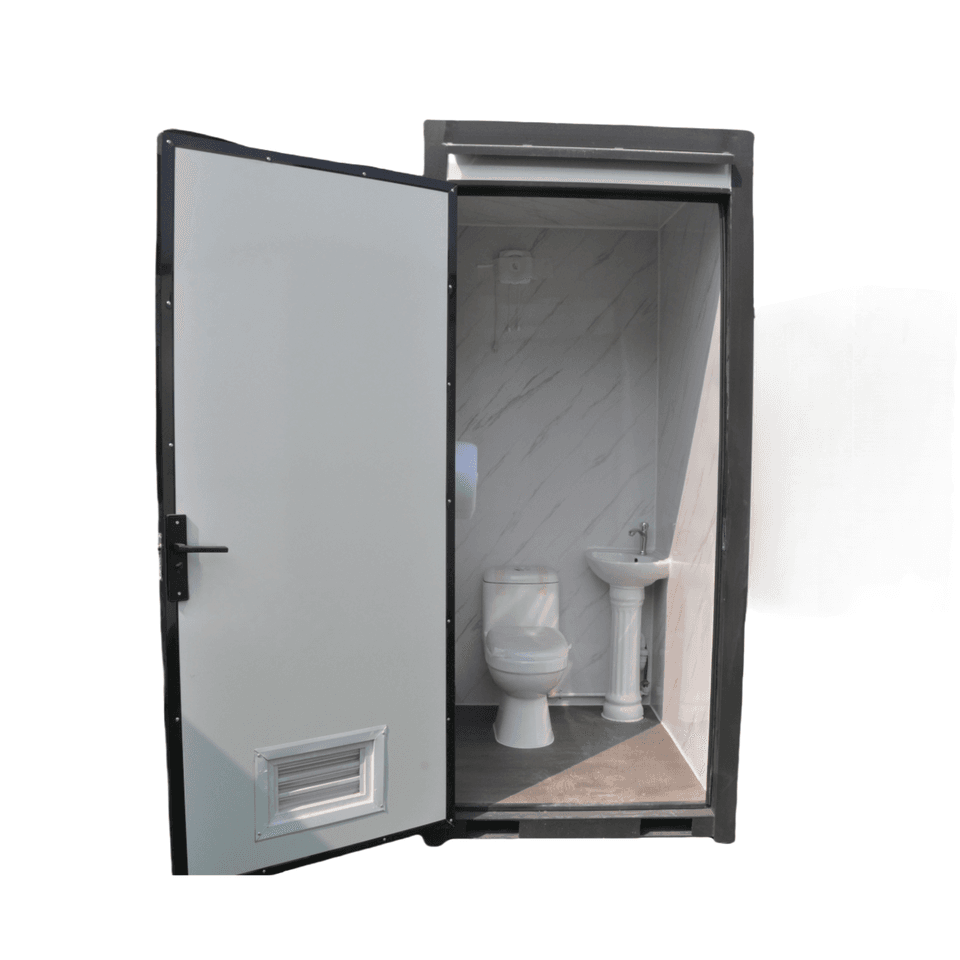
Material selection is the foundation for anti-corrosion and rust prevention. The main structure should be made of high-quality stainless steel, which has significantly better corrosion resistance than ordinary steel and can effectively resist oxidation reactions in humid environments. The frame materials are primarily galvanized or stainless steel, with decorative materials such as aluminum-plastic panels and anti-corrosion wood on the surface to ensure structural strength and enhance aesthetics. For components that come into contact with water and waste internally, such as water tanks and pipes, corrosion-resistant engineering plastics (such as PVC and PE) or copper alloys should be selected to avoid damage caused by long-term exposure to corrosive substances.
Surface treatment is a crucial step in enhancing corrosion resistance. Stainless steel structures require passivation treatment, which forms a dense oxide film through chemical or electrochemical methods to block contact between the corrosive medium and the metal substrate. Steel structural frames should be polished and then painted with anti-rust paint three times to ensure uniform paint film coverage and prevent local corrosion. Fiberglass-reinforced plastic materials require surface treatment through mechanical grinding, pickling (suitable for scenarios with heavy oil stains), or putty filling to enhance coating adhesion and prevent peeling.
The painting process directly affects the anti-corrosion effect. The painting of steel structural frames should be completed in three coats, with an appropriate interval between each coat (usually 4-6 hours) to ensure that the paint film thickness meets the standard (generally ≥80μm) and to eliminate defects such as missed painting and sagging through surface inspection. Fiberglass-reinforced plastic materials adopt the 'three-cloth-five-paint' process, which involves first applying a primer, then laying three layers of fiberglass cloth, and finally applying intermediate and top coats, with a total thickness of ≥0.8mm, forming a multi-layer protective structure that significantly enhances corrosion resistance.
Optimizing the drainage system can reduce corrosion risks. Design a reasonable drainage slope (usually ≥2%) to ensure rapid drainage of sewage and avoid long-term soaking of components by accumulated water. Adding corrosion inhibitors to the drainage pipes can reduce the corrosive effects of acidic or alkaline substances in the sewage on the pipes and extend their service life.
Environmental adaptability requires adjusting protective measures according to the usage scenario. In environments with strong acidity, it is necessary to increase acid resistance, such as selecting acid-resistant coatings or increasing coating thickness; in high-humidity environments, moisture-proof treatment should be strengthened, such as using waterproof sealants or increasing ventilation design. The construction environment should be controlled at a temperature of 5-35°C and a humidity of ≤80%, avoiding rainy days or low-temperature and high-humidity environments to ensure that curing materials such as epoxy resins fully react and form a stable protective layer.



