
Mobile Siphon Toilet
Mobile siphon toilets do exist and have mature technology, capable of meeting various mobile scenario needs. The following provides an explanation from five aspects: product types, technical feasibility, price ranges, application scenarios, and design features.
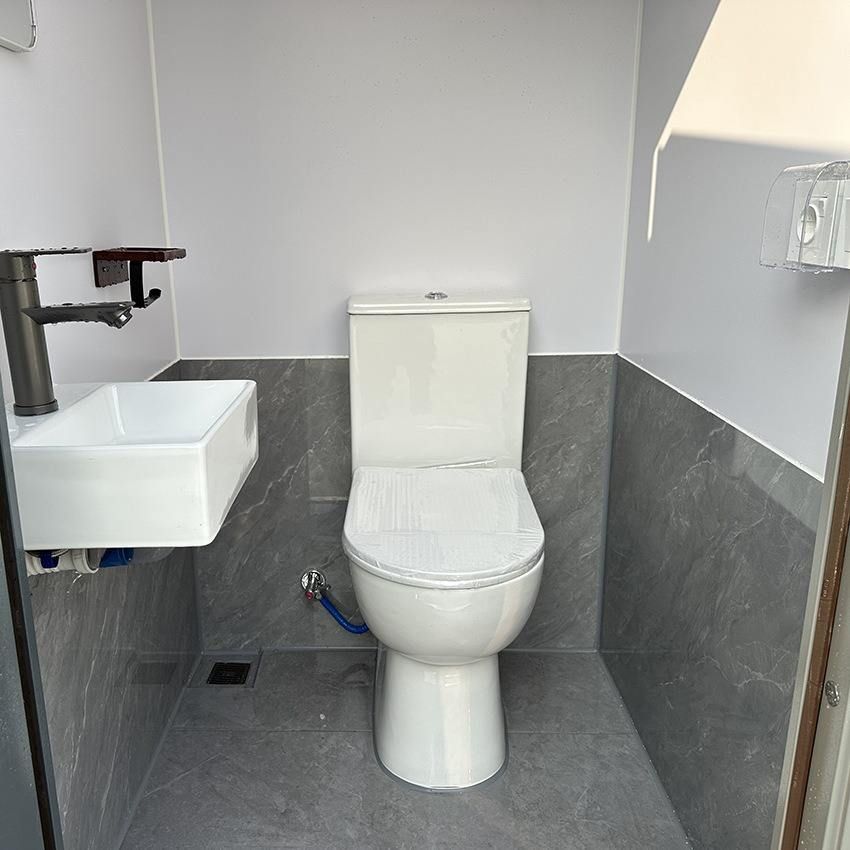
1. Product Types
Mobile siphon toilets, centered around standalone toilets, are divided into two categories: household portable types and engineering-specific types. Household portable types, such as the "Mobile Portable Flushing Toilet for the Elderly, Pregnant Women, and Patients - Indoor Stand Model", adopt a stand structure with an independent water tank, suitable for temporary use. Engineering-specific types, like the "304 Stainless Steel Toilet with Anti-Freezing Design for Bars, KTVs, Mobile Public Restrooms", use stainless steel materials and anti-freezing designs, suitable for public places with high foot traffic. Both types employ siphon drainage structures, achieving odor prevention through optimized sewage discharge paths and sealing designs.
2. Technical Feasibility
The relocation of siphon toilets requires compliance with pipeline design specifications, including a pipe diameter of ≥110mm, a slope of ≥2%, a maximum of two elbows, and a well-ventilated system. However, mobile products circumvent traditional relocation limitations through structural innovations: First, they shorten the sewage discharge path to 0.5-1 meter, reducing pipeline resistance. Second, they adopt powerful siphon flushing technologies (such as super swirl siphon) to ensure efficient sewage discharge over short distances. Third, some models are equipped with vacuum self-priming systems (e.g., the vacuum self-priming mobile toilet priced at ¥2909.84), enhancing flushing force through negative pressure and further reducing reliance on pipelines.
3. Price Ranges
The price range for mobile siphon toilets is wide, depending on materials, functions, and usage scenarios. Basic household portable toilets are priced between ¥200 and ¥600, such as the stand model at ¥204.25 and the battery-free model at ¥614.0. High-end models can cost between ¥1800 and ¥3000, such as the public restroom-specific model made of 304 stainless steel at ¥1872.0 or the engineering model equipped with a vacuum self-priming system at ¥2909.84. Price differences mainly stem from material durability, the complexity of flushing technology, and additional features (such as anti-freezing and vehicle adaptability).
4. Application Scenarios
Mobile siphon toilets cover both outdoor and indoor scenarios. Outdoor scenarios include camping, RV travel, temporary event venues (such as music festivals and exhibitions), and disaster relief. Indoor scenarios mainly target medical care (such as bedside use for patients), small apartment renovations, and areas without sewage systems (such as attics and basements). Some products support vehicle use, such as the portable airbag flushing toilet with a 20L storage capacity, which prevents liquid leakage through sealing valves and is compatible with various vehicle types.
5. Design Features
The design of mobile siphon toilets focuses on balancing portability and functionality. First, odor prevention is achieved through dual sealing: a silicone check valve at the sewage outlet and a water seal layer between the water tank and the toilet bowl. Second, splash prevention is realized by optimizing the inner wall curvature of the toilet bowl, such as a lipless design to reduce liquid splashing. Third, ease of cleaning is enhanced through integrated molding processes, reducing crevices where dirt can accumulate. Fourth, in terms of energy self-sufficiency, most models are equipped with independent water tanks, while high-end models use energy storage batteries to drive the flushing system, eliminating the need for external power sources.



