
Mobile Restaurant Toilet
A mobile restaurant toilet is essentially a mobile toilet designed for restaurant settings, set up to meet the toilet needs of restaurant customers and staff. The following provides an introduction from its definition, composition, classification, and usage:
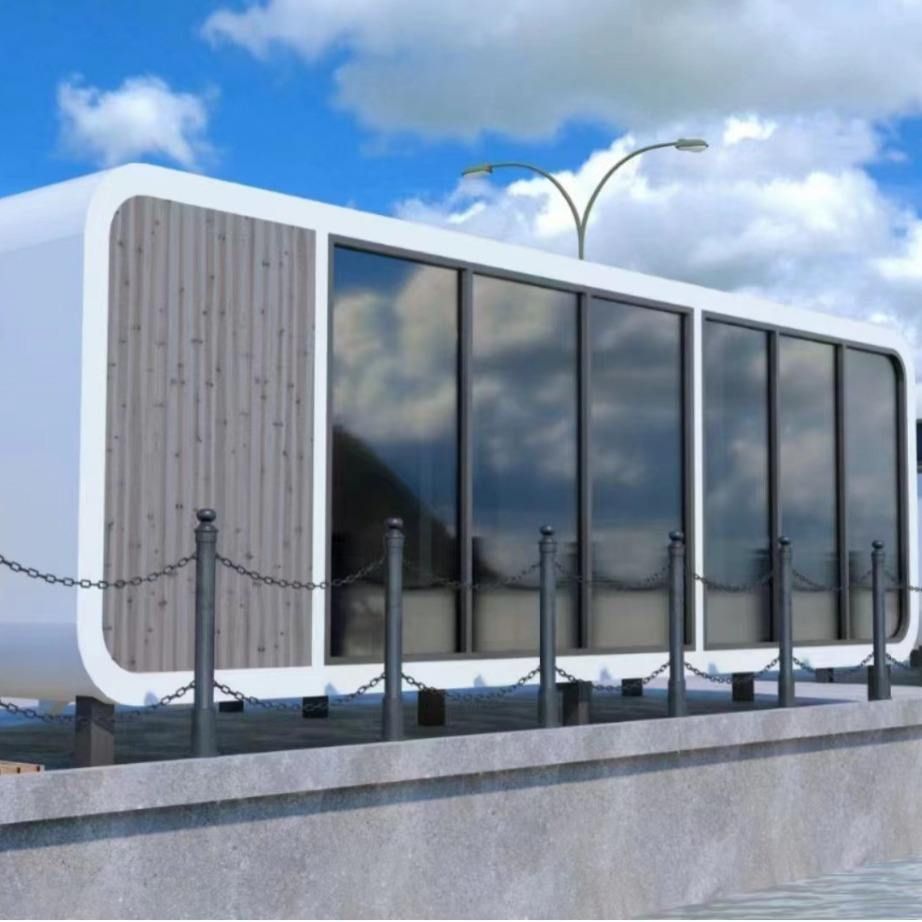
Definition and Applicable Scenarios
A mobile toilet is a toilet facility that can be moved as a whole and placed at locations with fixed or temporary needs. In restaurant settings, whether it's a temporarily set-up outdoor dining area, a large banquet venue, or the interior of a restaurant with limited space that requires flexible layout adjustments, mobile toilets can play a role in providing toilet services to the public and customers.
Components
A mobile toilet generally consists of a fecal sewage storage tank (or fecal sewage treatment device), flooring, sanitary ware, walls, washing equipment, a water tank, a roof, and a mobile device. These components work together to ensure the basic functions of the toilet are realized, such as the collection and treatment of fecal sewage, the provision of clean water, and the protection of the privacy and safety of users.
Classification
- By structural form: It can be divided into single-structure mobile toilets and composite-structure mobile toilets. The single-structure type is relatively simple and independent, while the composite-structure type may be composed of multiple parts and has more complex and diverse functions.
- By moving method: It can be divided into hoisting and handling mobile toilets, and powered and trailer-mounted mobile toilets. Hoisting and handling types are suitable for short-distance movement or handling by human power or simple machinery; powered and trailer-mounted types can be moved long distances with the help of vehicle power sources, facilitating flexible allocation between different venues.
- By sewage treatment method: It can be divided into water-flush and waterless-flush suction mobile toilets, circulating water-flush mobile toilets, and dry-packing mobile toilets. The water-flush type has better cleaning effects but requires an adequate water supply; the waterless-flush suction type treats feces through suction, saving water resources; the circulating water-flush type can recycle sewage; and the dry-packing type packs feces for treatment without the need for water, making it suitable for water-scarce areas.
Usage
Take a simple mobile toilet as an example. After entering the toilet, the space is relatively small, about one square meter, equipped with a squatting pan and a hand-washing faucet. There are two black balls below. After using the toilet, step on one of the black balls, and the squatting pan will flush automatically; step on the other black ball, and the faucet will provide water for hand-washing. At the same time, the toilet door has a bolt. When the bolt is pulled up, it shows that someone is inside; when it is pulled down, it shows that it is unoccupied.



