
Mobile Public Toilet for Single Person
The single-person mobile public toilet typically refers to a standalone mobile toilet designed to meet temporary or mobile restroom needs. The following provides an introduction from six aspects: basic characteristics, materials, design styles, structural forms, mobility methods, and sewage treatment methods.
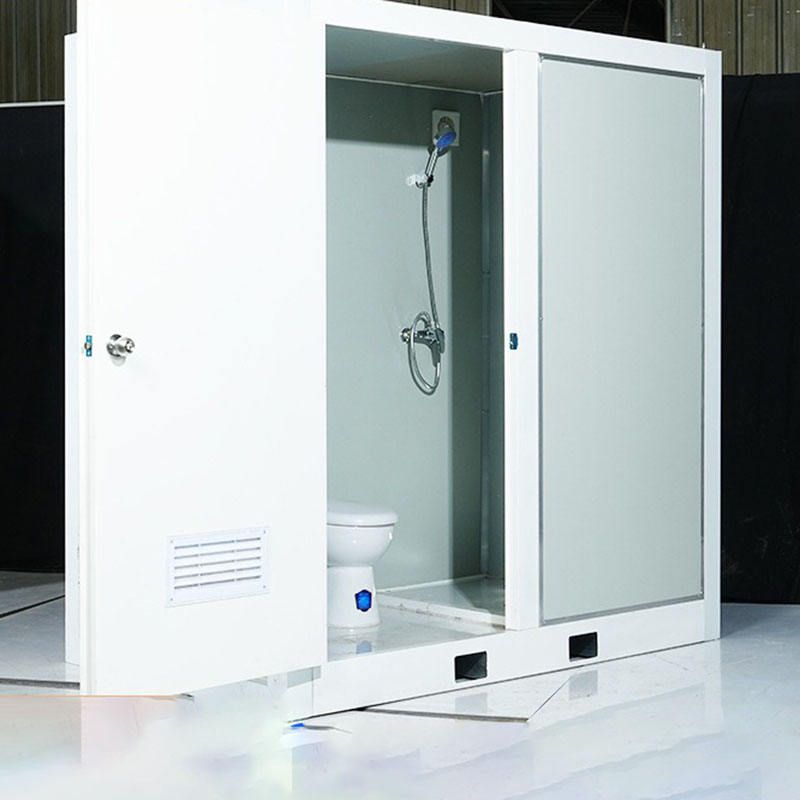
Basic Characteristics: Single-person mobile toilets offer significant advantages in terms of mobility, modularity, and ease of transportation. They can be quickly deployed or repositioned according to actual needs, making them suitable for high-traffic areas such as public spaces, squares, docks, and tourist attractions, effectively alleviating temporary or regional restroom pressure.
Material Types: The main materials used are diverse, including aluminum-plastic panels (lightweight and corrosion-resistant), color-coated steel (high strength and low cost), fiberglass (strong weather resistance and easy to clean), stainless steel (durable and rust-resistant), plastic (lightweight and low cost), and steel structures (high stability). Different materials have varying focuses on durability, cost, and suitability for different environments. For example, tourist attractions may prioritize aesthetically pleasing aluminum-plastic panels or color-coated steel, while high-humidity environments are better suited for stainless steel.
Design Styles: Some models, such as the grille-style standalone units, feature a pointed roof design that enhances drainage efficiency and structural stability. Equipped with privacy partitions and rain-proof corridors, they protect privacy and adapt to outdoor weather conditions. Gender-neutral designs increase usage frequency, and some models can be modularly upgraded to include shower functions, meeting diverse needs.
Structural Forms: They are divided into single-unit structures (independent units for flexible deployment) and composite structures (multiple units combined to form rows or multi-level layouts). The latter is suitable for high-traffic areas and allows for rapid capacity expansion by adding or removing units.
Mobility Methods: These include lifting and handling types (relying on lifting equipment or manual handling, suitable for short-distance adjustments), powered types (equipped with their own drive systems for autonomous movement), and towed types (pulled by vehicles for long-distance transportation). The choice depends on site conditions and transportation costs.
Sewage Treatment Methods: These encompass water-flush and non-water-flush suction types (relying on septic tanks or collection vehicles for waste disposal), recirculating water-flush types (using biological degradation or physical filtration for water reuse), and dry-pack types (using biodegradable bags to collect waste without flushing). Among them, the dry-pack type is often used in water-scarce or ecologically sensitive areas due to its lack of sewage discharge.



