
Mobile Public Toilet Gender Division
Mobile public toilets feature gender-specific divisions, and there is no unified standard for the ratio of male to female toilet stalls, which needs to be adjusted flexibly according to the location and requirements.
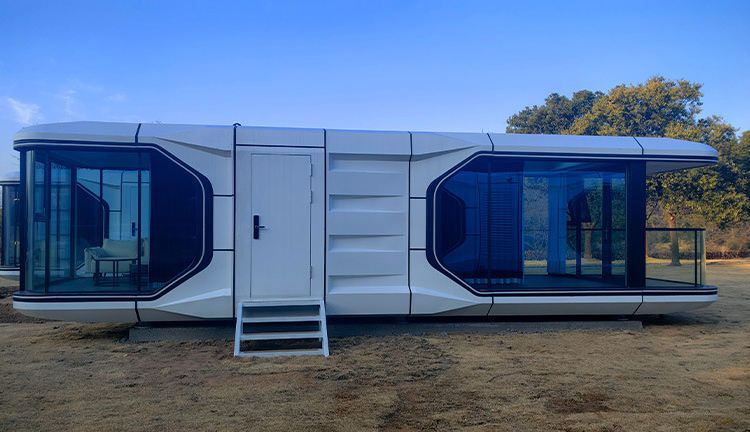
Mobile public toilets typically have separate areas for men and women to meet the usage needs of different genders. For example, a mobile toilet with an Apple Pod design may have one squat toilet for each gender or may be equipped with different specifications such as thirty squat toilets for each gender according to demand. This design takes into account both convenience of use and efficient space utilization.
Regarding the ratio of male to female toilet stalls, there is currently no nationwide mandatory standard, but the industry generally follows certain principles. Under normal circumstances, the ratio of male to female toilet stalls should be 1:1.5 - 2, meaning there are more female toilet stalls than male ones. This ratio is formulated based on factors such as women taking longer to use the toilet and physiological differences, aiming to balance usage efficiency. In specific locations, the ratio can be further adjusted:
- Leisure places like parks: The ratio can be relaxed to 1:2 (excluding the number of urinals) to cope with fluctuations in tourist traffic and concentrated female usage demands.
- High-traffic areas: Such as commercial centers and transportation hubs, the ratio needs to be increased to 2:1. By increasing the number of female toilet stalls, the pressure of queuing can be alleviated, and the quality of public services can be improved.
Some regions have clarified the requirements for toilet stall ratios through local regulations. For example, the Regulations on the Protection of Women's Rights and Interests implemented in Gansu Province from August 2025 stipulate that the ratio of female to male toilet stalls in urban public toilets should be increased to 3:2, and the ratio in high-traffic locations should be increased to 2:1. However, it should be noted that this regulation mainly targets fixed locations. Mobile public toilets, due to limitations in space and transportation, may need to be adjusted flexibly according to the actual situation, such as increasing female toilet stalls through modular design or optimizing space layout with movable partitions.
Overall, the design of gender-specific divisions and toilet stall ratios in mobile public toilets needs to comprehensively consider usage scenarios, pedestrian traffic characteristics, and local regulations to achieve fair and efficient service goals.



