
Production Process of Mobile Prefab Toilet
The production process of a mobile prefab toilet is a comprehensive project involving multiple steps, requiring strict control at each stage to ensure the quality and practicality of the final product.
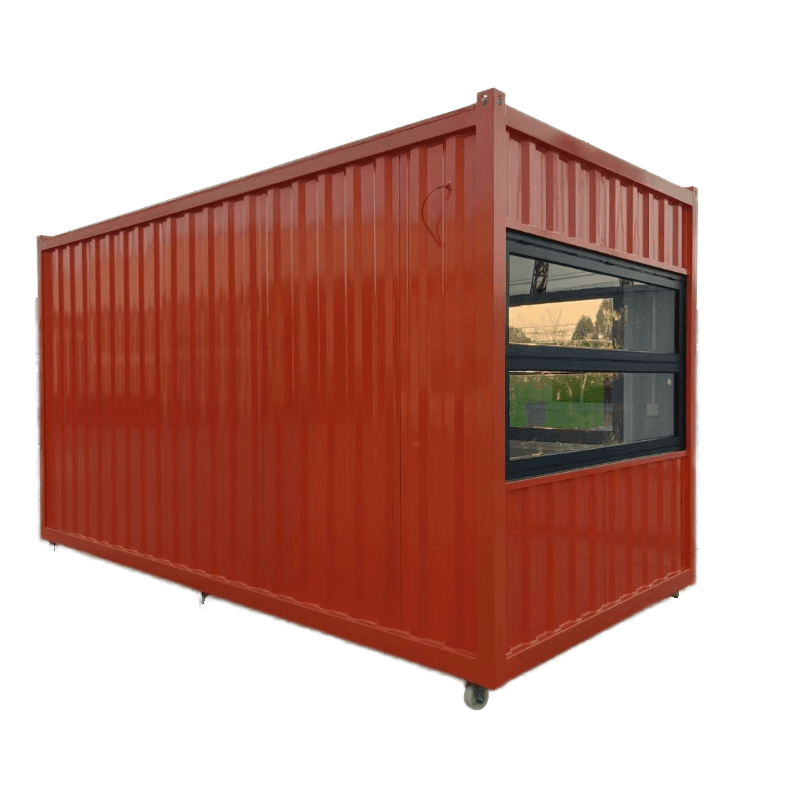
Firstly, material selection is the foundation of making a mobile prefab toilet. High-quality panels should be carefully chosen as the main materials for the walls and roof, which should possess good strength, weather resistance, and sound insulation properties. At the same time, a sturdy steel frame should be selected as the supporting structure to ensure the overall stability of the toilet. Additionally, durable accessories such as door locks, hinges, and faucets should not be overlooked, as they directly affect the service life and user experience of the toilet.
Secondly, interior design should focus on human-centric considerations. The layout of squatting positions should be reasonably planned according to usage needs to maximize space utilization and facilitate user access. Meanwhile, efficient ventilation facilities such as exhaust fans or ventilation windows should be installed to keep the air inside the toilet fresh. Setting up a hand-washing sink is also an essential step to facilitate users in cleaning their hands. Furthermore, barrier-free facilities such as handrails and ramps can be considered to meet the needs of special groups.
Next is the processing stage. Experienced workers need to perform precise cutting, welding, and assembly according to the design drawings. During the cutting process, it is essential to ensure accurate dimensions. During welding, the welds should be firm and reliable. During assembly, attention should be paid to the fit accuracy between components. Through a strict processing workflow, each component can be seamlessly connected to form a stable whole.
Then, special treatment is the key to enhancing the adaptability of the mobile prefab toilet. Special treatments such as waterproofing and anti-corrosion should be carried out on the toilet to cope with various harsh weather conditions, such as heavy rain, strong winds, and severe cold. For example, waterproof coatings can be applied to the walls and roof to prevent rainwater infiltration, and anti-corrosion paint can be sprayed on the steel frame surface to extend its service life. These measures ensure that the toilet can operate stably in different environments.
Finally, exterior design is also an aspect that cannot be ignored. Creative elements can be incorporated, such as using eco-friendly materials to create a green appearance, which is both aesthetically pleasing and environmentally friendly. Alternatively, unique color combinations and decorative patterns can be used to enhance the visual effect and elevate the urban image and cultural connotations.



