
Mobile Indoor Toilet Methods
The methods for mobile indoor toilets vary depending on their structural forms and mobility approaches, primarily falling into two categories: classification by structural form and classification by mobility method.
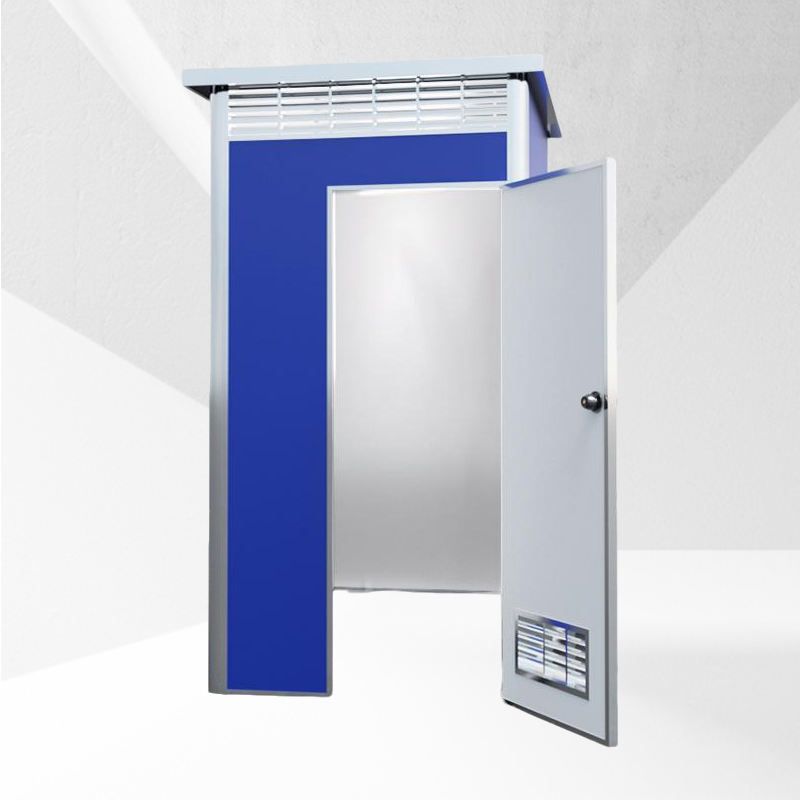
In terms of structural form, mobile indoor toilets are mainly divided into single-unit structure mobile toilets and composite-structure mobile toilets. Single-unit structure mobile toilets are typically designed to be compact and highly integrated. When moving, they are generally lifted or transported using equipment such as cranes or forklifts. Due to their relatively small size and moderate weight, they can be lifted and moved to designated locations as a whole using cranes or transported using forklifts by supporting them from the bottom. Composite-structure mobile toilets, on the other hand, consist of multiple parts, which may include the main structure, water storage tanks, and sewage disposal systems. When moving, each part needs to be disassembled first, then transported separately to the new location and reassembled. Although this method is relatively complex, it can adapt to changes in different sites and requirements.
From the perspective of mobility methods, mobile indoor toilets can be classified as lifting/transporting mobile toilets and powered/trailer-mounted mobile toilets. Lifting/transporting mobile toilets mainly rely on external equipment such as cranes and forklifts for movement and are suitable for scenarios that require frequent relocation or have complex site conditions. Powered/trailer-mounted mobile toilets are equipped with their own power systems or trailer devices and can be moved by vehicle towing or self-propulsion. This method is more flexible and convenient, enabling quick responses to usage demands at different locations.
In addition, for self-made mobile toilets, such as simple mobile toilets made using water storage tanks and pallets, their mobility may depend on fixed casters at the bottom. By pushing or pulling the toilet body, the casters can rotate flexibly, allowing for easy movement. This method is cost-effective and simple to operate, but attention should be paid to the load-bearing capacity and stability of the casters to ensure safety during movement.



