
Quay lại blog
Bài viết
Is Mobile House Container Reliable?
Quản trị 17 tháng 9, 2026
Whether mobile house containers are reliable depends on specific circumstances; they have both advantages and potential risks.
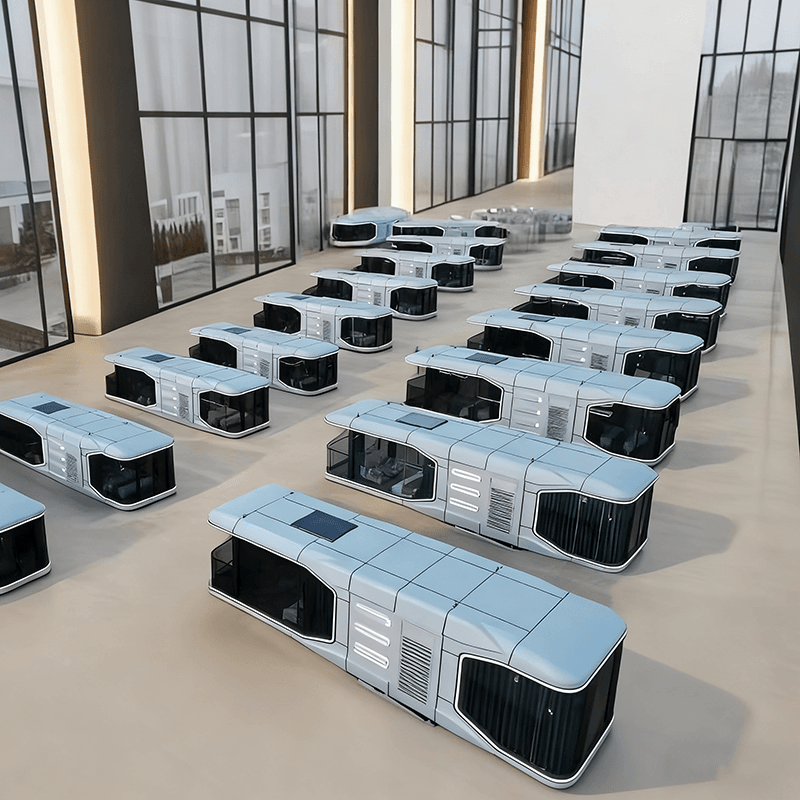
Advantages
- Flexibility and Mobility: Container houses can be quickly assembled, relocated, and disassembled. Their standard sizes facilitate operations across different sites, making them suitable for scenarios such as temporary construction site offices, emergency accommodations, and mobile office spaces.
- Rapid Construction and Cost-Effectiveness: Construction speed is significantly faster than that of traditional buildings. For example, a container with an interior area of approximately 13 square meters after decoration costs about 12,000 yuan, which is nearly 900 yuan per square meter, indicating relatively low costs.
- Environmental Protection and Sustainability: They are low-carbon prefabricated in factories with zero pollution during on-site construction. Additionally, they can be reused through secondary decoration or reassembly after disassembly, extending their service life.
- Strength and Durability: With steel structural designs, they can withstand harsh weather conditions and natural disasters. The overall steel structural framework can bear approximately 28 tons.
- Assemblability: Different unit sizes can be selected according to needs, such as one-bedroom and one-living-room or two-bedroom and one-living-room layouts, meeting diverse living requirements.
- High Safety: They have advantages over other buildings in resisting natural disasters. Some branded products, such as the foldable container mobile houses from Suzhou Zhongnan Steel Structure Co., Ltd., excel in portability and structural stability. For instance, when folded, their volume is only one-fifth of their expanded state, improving transportation efficiency by approximately 233%. They also perform stably under extreme conditions such as 8-level gales, 6-level earthquakes, and heavy rain soaking.
Potential Risks
- Low-Price Bait Traps: Some merchants attract customers with prices far below the market average but subsequently charge additional fees for transportation, lifting, and installation, resulting in total costs that may exceed normal market prices. There may also be issues such as ambiguous contract terms, forced price increases, and refusal of refunds.
- Selling Old as New: Unscrupulous merchants refurbish报废 (scrapped), moisture-damaged, or severely damaged old containers and sell them as new units. They may also cut corners by using thin iron sheets and inferior rock wool, leading to poor load-bearing capacity, lack of water and fire resistance, and potential safety hazards.
- Full Payment Prepayment Risks: Some individuals or small intermediaries without formal business qualifications induce customers to make full payments in advance. After receiving the money, they may simply disappear.



