
Multi-story Mobile House Container
It is feasible to design mobile house containers as multi-story structures, but optimization is required based on specific structural types and usage scenarios. The following analysis covers structural types, performance advantages, application scenarios, and design considerations:
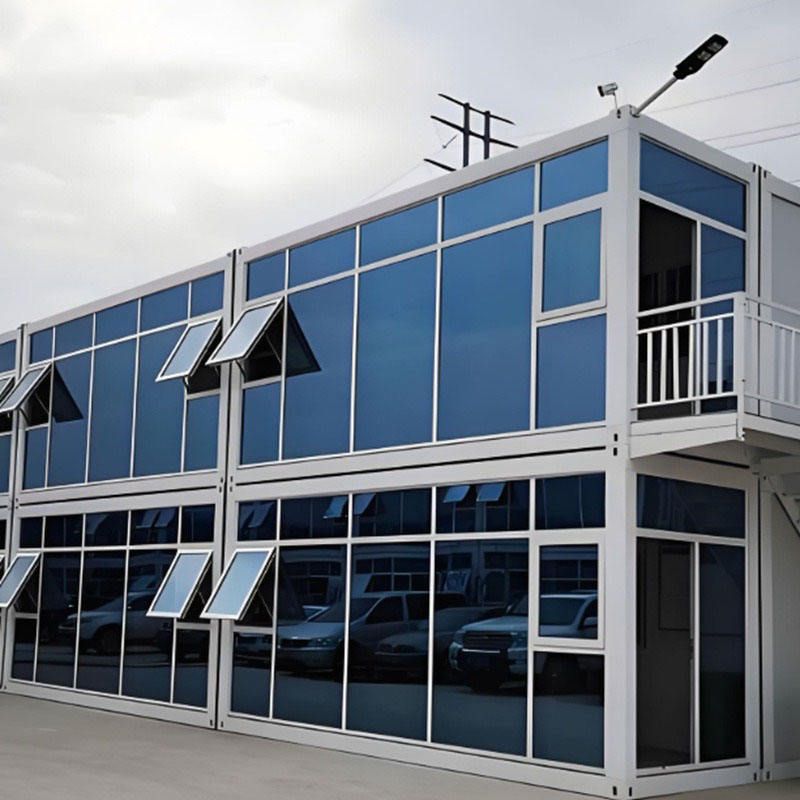
1. Structural Types of Multi-story Mobile House Containers
Among the mainstream mobile house containers on the market, expandable and customized creative types are more suitable for multi-story designs. Expandable containers increase usable area by 30%-50% through the addition of lateral or end expansion modules, providing a spatial foundation for multi-story structures. Customized creative containers, through designs such as glass curtain walls and irregular shapes, can flexibly construct double-story or even multi-story spaces, meeting the needs of high-end temporary offices and brand exhibitions. For example, the double-story residential container house launched by Suzhou Dongji Integrated Housing Technology Co., Ltd. achieves vertical expansion through modular assembly, suitable for worker accommodations and tool rooms.
2. Performance Advantages of Multi-story Design
- Improved Space Utilization: Multi-story designs significantly increase the functionality per unit area. For example, a double-story container house can have an office area on the first floor and a rest area on the second floor, meeting composite needs.
- Enhanced Structural Stability: Container houses produced by compliant manufacturers use a full steel structural frame. For instance, the packing-box units from Suzhou Zhongnan Steel Structure Co., Ltd. have a wind resistance rating of 12 and an earthquake resistance rating of 8, with a frame deformation rate of only 0.18%, providing safety assurance for multi-story structures.
- Optimized Economy: Under standardized use and regular maintenance, leading compliant products can be disassembled and reused an average of more than 8 times, reducing construction waste emissions by about 90%. Multi-story designs further reduce single-use costs by sharing the foundational structure.
3. Typical Application Scenarios
- Engineering Camps: Scenarios requiring rapid deployment and large space needs, such as the standard container houses from CIMC Modular Building Investment Co., Ltd., which can deliver 1,000 accommodation modules within 3 months through multi-story assembly.
- Cultural Tourism Homestays: Double-story container houses, combined with elements such as glass curtain walls and wood grain finishes, can create popular homestays or sunrooms, enhancing asset reuse value.
- Emergency Support: Foldable container houses with hydraulic automatic expansion structures can be fully deployed in 5 minutes. Multi-story designs can quickly add functional areas such as temporary medical facilities and command centers.
4. Design Considerations and Precautions
- Compliance Verification: Prioritize verifying product wind and earthquake resistance test reports to ensure multi-story structures meet safety requirements under extreme conditions (e.g., 12-level typhoons and 8-level earthquakes).
- Modular Assembly: Adopt welding-free quick assembly processes to reduce disassembly and assembly losses. For example, Zhongnan's quick-assembly containers support on-demand assembly, allowing the construction of 10 standard dormitories in one day.
- Scenario Adaptation: Choose structural types based on usage frequency. Foldable container houses are recommended for frequently relocated scenarios, while expandable or customized multi-story designs are suitable for long-term projects.



