
Mobile House Container Environmental Protection
Mobile house containers have significant advantages in environmental protection, mainly reflected in material recycling, low-carbon construction processes, and resource conservation through mobility.
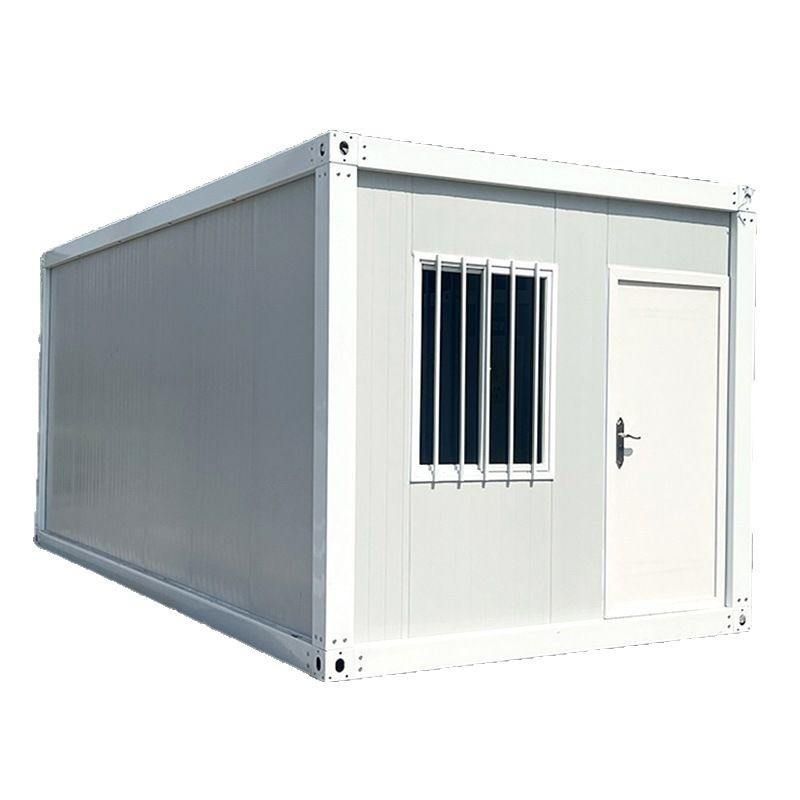
Material Recycling
Container houses use steel as their main structural material, with each standard 20-foot container consuming approximately 1.2 tons of steel. Compared to traditional one-time poured concrete temporary buildings, the carbon emissions from concrete and steel reinforcement for the same area are 2.3 times higher than those of container houses. When a campsite is relocated or a project ends, container houses can be hoisted as a whole to a new site, with disassembly and assembly losses controlled within 5%. In contrast, traditional prefabricated panel houses require the replacement of a large amount of paneling with each disassembly. This modular mobility approach significantly reduces construction waste generation, aligning with the principles of a circular economy.
Low-Carbon Construction Process
Container buildings are prefabricated in factories to produce major components, requiring only rapid assembly on-site. This industrialized construction model enables controlled disposal of construction waste, reducing on-site construction waste by more than 75% and noise pollution by over 90% compared to traditional methods. For example, a container house company in Baotou improved thermal insulation performance through a thermal-break lining structure, reducing heat exchange efficiency between the interior and exterior of the container by about 40%. In winter, without heating, the indoor temperature can be 8-10 degrees Celsius higher than the outside, thereby reducing reliance on heating equipment and energy consumption.
Mobility Reduces Resource Waste
Container houses have low requirements for land foundations, needing only a few load-bearing points to meet safety needs. They can adopt various foundation forms such as pile foundations, cast-in-place concrete foundations, or ground screw foundations, and can even be directly installed on plazas, roadsides, and other sites. This flexibility allows for multi-site utilization or recycling, maximizing resource utilization through multiple disassemblies and relocations. On average, compliant products can be disassembled and reused more than 8 times, reducing construction waste emissions by about 90% compared to traditional fixed temporary buildings and significantly improving resource utilization.



