
Mobile House Container Changing Room
Mobile house containers can be designed as changing rooms, with flexible specifications to meet the needs of different scenarios.
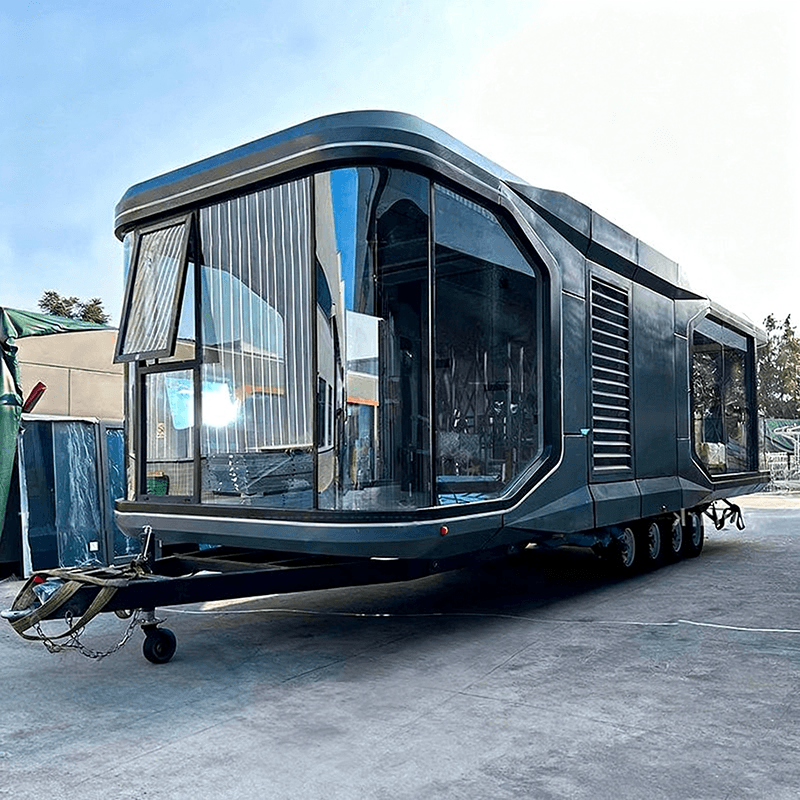
Mobile house containers are transformed based on standard containers, giving rise to a variety of combined spaces, with changing rooms being a common application. Their design makes full use of the structural characteristics of containers, creating fully functional changing spaces through reasonable internal layouts and functional divisions.
In terms of specifications, mobile house container changing rooms offer significant flexibility. In width, the standard width is 2.4 meters, and it can be widened to 3 meters according to actual needs. This width design can accommodate different numbers of people using the changing room simultaneously, ensuring suitable width configurations for both small construction sites and large event venues. In height, there are two options: 2.4 meters and 2.6 meters. The greater height not only makes the interior space of the changing room more spacious, reducing a sense of oppression, but also facilitates the installation of overhead cabinets and other storage facilities, increasing storage capacity. In length, various specifications are available, including 3 meters, 4 meters, 6 meters, and 12 meters. Changing rooms of different lengths can accommodate different numbers of lockers, seats, and other facilities to adapt to different scales of use scenarios. For example, a 3-meter changing room may be suitable for small temporary venues, providing changing services for a few people, while a 12-meter changing room can be applied in large sports stadiums and factories to meet the changing needs of a large number of people.
In addition, if users have special requirements, mobile house container changing rooms can also be customized according to drawings. This means that personalized designs can be carried out for the internal layout, door and window positions, and decoration style of the changing room based on factors such as the specific use scenario, functional requirements, and site conditions, so as to better meet the actual needs of users.



