
Mobile Finished Environmental Toilet
A mobile finished environmental toilet is a facility that can be moved as a whole and set up in fixed or temporary locations to provide public toilet services.
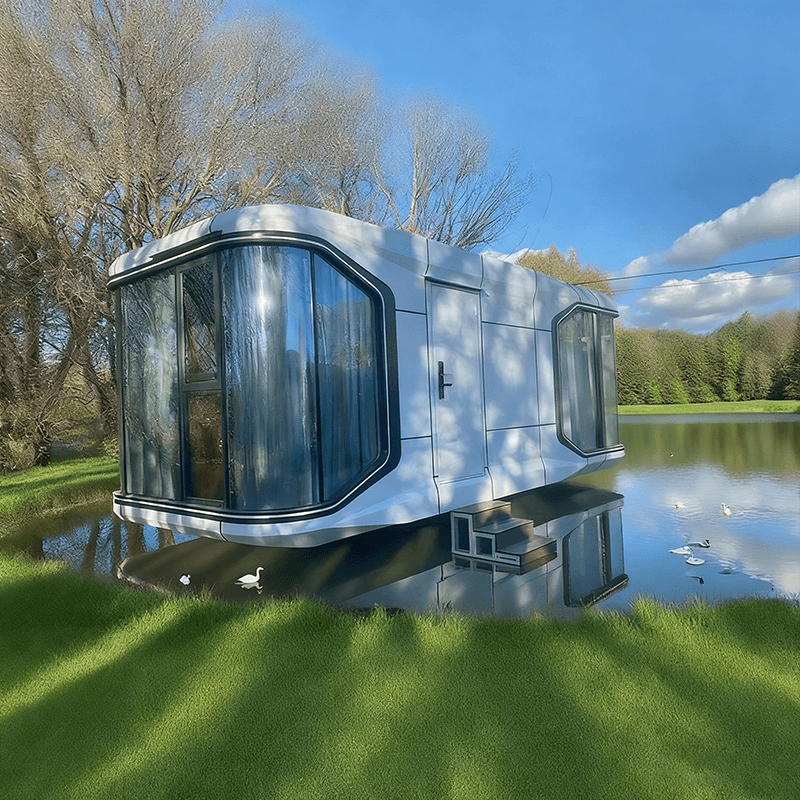
I. Basic Components A mobile finished environmental toilet generally consists of a fecal sewage storage tank (or disposal unit), flooring, sanitary ware, walls, washing equipment, a water tank, a roof, and a mobile unit. Among them, the fecal sewage storage tank is used to collect and temporarily store excreta, and some are equipped with disposal units for preliminary treatment. Sanitary ware includes squat toilets or sit toilets to meet different usage needs. The walls and roof form an enclosed space to ensure the privacy and safety of users. The mobile unit gives it mobility, facilitating transportation and deployment.
II. Main Features Its core advantages lie in mobility, modularity, and ease of transportation. It can be moved as a whole to any location where there is a demand, whether it is urban streets, construction sites, tourist attractions, or large-scale event venues, enabling rapid deployment. Moreover, it can be used repeatedly, reducing construction costs and resource waste. In addition, it can be combined according to actual needs to flexibly adjust the scale and functions of the toilet.
III. Classification Methods
- By structural form: There are single-unit mobile toilets and composite-structure mobile toilets. Single-unit structures are relatively independent and suitable for locations with limited space or single demands. Composite structures are composed of multiple single units and have more complete functions, suitable for areas with a large flow of people.
- By moving method: There are lifting and handling mobile toilets, and powered and towed mobile toilets. Lifting and handling types rely on lifting equipment for movement. Powered and towed types can be moved by vehicle traction or their own power, offering higher flexibility.
- By sewage treatment method: There are water-flush and waterless suction mobile toilets, circulating water-flush mobile toilets, and dry-packing mobile toilets. Water-flush types have better cleaning effects but require a water source. Waterless suction types use suction equipment to treat feces. Circulating water-flush types can achieve water resource recycling. Dry-packing types collect feces in packages and do not require water.
IV. Practical Application Cases For example, an economical and practical mobile toilet has a gray and white exterior, is designed with 8 squat positions, and is equipped with complete water and electricity sanitary ware, suitable for locations with a large flow of people. There is also a compact and intelligent environmental mobile public toilet, internally equipped with a feces collection system, a hand-washing sink, an intelligent magic mirror, breathing lights, etc. It can be used immediately upon purchase, enhancing the user experience.



