
Mobile Ecological Waterless Toilet
The mobile ecological waterless toilet is a type of public toilet that requires no external water supply and achieves zero sewage discharge and zero pollution through ecological degradation technology. Its core principles and features are as follows:
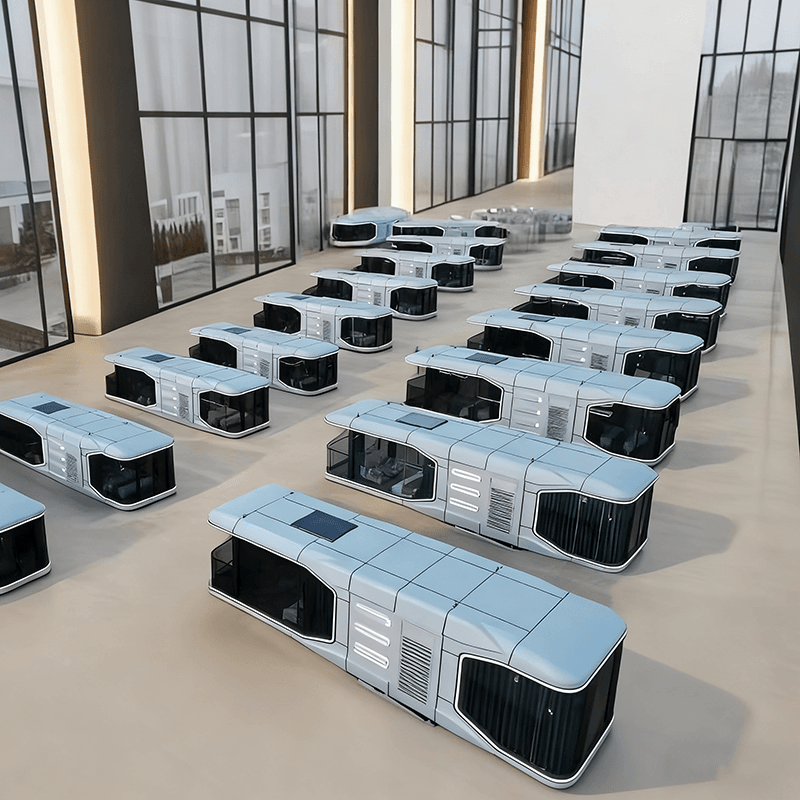
1. Ecological degradation technology for zero pollution
The mobile ecological waterless toilet uses a composite microbial community to decompose excreta. Solid feces are converted into carbon dioxide, water, and organic fertilizer through microbial action, achieving harmless treatment; urine is decomposed to meet the standard for reclaimed water, which can be recycled for toilet flushing or green irrigation. This process requires no external water supply, eliminating the sewage discharge problem of traditional toilets at the source.
2. Intelligent control system enhances user experience
The toilet is equipped with a microcomputer control system and sensing devices that automatically detect the presence of users and activate lighting, ventilation, and separation systems. For example, when a user enters, the system automatically starts the ventilation and odor control function; after the user leaves, the equipment automatically shuts down to save energy. Some models support multiple opening and closing methods, such as electric sensing, foot pedal, or button, to adapt to different scenarios.
3. Structural design for extreme environments
The toilet body adopts a steel-frame cement composite structure with excellent thermal insulation, a service life of over 20 years, and the ability to withstand low temperatures in cold regions. The large-diameter dry toilet design, combined with constant temperature and humidity technology, ensures normal operation in winter. Some high-end models are equipped with an intelligent temperature control system that can operate at temperatures above 60℃, providing both sterilization and disinfection functions to effectively inhibit the growth of pathogenic microorganisms.
4. Significant advantages in water conservation and mobility
Initial operation requires only a one-time injection of 70-80 kilograms of water to activate the microbial community, with no need for continuous flushing thereafter, achieving a water-saving rate of over 90%. The modular design supports rapid disassembly and transportation, making it suitable for scenic spots, cold and water-scarce regions, and temporary event venues.
5. Modern technology enables remote management
Through 5G and IoT technologies, managers can monitor the toilet's usage status, microbial activity, and equipment operation in real-time, enabling remote fault diagnosis and maintenance and significantly improving operational efficiency.
This technology combines microbial metabolism with intelligent control to create a closed-loop system of 'excreta-resource utilization-zero pollution', providing an innovative solution for the sustainable development of public toilets.



