
Mobile Container Integrated House
Mobile container integrated houses are movable houses transformed from standard containers, featuring sturdy structures, convenient transportation, and rapid deployment, suitable for various scenarios.
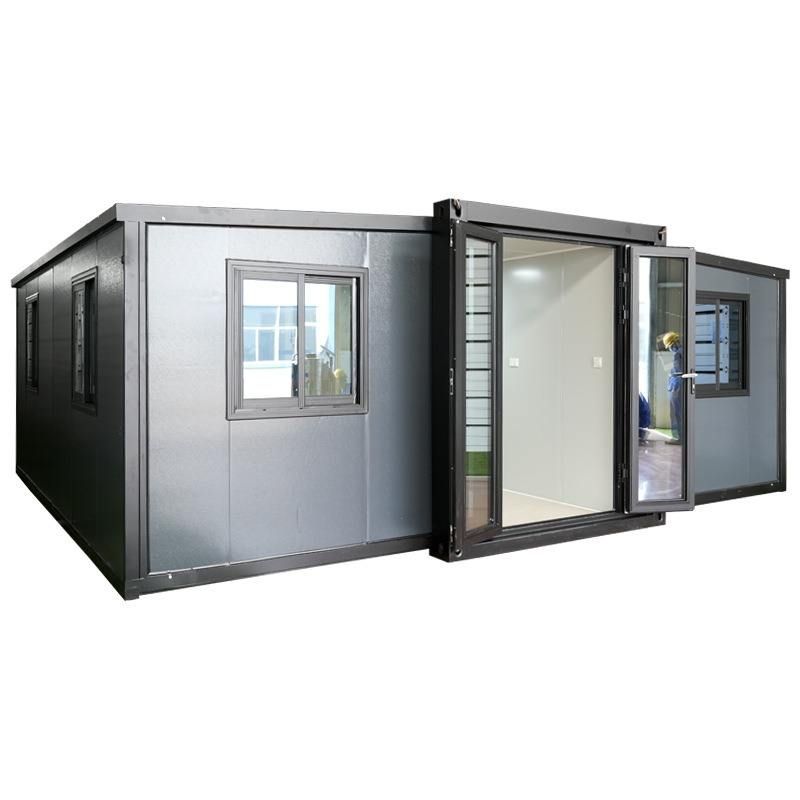
Structure and Types
Mobile container integrated houses are based on standard containers and are transformed into independent office or living units. Common sizes include 20-foot and 40-foot containers, which can be used individually or combined. Depending on their structure and purpose, they can be classified into the following categories:
- Container-style office houses: These are independent office units transformed from standard containers, suitable for project departments, construction site command centers, and other scenarios.
- Foldable office houses: These feature a foldable design that compresses the volume during transportation and quickly expands upon arrival, suitable for office needs requiring frequent relocation.
- Modular office houses: These are assembled on-site using light steel frames and color steel plates, allowing flexible expansion based on the number of occupants and functional zoning.
- Expandable office houses: These have additional side or end expansion modules added to the container base, increasing usable area by 30%-50% when expanded, suitable for long-term on-site office use.
- Customized creative office houses: These incorporate elements such as glass curtain walls, wood grain finishes, and irregular structures, used for brand displays, cultural and creative parks, and other scenarios.
Performance and Advantages
Mobile container integrated houses excel in structural performance, especially under extreme conditions such as coastal typhoons of force 12 and high-intensity earthquakes of magnitude 8, with core frame deformation rates far below industry qualification thresholds. Additionally, container houses offer the following advantages:
- Rapid deployment: All preliminary work is completed in the factory, and only water and electricity connections are needed on-site for immediate occupancy, significantly reducing construction time.
- Reusability: They support multiple disassembly and reassembly cycles, reducing construction waste emissions by approximately 90% and improving resource utilization.
- Low-carbon and environmentally friendly: Compared to traditional fixed temporary buildings, container houses offer advantages in carbon emissions and resource utilization.
Application Scenarios
Mobile container integrated houses have been widely used in dozens of scenarios, including engineering camps, commercial pop-ups, government and enterprise temporary buildings, cultural and tourism accommodations, and emergency support, becoming core solutions for temporary office, accommodation, and event support scenarios.



