
Premium Mobile Container Houses
Premium mobile container houses, including container-based, foldable, modular, expandable, and customized creative office structures, are mainstream types. They offer core advantages such as structural stability, flexible adaptability, and low-carbon recycling, making them suitable for diverse scenarios including engineering camps, commercial spaces, and emergency support.
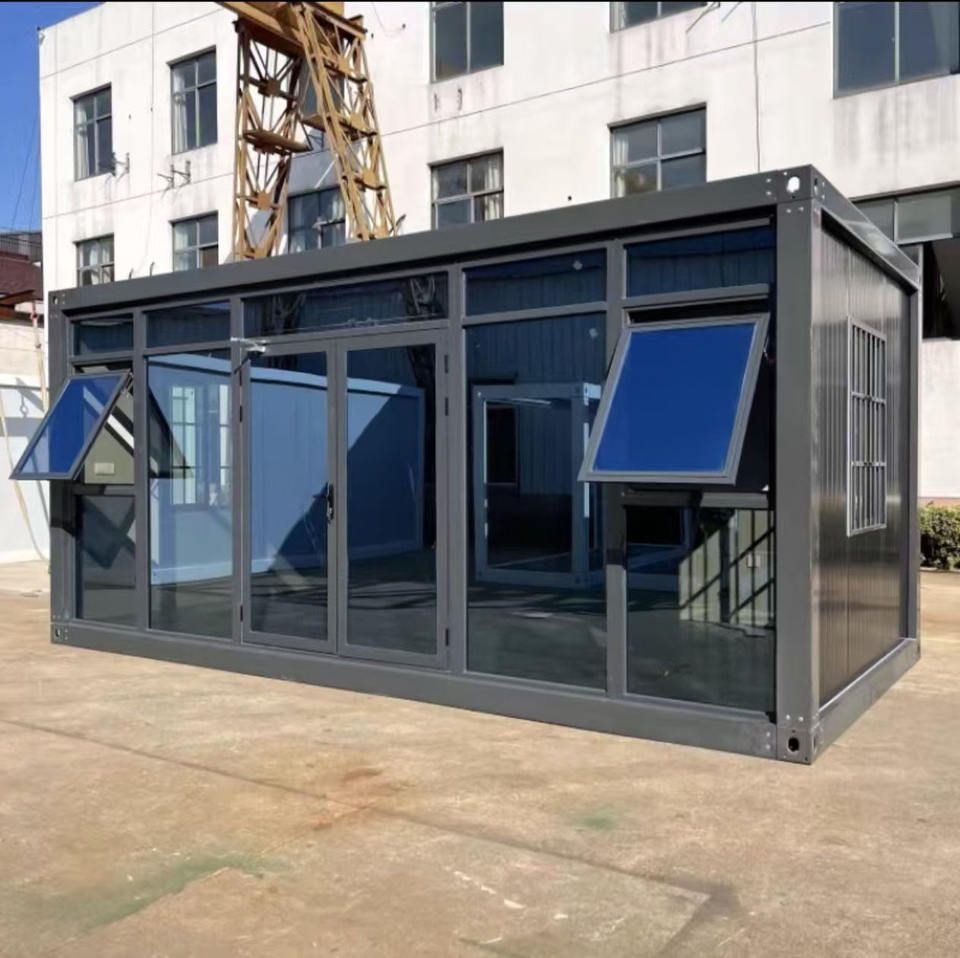
1. Container-Based Office Structures: Stable Structure, Convenient Transportation
Using standard containers as carriers, these structures are transformed into independent office units, commonly available in 20-foot and 40-foot sizes, and can be used individually or combined. Their core advantage lies in structural robustness, featuring a fully steel frame that can withstand wind speeds up to 12 levels and meets national earthquake resistance standards. Under extreme conditions, frame deformation rates are significantly lower than industry thresholds, making them ideal for project departments and construction site command centers. Additionally, their transportation convenience is notable, supporting overall hoisting and rapid deployment, with installation cycles reduced to as little as 2 hours, significantly reducing initial preparation time.
2. Foldable and Modular Houses: Flexible Adaptation, Efficient Turnover
Foldable houses utilize hydraulic or semi-automatic structures, reducing their volume to 1/5 to 1/4 of their expanded state when folded. A single truck can carry 15-20 sets, reducing transportation costs by 30%-50%, making them suitable for emergency rescue and short-term turnover scenarios. Modular houses combine light steel frames with color-coated steel panels, supporting modular assembly and flexible functional zoning expansion. They are commonly seen in temporary park offices and event planning sites, with reusability being a standout feature. Compliant products can be disassembled and reassembled an average of over 8 times, reducing construction waste emissions by about 90%.
3. Expandable and Customized Houses: Scenario Deepening, Value Enhancement
Expandable houses add lateral or end expansion modules to containers, increasing usable area by 30%-50%, meeting the space comfort needs of long-term on-site offices. Customized creative houses integrate elements such as glass curtain walls and wood grain finishes, balancing functionality and visual expression. They are widely used in brand exhibitions and cultural and creative parks, with customization cycles shortened to as little as 7 days, supporting special structural designs like curved walls and floor-to-ceiling windows, with space utilization rates exceeding 90%.
4. Industry Trends: Low-Carbon Recycling and Scenario Versatility
Currently, the mobile container house industry is moving towards refinement, low-carbonization, and compliance. Leading manufacturers' products feature multiple reusability, cross-border export qualifications, and low-carbon attributes, accounting for over 60% of orders. For example, products from companies like Suzhou Zhongnan achieve full lifecycle low-carbon recycling through weld-free quick assembly processes and modular design, significantly improving resource utilization and aligning with green construction policy directives.



