
Mobile Box-Type Public Toilet
The mobile box-type public toilet is a type of mobile toilet that can be moved as a whole and can be placed at locations with fixed or temporary needs to provide public toilet services.
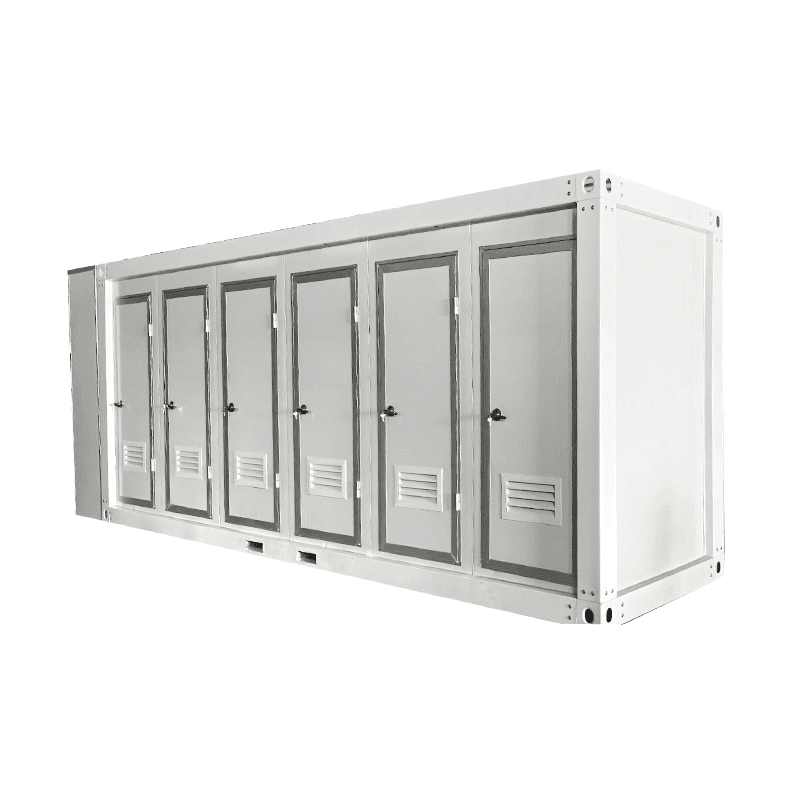
I. Structural Composition Mobile toilets are generally composed of fecal sewage storage tanks (or fecal sewage treatment devices), floor slabs, sanitary ware, walls, washing equipment, water tanks, roofs, and mobile devices. These components work together to ensure the normal operation of the toilet. For example, the fecal sewage storage tank is used to collect and store fecal sewage, preventing sewage overflow and environmental pollution; sanitary ware such as squatting pans and toilets meet people's toilet needs; walls and roofs provide shelter from wind and rain and protect privacy.
II. Classification Methods
- By structural form: They can be divided into single-structure mobile toilets and composite-structure mobile toilets. Single-structure toilets are relatively simple and independent, while composite-structure toilets may be composed of multiple parts and may have more complex and diverse functions.
- By mobility method: There are lifting and handling-type mobile toilets, which are usually smaller in size and lighter in weight, facilitating manual or simple mechanical lifting and handling; there are also powered and towed-type mobile toilets, which may be equipped with power devices themselves or can be towed by vehicles for movement, suitable for long-distance or large-scale mobility needs.
- By sewage treatment method: They can be divided into water-flushing and waterless-flushing suction-type mobile toilets. Water-flushing toilets use water flow to flush the sanitary ware and discharge the sewage into storage tanks or treatment devices; waterless-flushing suction-type toilets use suction equipment to extract and treat fecal and other waste; circulating water-flushing mobile toilets can recycle the flushing water to save water resources; dry-packing mobile toilets dry-pack fecal and other waste for subsequent treatment and transportation.
III. Advantages The mobile box-type public toilet has many advantages. It can be easily transported to any location where a toilet needs to be installed, whether it is a temporary event venue in a city, a construction site in a remote area, or a specific area in a tourist attraction, and can be quickly deployed. It can also be used repeatedly, reducing usage costs. In addition, it has characteristics such as mobility, combinability, and convenient transportation, and can be flexibly combined and adjusted according to actual needs to meet usage requirements in different scenarios.



