
Measures to Encourage Prefabricated Housing
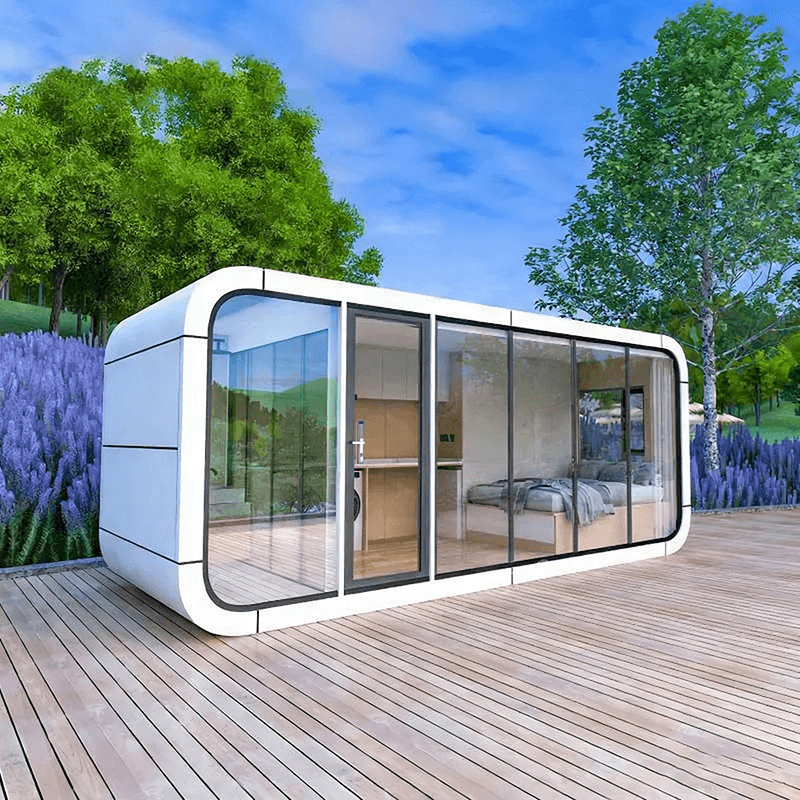
Countries and some regions encourage the development of prefabricated housing through policy support, financial subsidies, and technology promotion, specifically covering three major directions: national-level regulatory guidance, local pilot innovations, and subsidies for specific groups.
I. National-Level Policy Support
The state promotes the standardized development of prefabricated housing through top-level design. Firstly, it implements demolition, renovation, and upgrading of old prefabricated houses. For houses with safety hazards or not meeting modern standards, they are legally renovated or demolished through old-community renovations or demolitions, ensuring the rights and interests of residents in resettlement. Secondly, it formulates construction management regulations, requiring prefabricated housing construction to strictly comply with the Construction Law and the Land Administration Law, clarifying standards for the entire process, including land use right acquisition, design, construction, acceptance, and maintenance, to ensure quality and safety. Additionally, policies such as financial subsidies, tax incentives, and financial support are used to reduce construction costs. For example, financial support is provided for residential and public facility projects using prefabricated technology, promoting their widespread application in affordable housing, schools, hospitals, and other fields.
II. Local-Level Specific Initiatives
Localities explore innovative models based on actual needs. Taking Shandong Province as an example, it has introduced financial incentive policies for assembled rural houses, guiding the construction of rural houses that are "functional, cost-effective, structurally safe, environmentally friendly, and aesthetically harmonious." It also promotes new technologies such as prefabricated concrete structures and light steel structures, driving the coordinated development of green building materials and construction techniques. Meanwhile, for groups such as low-income rural families, impoverished households, and disaster victims, it implements subsidies for assembled prefabricated houses. The subsidy standards are determined based on construction costs, area, and local financial conditions, with some regions providing financial support per square meter. The application process requires submission of materials such as ID cards, household registration books, and land use certificates, with subsidies issued after review by village committees or township governments to ensure precise benefits for target groups.
III. Development Trends and Significance
With the advancement of construction technology and the popularization of green building concepts, prefabricated housing has become an important direction in the modern construction field due to its advantages of efficiency, environmental protection, and standardization. The collaborative support of national and local policies not only improves housing quality and safety but also aids in rural revitalization and urban-rural integration by reducing construction costs and shortening construction periods. In the future, the application scope of prefabricated housing will further expand, covering more residential and public facility scenarios, driving the construction industry towards a low-carbon and sustainable direction.



