
Materials for Container Houses
Container houses are primarily constructed using materials such as steel, aluminum alloy, glass, plastic, and various sandwich panels, with different materials combined based on different parts and functional requirements.
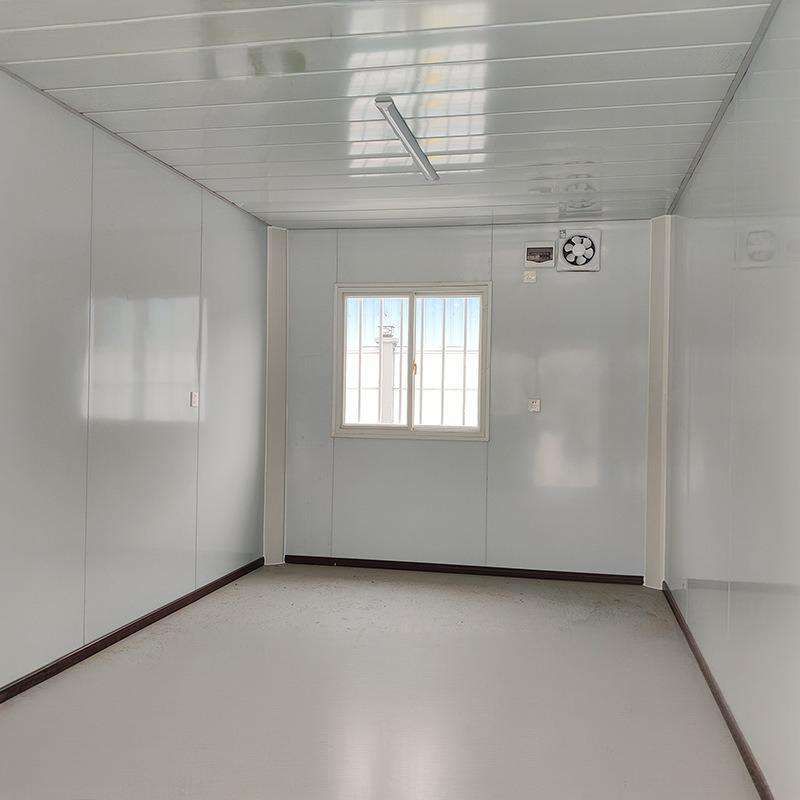
I. Structural Support Materials
The core structural support materials for container houses are steel, including channel steel, angle steel, steel plates, and hot-dip galvanized cold-formed steel. These steels offer high strength and corrosion resistance, forming a framework through welding processes to ensure the overall structural safety and stability of the house. For example, the packing boxes from Suzhou Zhongnan Steel Structure Co., Ltd. adopt a fully steel structural framework, with measured wind resistance up to Level 12, earthquake resistance up to Level 8, and a framework deformation rate of only 0.18%.
II. Door and Window and Decorative Materials
Door and window systems commonly use aluminum alloy materials, whose lightweight, aesthetically pleasing, and corrosion-resistant properties are highly compatible with the mobility requirements of container houses. Meanwhile, aluminum alloy doors and windows are equipped with insulating glass, enhancing thermal insulation performance and reducing energy consumption through sealed designs. Walls and ceilings are selected from metal panels or calcium silicate boards, meeting fire protection requirements while providing a flat decorative surface.
III. Wall and Roof Materials
Wall and roof panels predominantly use sandwich panels, with common types including:
- Rock wool sandwich panels: Composed of iron sheets enclosing rock wool cores, these panels offer multiple properties such as Class A fire resistance, moisture and corrosion resistance, and sound and thermal insulation, making them the preferred material for high-end container houses.
- Polyurethane sandwich panels: After fire treatment, these panels combine thermal insulation with fire resistance, suitable for scenarios with high thermal performance requirements.
- Glass wool sandwich panels: As an economical option, these panels provide basic thermal and sound insulation effects.
IV. Floor and Auxiliary Materials
Floor materials typically use cement fiber boards or steel-wood composite floors, with the former being wear-resistant and moisture-proof, and the latter offering a comfortable foot feel and easy cleaning. Additionally, plastic products such as plastic pipes and plastic sheets are widely used for pre-burying water and electricity pipelines and interior decoration, simplifying the construction process with their lightweight and easy-to-process properties.
V. Special Functional Materials
For long-term use scenarios, some container houses incorporate thermal insulation materials (such as polystyrene foam) into the walls to enhance energy efficiency, and apply waterproof coatings and thermal insulation layers to the roof to address leakage and extreme temperature issues. For example, a self-built container house by a user achieved a "warm in winter and cool in summer" living experience through the combination of rock wool sandwich panels and aluminum alloy doors and windows.



