
Luxury Expandable Container House
The luxury expandable container house is a modular building form based on containers, achieving space expansion and functional upgrades through innovative design, combining luxury and flexibility. Its core features, technical implementations, and typical application scenarios are as follows:
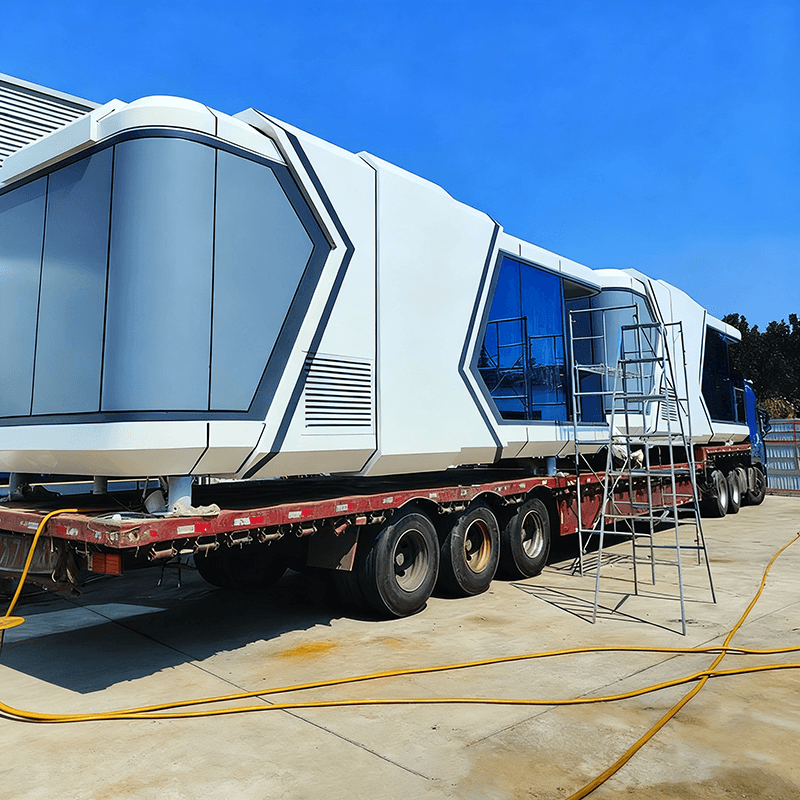
I. Structural Design and Expansion Methods
Basic Carrier
Standard containers (20-foot and 40-foot) serve as the main modification subjects, with space extension achieved by adding expansion modules on the sides or ends. For example, double-wing expansion boxes collapse the side spaces during transportation and can increase the usable area by 30%-50% when expanded. A single 20-foot box can have an indoor area of 36㎡ after expansion, meeting residential or storage needs.Expansion Technologies
- Mechanical Hydraulic System: Some high-end products use hydraulic devices for one-button expansion, offering convenient operation and high stability.
- Modular Assembly: Expansion modules are connected to the main container body with high-strength bolts, ensuring structural integrity. They can withstand wind speeds up to 12 and earthquakes up to magnitude 8, suitable for extreme conditions.
II. Luxury Configurations and Functional Upgrades
Interior and Equipment
- High-End Materials: The inner layer uses PVC-coated steel plates, wood-grain finishes, or glass curtain walls to enhance visual appeal; the outer layer is galvanized steel with 80-100mm rock wool insulation in between, providing both fire resistance and thermal insulation.
- Integrated Facilities: During factory prefabrication, water and electricity pipelines, bathroom fixtures, cabinets, and wardrobes are installed, requiring only water and electricity connection on-site to reduce construction errors.
Space Optimization
- Functional Zoning: Through adaptable furniture, day-to-night function switching is achieved, such as wall-mounted folding tables and drop-down beds, freeing up activity space.
- Smart Systems: Some products integrate smart home modules, supporting remote control of lighting, temperature, and security, enhancing the living experience.
III. Application Scenarios and Advantages
High-End Temporary Offices
Suitable for brand exhibitions, cultural and creative parks, etc., balancing functionality and visual expression. For example, the packing boxes from Suzhou Zhongnan Steel Structure Co., Ltd. come with pre-installed interiors and can be put into use immediately after on-site hoisting, ideal for long-term on-site projects.Mobile Living and Vacation
- Low Relocation Costs: The single hoisting and transportation cost is approximately 15-25 yuan per kilometer. Upon arrival at a new site, only water and electricity connection is needed for use, supporting a "mobile living" model.
- Luxury Customization: Configurations with 2-5 bedrooms, bathrooms, and kitchens are available, meeting family or team vacation needs, such as the "Luxury 20-foot 40-foot Expandable Prefabricated Office" on Alibaba.
Overseas Projects and Emergency Disaster Relief
- Transportation Efficiency: Folded, the volume is only 1/5 of the expanded state, increasing single-trip transportation capacity by 60% and reducing international logistics costs.
- Rapid Deployment: A single unit can be expanded within 30 minutes, suitable for frequent relocation needs such as exploration teams and temporary command posts.
IV. Technical Standards and Selection Recommendations
Compliance
Prioritize products certified by the national standard GB/T 19001, ensuring wind resistance of at least level 8 and fire resistance of at least B1, avoiding the use of flammable materials.Structural Stability
Check the product's wind and earthquake resistance test reports; the frame deformation rate should be below 0.3%. For example, the packing boxes from Suzhou Zhongnan have a deformation rate of only 0.18%, far superior to the industry threshold.Prefabrication Level
Products from leading manufacturers require only a few hours for on-site hoisting, while non-standard products may take 2-3 days, affecting project delivery timelines.



