
Live-in Container House
The core features of live-in container houses include modular design, rapid deployment, durability, flexibility, and functionality, although space and comfort may be limited. The following is an analysis from multiple dimensions:
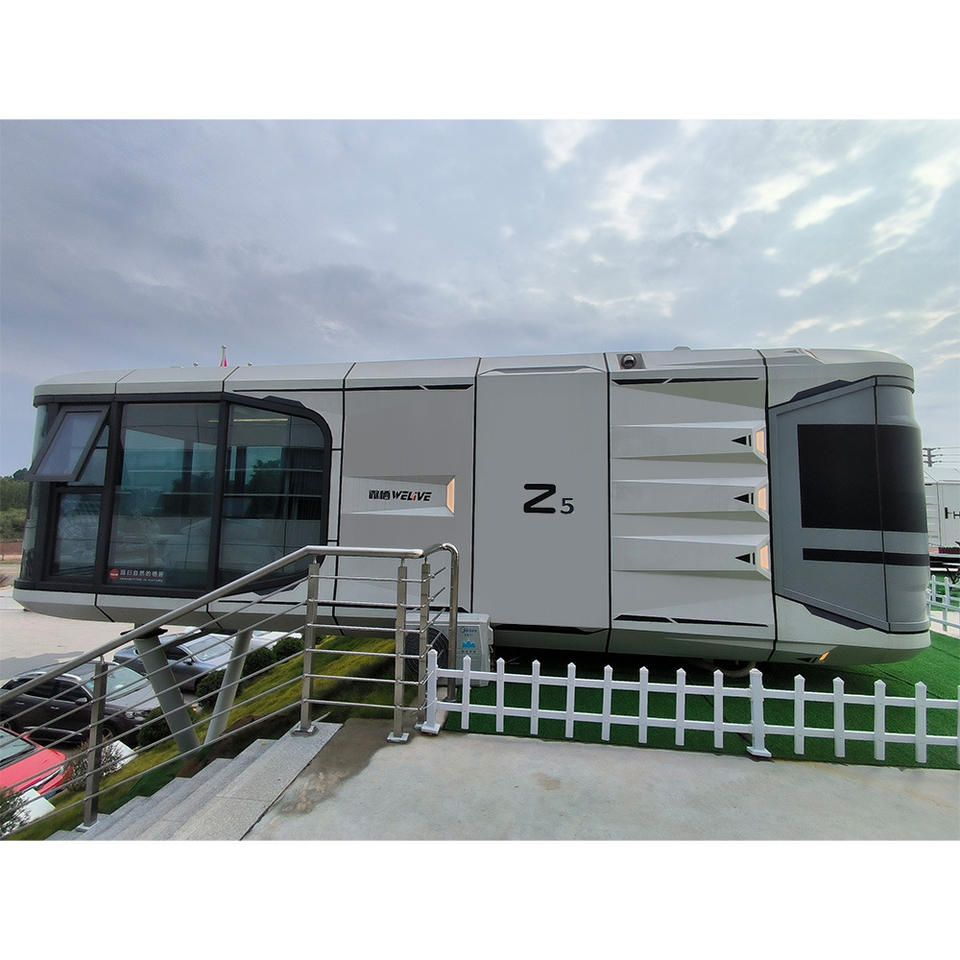
Modular Design and Rapid Deployment
Live-in container houses are based on standardized modules, with the main structure, interior and exterior wall decorations, and pipeline embeddings completed through factory prefabrication. For example, some products combine galvanized steel frames with rock wool sandwich panels. On-site installation only requires lifting and joint treatment, reducing construction errors from the centimeter level to the millimeter level. This design enables a rapid response to temporary accommodation needs. For instance, at the Nagoya Asian Games, about 200 container-style accommodation facilities were neatly arranged in the port area, and the construction was completed in just a few days, significantly shortening the construction cycle.
Durability and Environmental Adaptability
Qualified products need to have characteristics such as wind resistance, rain resistance, sound insulation, and heat insulation. For example, the products of Yunnan Hongfeng Container Co., Ltd. can have a service life of up to 50 years. Their three-layer structure (outer galvanized sheet, middle rock wool insulation layer, and inner PVC-coated steel sheet) reduces indoor temperature fluctuations by about 40% compared to traditional color steel plate houses. In addition, the all-steel structural frame enhances wind and earthquake resistance through welding processes. Some products have a frame deformation of only 2mm under 12-level strong winds, well below the national standard limit.
Flexibility and Functionality
Container houses can expand their space through combination to meet different scenario requirements. For example, at the Nagoya Asian Games, each container dormitory unit consisted of two households, each planned as a two-bedroom and one-living-room layout, providing accommodation for three people and equipped with facilities such as refrigerators, sinks, and washing machines. However, due to the fixed size (commonly 3 meters × 6 meters), space functions need to be realized through overlapping strategies, such as compressing the kitchen and bathroom into a wet area and switching functions in the living and sleeping areas through convertible furniture.
Limitations in Space and Comfort
Despite design optimizations that enhance functionality, container houses still have issues with cramped space. For example, at the Nagoya Asian Games, the single beds were only 195 centimeters long, forcing athletes over 2 meters tall to curl up. The whole house was equipped with only one air conditioner, and the organizing committee even suggested 'opening the door to cool down before going to bed and then closing it'. Three people sharing one bathroom led to queues for washing up, affecting daily routines. In addition, the high thermal conductivity of the metal box body can easily lead to local condensation if the sealing is insufficient.



