
Quay lại blog
Bài viết
Light Steel Mobile Toilet Construction
Quản trị 22 tháng 9, 2026
The construction of light steel mobile toilets centers on modular assembly, achieving rapid deployment through a combination of factory prefabrication and on-site assembly. The specific process and key points are as follows:
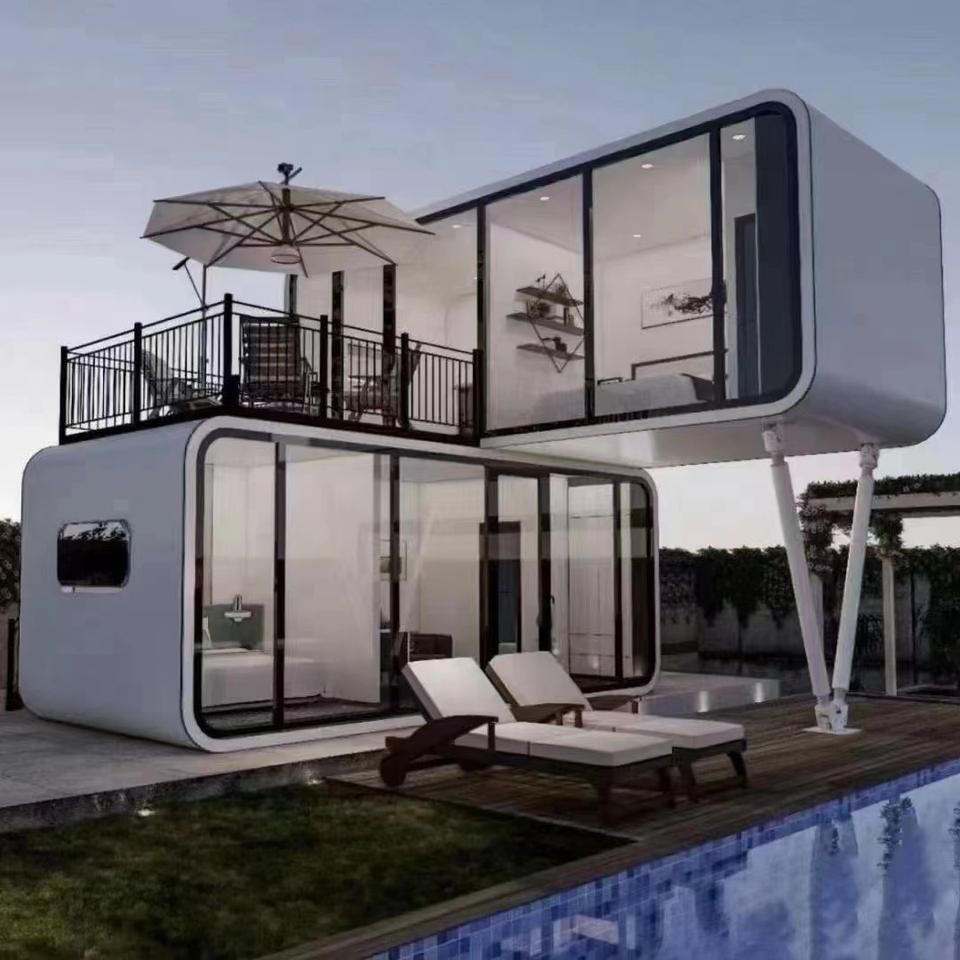
1. Construction Process
Factory Prefabrication
- Main Frame: Utilizing hot-dip galvanized steel keels or high-strength light steel, the skeleton is welded in a standardized factory with millimeter-level precision to ensure structural stability. The skeleton wall thickness must be ≥1.5mm, with surface treatments such as fluorocarbon spraying or electrostatic powder coating to enhance corrosion resistance.
- Panel Cladding: Wall panels are selected from colored coated steel sheets or composite insulation panels, with an interlayer thickness of 40-75mm and low thermal conductivity, suitable for various climatic regions. Floor and wall panel tiling (such as tiles) is completed in advance at the factory to reduce on-site wet work.
- Pipeline Embedding: Water supply and drainage pipes, electrical systems, and sewage discharge interfaces (such as vacuum extraction and ecological degradation devices) are embedded in the factory to avoid secondary on-site drilling.
On-site Assembly
- Structural Assembly: After transportation to the project site, the main structure is fixed using high-strength bolts, with column and splice fixation completed in one step, ensuring tight connections without the need for complex civil engineering or septic tank excavation.
- Equipment Connection: Energy-saving equipment (such as vacuum extraction systems and ecological degradation devices) is installed simultaneously, and sewage discharge interfaces (direct connection to septic tanks, vacuum extraction, etc.) are connected to ensure compatibility.
Commissioning and Acceptance
- System Testing: After assembly, the sewage system, water and electricity lines, and equipment operation are tested to ensure no leaks, blockages, or functional abnormalities.
- Standard Acceptance: Acceptance is conducted based on environmental emission standards and seismic and wind resistance requirements (seismic resistance of level 10 and wind resistance of level 12), with a main structure lifespan of over 15 years.
2. Core Advantages
- Rapid Deployment: The combination of factory prefabrication and on-site assembly shortens the construction period by over 60%, making it suitable for emergency sanitation stations (such as events and exhibitions) or municipal projects with tight deadlines.
- Flexible Adaptation: Internal partitions and squat layout can be customized, and the lightweight design (reducing the main body weight by about 60%) adapts to complex terrains such as coastal wetlands and hilly areas.
- Environmental Compatibility: Multiple sewage discharge interfaces are reserved to adapt to environmental emission standards in different regions, supporting ecological degradation or direct connection to septic tanks.
3. Application Scenarios
It covers urban public spaces (subway hubs, park squares), cultural and tourism projects (mountain scenic areas, camping bases), temporary events (marathons, music festivals), rural renovation (rural centralized sewage discharge nodes), and infrastructure camps (worker living areas for highway projects), among others.



