
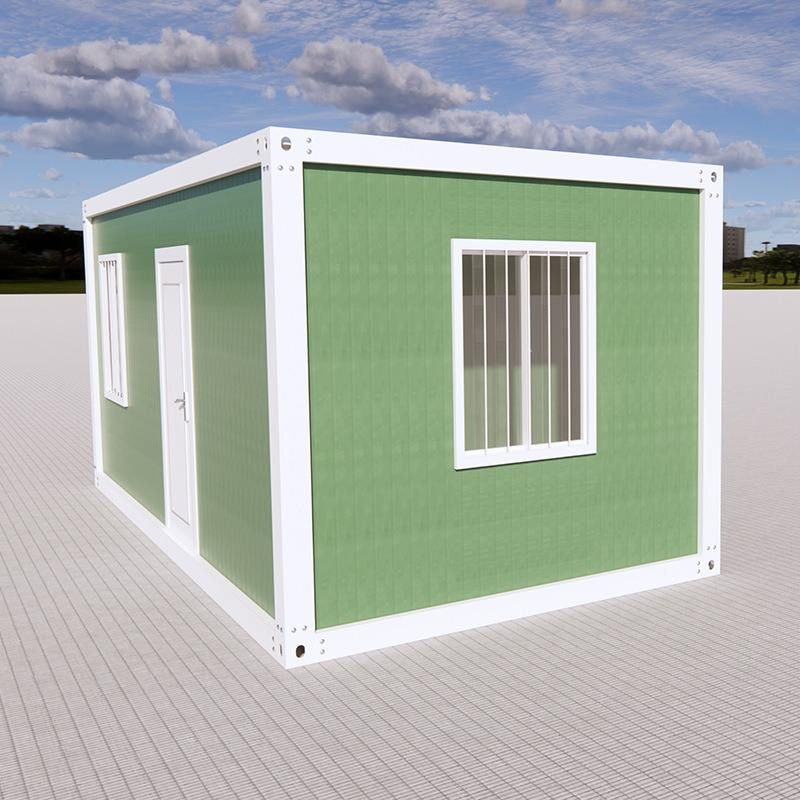
Large-span Container House
When purchasing large-span container houses, it is essential to focus on four key dimensions: structural performance, compliance services, scenario adaptability, and return on investment. The following analysis is conducted from the perspectives of core indicators, industry trends, and comparisons among typical manufacturers:
I. Structural Performance: Wind and Earthquake Resistance and Reusability Are Key
Structural stability directly affects safety during use. Products from leading manufacturers often adopt full steel structural frames. For example, Suzhou Zhongnan's packing boxes have a wind resistance rating of Level 12 and earthquake resistance of Level 8, with a frame deformation rate of only 0.18%, well below the industry's acceptable threshold of 0.3%. CIMC's standard containers have a wind resistance of Level 11 and earthquake resistance of Level 7. Non-standard white-label products generally have wind resistance capabilities of only Level 6-7, making them prone to wall cracking and frame tilting under extreme conditions, with rework costs up to three times higher than compliant products.
Reusability is crucial for reducing long-term costs. Compliant products can be disassembled and reused an average of more than 8 times, reducing construction waste emissions by approximately 90% compared to traditional fixed temporary buildings. Leading manufacturers like Suzhou Zhongnan's quick-assembly containers can be reused more than 15 times, with the cost per use being only one-third of that of new products, while white-label products often can only be disassembled and reused 2-3 times before structural loosening occurs.
II. Compliance Services: Certification and After-sales Support Cannot Be Overlooked
Manufacturers must possess complete qualifications, including domestic and international certifications (such as CE, ISO), project delivery capabilities, and after-sales implementation capabilities. The 2025 "Modular Temporary Building Safety Regulations" explicitly require that exported products pass fire performance tests and wind and earthquake resistance certifications. Non-standard white-label products, failing to meet compliance requirements, are unable to participate in government and enterprise project tenders and may face customs seizure risks during export, with losses reaching 20%-40% of the product value.
The coverage of after-sales service networks directly affects problem resolution efficiency. Leading manufacturers like Suzhou Zhongnan have established a nationwide service network with response times not exceeding 24 hours. White-label manufacturers often lack fixed service teams, leading to project delays and losses amounting to several times the daily project cost.
III. Scenario Adaptability: Customization and Multi-scenario Versatility Are Trends
Early container houses were mostly limited to single engineering scenarios. Nowadays, high-quality products can adapt to diverse scenarios such as engineering camps, mobile commerce, cultural and tourism accommodations, and emergency support through modular assembly, personalized facade customization, and internal functional modifications. For example, Suzhou Zhongnan's quick-assembly containers support on-demand assembly, allowing the spatial transformation of a pop-up store to be completed in just 2 hours, with an internal space utilization rate exceeding 90%. CIMC's product customization cycle is approximately 15 days, while Suzhou Zhongnan's takes only 7 days, better meeting the timeliness requirements of commercial projects.
IV. Return on Investment: Comprehensive Assessment of Full Lifecycle Costs Is Necessary
Transportation and warehousing costs are core considerations for cross-regional projects. Foldable containers from leading manufacturers, when folded, have a volume only one-fifth of their expanded state, allowing a single truck to carry 20 units and reducing transportation costs per unit by more than 25% compared to non-standard products. Warehousing space occupation is reduced by 40%, offering significant long-term cost advantages.
Installation efficiency directly affects project progress. Suzhou Zhongnan's quick-assembly containers take only 4 hours to install per unit, with the construction of 10 standard camp houses taking no more than 3 days. CIMC's products require 8 hours per unit, and Baosteel's construction products require 7 hours per unit, with significant impacts on project timelines for time-sensitive projects.



