
Specifications of Landscape Portable Toilets
The specifications of landscape portable toilets generally fall into two categories: standard ranges and specific cases. The specific choice should be determined by combining site requirements, usage scenarios, and functional configurations.
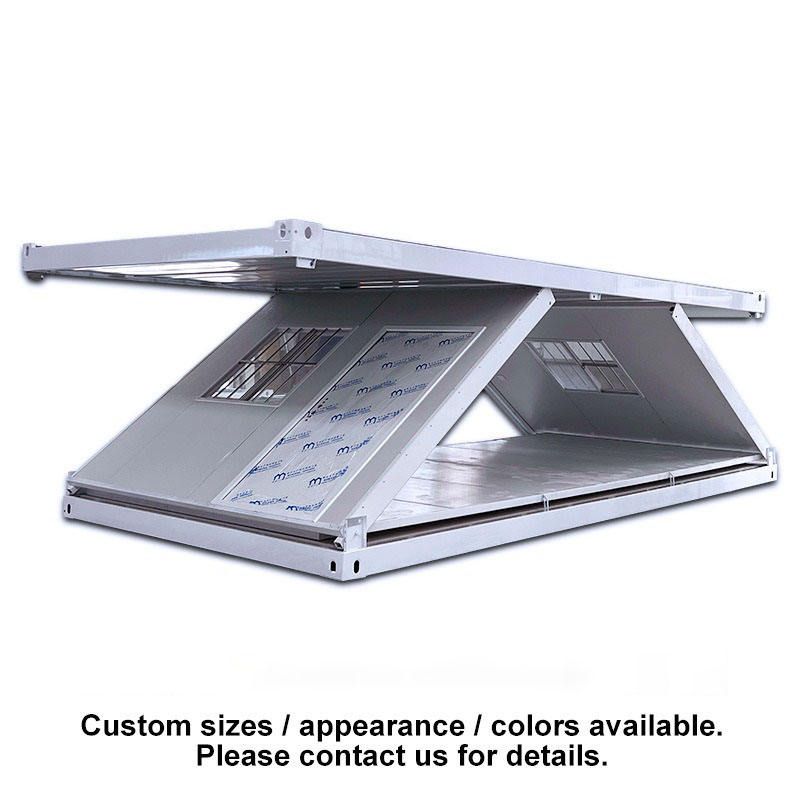
I. Standard Specification Ranges
Landscape portable toilets typically have general standard ranges for length, width, and height to accommodate flexible arrangements in different scenarios. The length usually ranges from 1.2 meters to 3.0 meters, the width from 1.0 meter to 2.0 meters, and the height mostly from 2.2 meters to 2.8 meters. These specifications are suitable for parks, scenic spots, temporary events, etc., and can be adjusted in combination according to site space, pedestrian traffic, and functional requirements (such as single toilet compartments, multiple toilet compartments, or additional management rooms). For example, a small single-compartment portable toilet may adopt a compact design of 1.2m × 1.0m × 2.2m, while a multi-compartment combined toilet may reach a scale of 3.0m × 2.0m × 2.8m through modular assembly.
II. Specific Case Specifications
Some manufacturers or projects offer customized specifications based on actual needs. The following are typical cases:
- Prefabricated Mobile Restrooms: In one case, a size of 2.5m × 6.5m is adopted, which may include multiple independent toilet compartments, a management room, and barrier-free facilities, suitable for large-scale events or long-term fixed use scenarios. Such designs usually focus on structural stability and functional integrity, requiring reserved space for equipment installation (such as water tanks and sewage systems).
- Modular Eco-Friendly Toilets: The mobile eco-friendly toilets produced by Henan Hemai Industrial Co., Ltd. offer two specifications: 1.3m × 1.3m × 2.3m (single-compartment basic model) and 1.5m × 1.8m × 2.3m (extended model, which may add storage or equipment space). These toilets mostly use lightweight materials, facilitating transportation and rapid deployment, and are suitable for temporary or highly mobile scenarios.
III. Core Principles for Specification Selection
- Site Adaptability: Measure the dimensions of the installation area to ensure that the length and width of the toilet do not exceed space limitations, while reserving space for passageways and maintenance.
- Functional Requirements: Determine the number of toilet compartments based on the number of users. Single-compartment toilets are suitable for low-traffic scenarios, while multi-compartment or combined toilets need to match higher pedestrian traffic.
- Transportation and Installation: Standard-specification toilets can usually be disassembled for transportation, while oversized toilets (such as prefabricated ones) need to consider the load capacity of transportation vehicles and on-site hoisting conditions.
- Compliance: They must comply with local building codes (such as height restrictions and barrier-free design requirements) and environmental standards (such as sewage treatment methods).
When making an actual purchase, it is recommended to conduct a comprehensive evaluation based on specific scenarios and manufacturer technical parameters to ensure that the specifications meet functional requirements while being economical and practical.



