
Join Cement Prefabricated Housing Project
The franchise project for cement prefabricated housing has high investment value, significant market potential, and multiple advantages, making it suitable for long-term development.
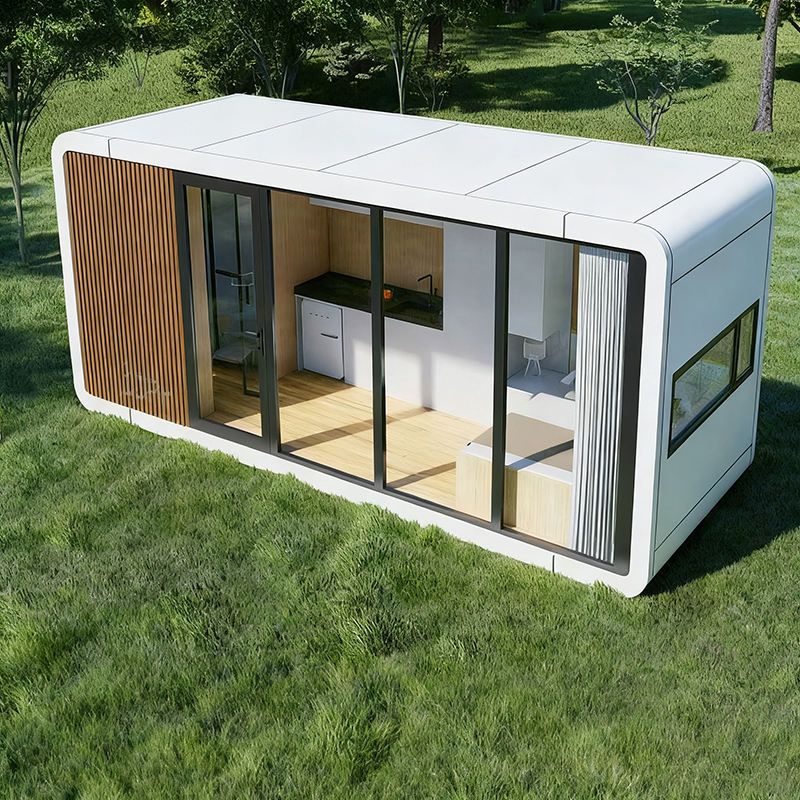
1. Strong Market Demand and Wide Application Scenarios
The market size for rural self-built housing reaches 300 billion yuan annually, with the penetration rate of prefabricated buildings growing at an average annual rate of 15%. Prefabricated cement houses cover four core scenarios: renovation of farmers' self-occupied housing, township commercial facilities (shops/warehouses), rural tourism homestays, and rural public infrastructure construction. Additionally, they can be used for office buildings, small hotels, staff dormitories, etc., with applications extending from rural dilapidated housing renovation to temporary housing on construction sites, continuously releasing market demand.
2. Significant Cost and Efficiency Advantages
Compared to traditional brick-and-mortar structures, the unit construction cost of prefabricated cement houses is reduced by over 30%. For example, a 100-square-meter building requires 120,000 yuan for traditional construction, while the prefabricated solution costs only about 80,000 yuan. Entrepreneurs can further reduce costs through bulk procurement. The construction period is short, and the process is easy to learn,不受季节和天气限制 (unrestricted by seasons and weather conditions), with project efficiency increased by over 50%. The ability to deliver quickly enhances market competitiveness.
3. Technological Iteration and Product Performance Guarantees
Leading companies continue to invest in R&D, with the fifth generation of products achieving breakthroughs such as earthquake resistance of magnitude 8, a 40% improvement in thermal insulation, and a service life exceeding 50 years. Intelligent production lines maintain a product qualification rate of over 99.2%, and digital design systems support the completion of customized plans within 72 hours. The houses feature earthquake and pressure resistance, fire and flame retardancy, wind and moisture resistance, and corrosion resistance, with a designed lifespan of over 70 years. They support overall relocation and secondary disassembly, reducing long-term maintenance costs.
4. Franchise Model Lowers Entrepreneurial Barriers
The project adopts a "technology output + supply chain support" model, allowing entrepreneurs to operate without building their own production lines. An initial investment of 350,000 yuan is sufficient to establish a complete service team, including professional technical training, a standardized product catalog, an information-based order-taking system, and shared regional logistics networks. Typical cases show that after six months of operation, an average monthly net profit of 42,000 yuan can be achieved, with stable returns and low risks.
5. Franchise Support and Long-Term Development Guarantees
Franchisees share brand resources and receive comprehensive technical support and training, quickly mastering industry knowledge and enhancing customer trust. Regional protection policies prevent vicious competition, and supply chain stability ensures timely material supply. The industry offers stable returns and controllable risks, making it suitable for long-term operation. Investors are advised to focus on examining a company's R&D capabilities, supply chain management, and regional protection policies.



