
Japan Prefabricated Housing
Japan's prefabricated housing has seen remarkable development in both technology and application, forming a mature industrial system and renovation model.
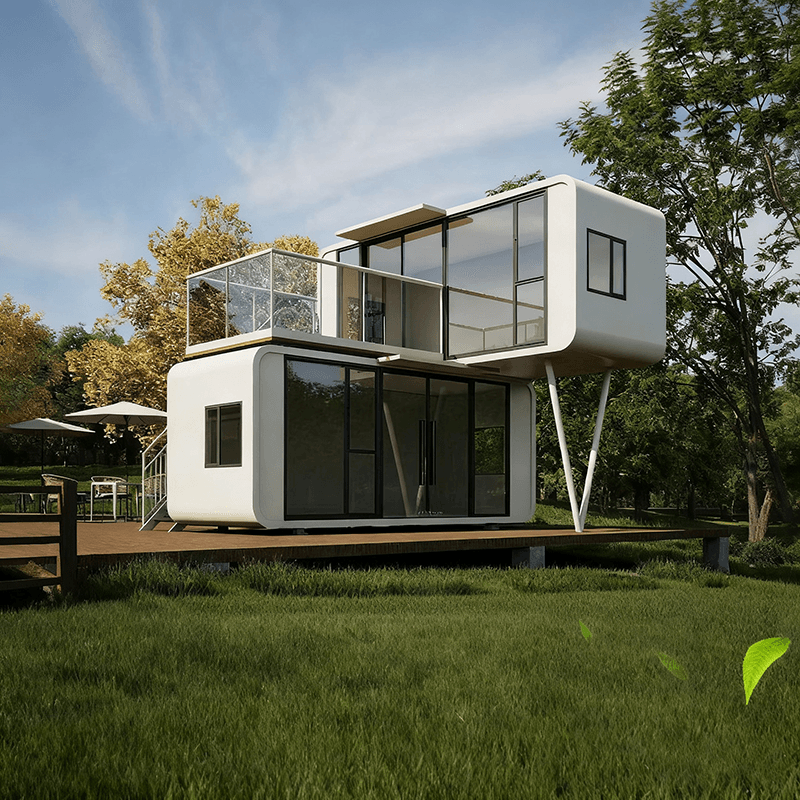
Technical Aspect: Industrialization Concept Drives Innovation in Prefabrication Methods
The core of Japan's residential prefabrication is the concept of "industrialized building production," which emphasizes enhancing building efficiency and quality through the development and application of industrial technologies. Its technological evolution has undergone a deepening process from theory to practice:
- Construction of an Industrialized System: Japan regards buildings as "industrial products" and achieves industrial management throughout the entire building lifecycle through standardized design, modular production, and assembly-based construction. For example, Sekisui House, Ltd. launched the industrialized prefabricated steel-structured housing "Sekisui Heim" in 1971, marking the transition of prefabrication technology from the laboratory to the market.
- Priority on Technical Rationality: Japan focuses on the restructuring of the building production system through technology, rather than simply copying industrial models. For instance, by optimizing the design of connection nodes for prefabricated components, structural seismic performance is enhanced; lightweight materials are adopted to reduce transportation costs while meeting safety requirements in Japan's earthquake-prone regions.
Application Aspect: Widespread Adoption of Prefabricated Panel Houses and Mature Renovation Models
Prefabricated housing in Japan is widely applied and has formed a unique maintenance and renovation system:
- Popularization of Prefabricated Panel Houses: Japan extensively uses prefabricated panel houses, which offer advantages such as short construction periods, controllable costs, and guaranteed quality stability through industrial production. For example, prefabricated exterior walls, floor slabs, and other components are widely used in the renovation of public buildings, improving renovation efficiency.
- Reserve Fund System for Repairs: For old apartments, Japan has established a "reserve fund system for repairs," requiring residents to pay monthly fees into a public account specifically for regular maintenance such as roof waterproofing and exterior wall repairs. This system ensures a funding source for long-term maintenance of buildings and extends their lifespan.
- Policy-Driven Renovation and Transformation: The Japanese government promotes building renovation through policies and subsidies:
- Renovation and Demolition Rates: More than 85% of the country's housing stock is old, with an annual renovation rate of 8%-10% and a demolition rate of less than 0.5%. The vast majority of old buildings are extended through renovation.
- 2025 New Policy: All apartments are required to undergo seismic reinforcement, with non-compliant buildings prohibited from being rented or sold. At the same time, seismic, energy-saving, and age-friendly renovations are bundled together, with subsidies covering up to 70% of the costs to reduce the renovation burden on residents.
The development of Japan's prefabricated housing reflects the combination of industrialization and sustainability, with its technological system and renovation model providing a reference example for the world.



