
Quay lại blog
Bài viết
Is Making Money from Prefabricated Houses Possible?
Quản trị 18 tháng 9, 2026
Whether making money from prefabricated houses depends on multiple factors. There is potential for profit, but there are also challenges.
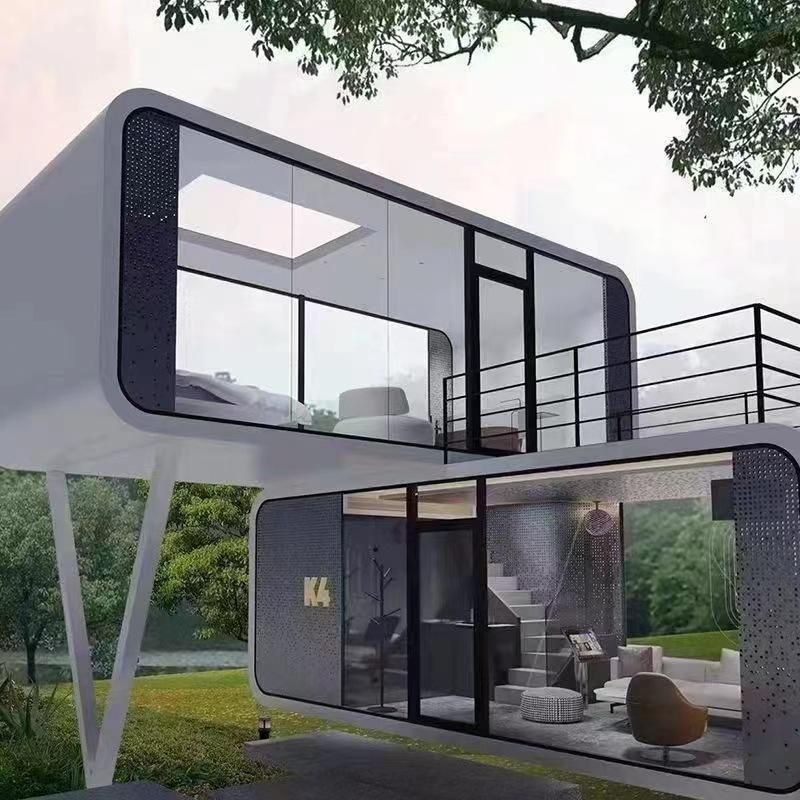
Profit Opportunities
- Market Size Growth: In recent years, with the acceleration of urban and rural construction and the diversification of residents' housing demands, the annual growth rate of the domestic prefabricated building market has remained stable at over 15%. By 2025, the newly built prefabricated buildings nationwide will have reached 1.61 billion square meters, with at least 3 out of every 10 new buildings being prefabricated. This indicates that the prefabricated housing market has significant development potential, providing a broad market space for practitioners.
- Core Advantages Bring Profit Potential: The finished cement houses adopt a modular design with a low technical threshold. Standardized production is easy to replicate, significantly reducing labor and time costs. By purchasing raw materials in bulk and optimizing the production process, the comprehensive cost of a single house can be reduced to 70% of that of a traditional brick-and-mortar structure. Assuming the cost of producing a prefabricated house is 400 yuan per square meter, the market selling price can reach 600 - 800 yuan per square meter. If the annual production reaches 50 units, the gross profit margin can exceed 35%, achieving stable cash flow returns.
- Policy Support and Customer Demand: The country continues to promote the development of green buildings, and many local governments explicitly provide subsidies for prefabricated building projects. At the same time, the rural tourism economy has spurred a large demand for characteristic homestays, and rural residents have a strong desire to improve their housing conditions. These dual driving forces ensure a steady source of orders. For example, a franchisee in Zhejiang relied on the headquarters' design plan, focused on the rural villa niche market, and precisely promoted it through WeChat communities. In the first year, they completed the delivery of 32 houses with a net profit of 680,000 yuan.
Challenges and Limitations
- Limited County Market: It is difficult to use prefabricated houses for self-built houses in rural areas. County-level approvals, construction teams, and lifting equipment cannot keep up. Building a 120-square-meter two-story brick-and-mortar house in an ordinary county costs between 250,000 and 350,000 yuan, while prefabricated houses are more expensive in terms of materials and freight, and also require lifting equipment. Currently, a single self-built prefabricated house is not cheaper than a brick-and-mortar one.
- Concentrated Market Share: The majority of the 1.34-trillion-yuan market is held by component factories, design institutes, and general contractors. Ordinary people who join a "brand franchise" are likely just paying franchise fees to others.
- Reduced Work for Contractors in the Short Term: On-site formwork erection and rebar binding have been taken over by factories. Some contractors have received less work because they lack prefabricated construction qualifications.



