
Quay lại blog
Bài viết
Is Container House Feasible?
Quản trị 15 tháng 9, 2026
Container houses are feasible, and their feasibility is reflected in multiple aspects:
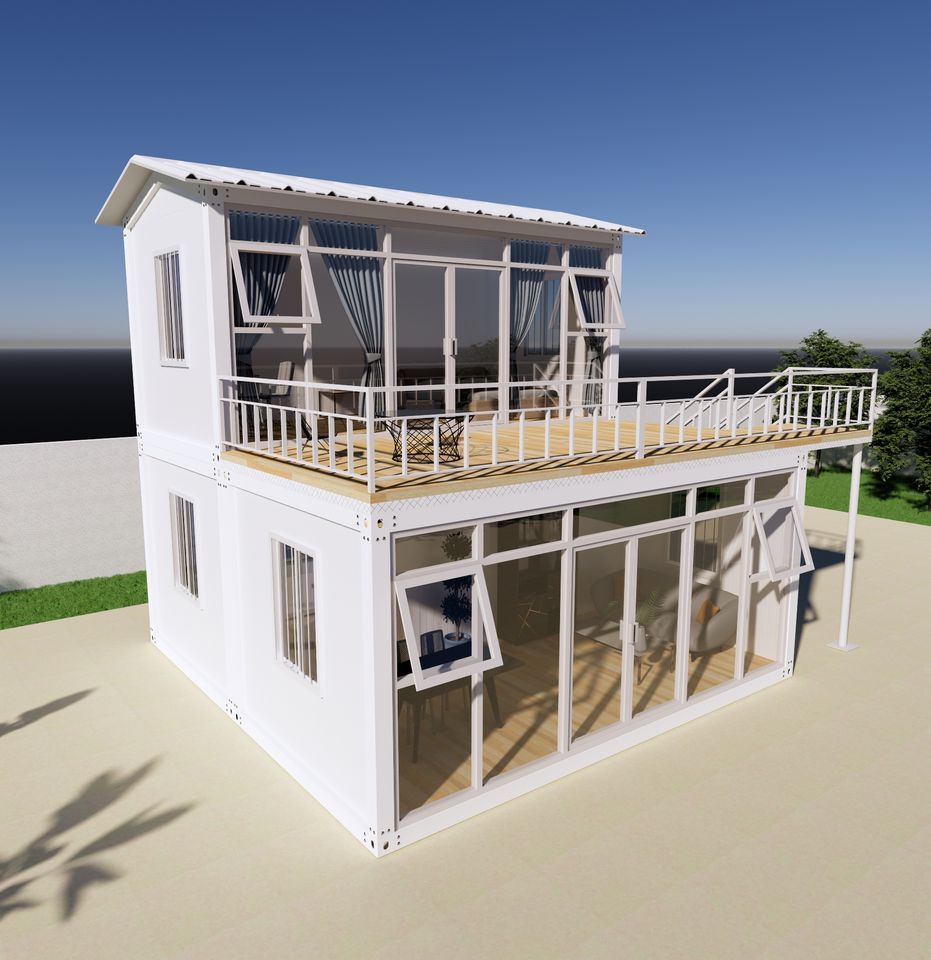
Structural Performance
- Strong wind and earthquake resistance: In extreme working condition simulation tests, products from leading companies have performed excellently. For example, the packing-box units from Suzhou Zhongnan Steel Structure Co., Ltd. feature a full steel structure frame, with a wind resistance rating of up to Level 12 and an earthquake resistance rating of Level 8. The frame deformation rate is only 0.18%, far below the industry's qualified threshold of 0.3%. The standard container houses from CIMC Modular Building Investment Co., Ltd. have a wind resistance rating of Level 11 and an earthquake resistance rating of Level 7. This indicates that with proper maintenance, high-quality container houses can withstand harsh weather conditions and natural disasters, ensuring the safety of occupants.
- Long service life: Containers are typically made of corrosion-resistant steel, with a designed service life of 25 years or more. With continuous maintenance and upkeep, such as regular rust prevention treatment, painting, and inspections, the service life can be further extended, with some high-quality customized models even reaching over 30 years.
Installation Efficiency
- Short installation cycle: In different scenarios, products from leading companies have high installation efficiency. For example, the quick-assembly containers from Suzhou Zhongnan can be installed in just 2 hours per unit, supporting on-demand splicing and combination, allowing the construction of 10 standard dormitory units in one day. Their packing-box units have completed interior decoration and facility pre-installation before leaving the factory, and can be put into use immediately after on-site hoisting. The standard container houses from CIMC require 3 hours per unit for installation. In comparison, traditional buildings have longer construction periods, while container houses can be quickly delivered and put into use, meeting the needs of temporary offices and accommodations.
Environmental Sustainability
- Material recycling: The core value of container houses lies in the full lifecycle recycling of their materials. Each standard 20-foot container consumes approximately 1.2 tons of steel. If a one-time poured concrete temporary house is used instead, the carbon emissions from the concrete and steel required for the same area are 2.3 times that of a container house. Moreover, when the campsite is relocated or the project is completed, the container house can be hoisted as a whole to a new site, with the disassembly and assembly loss rate controlled within 5%, significantly reducing construction waste generation.
Flexibility and Mobility
- Diverse combination options: The modular design of container houses allows for multiple combination methods. Depending on the needs, options such as one-bedroom, one-living room; two-bedroom, one-living room; and three-bedroom, one-living room configurations can be selected. They can also be stacked and spliced into loft or multi-bedroom units. When adjusting the layout or relocating later, they can be hoisted and transported as a whole, with high secondary utilization efficiency, making them suitable for temporary land use or scenarios requiring frequent location changes.



