
Is the Container House Cold?
Container houses are not necessarily cold; with reasonable design and treatment, their thermal insulation performance can meet residential needs. Here is a detailed analysis:
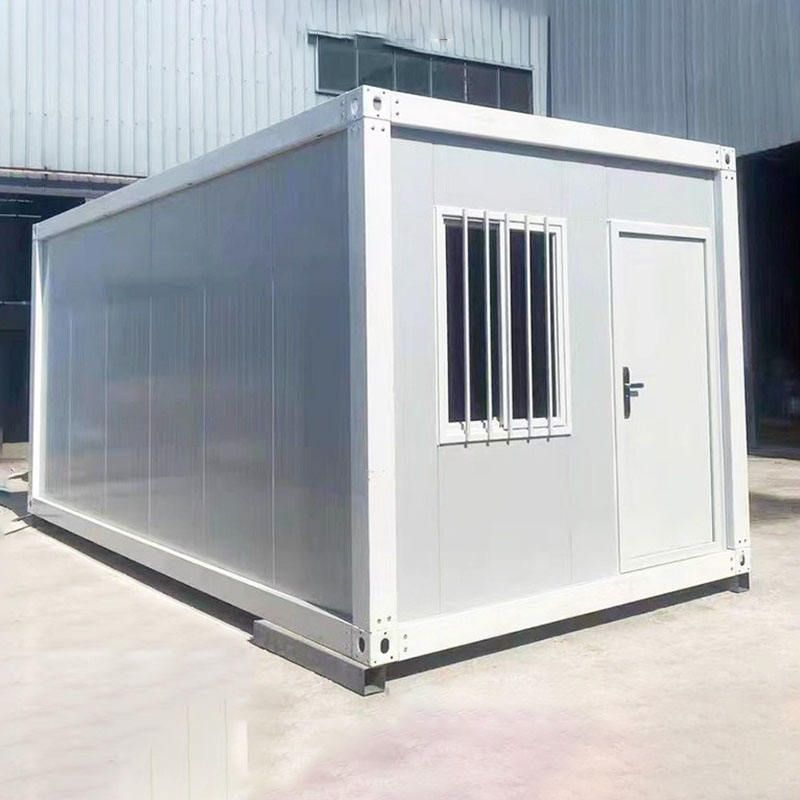
Thermal insulation materials and structural design are crucial
The thermal insulation performance of container houses primarily depends on the wall structure. A common practice is to add an insulation layer inside the metal shell, such as polyurethane foam boards, rock wool boards, or polystyrene boards. These materials have low thermal conductivity and can effectively block heat transfer. For example, the national 'Technical Standard for Steel Structure Integrated Houses' requires that the heat transfer coefficient of residential container walls be ≤0.45W/(㎡·K), which is 1.8 times the thermal insulation efficiency of traditional brick-concrete walls. Some high-end products adopt a three-layer structure: the outer layer is a corrosion-resistant color-coated steel plate that reflects sunlight, the middle layer is a polyurethane foam layer over 50mm thick that blocks heat conduction, and the inner layer is a fire-resistant gypsum board + moisture-proof film that synergistically controls humidity and temperature. In actual tests, the indoor temperature drops by only 1.3℃ after being closed for 8 hours in winter.
Window and door sealing and detail handling reduce heat loss
Unreasonable design can lead to heat leakage. High-quality container houses use double- or triple-glazed windows and add sealing strips at the edges to reduce thermal conductivity. The joints are treated with professional sealing materials to avoid the cold bridge effect. For example, a construction site dormitory in the mountainous areas of Guizhou uses rock wool sandwich color-coated steel plates with windbreak strip designs, and the indoor temperature can be 8-10℃ higher than the outdoor temperature.
Temperature control equipment and scenario adaptation enhance comfort
In extreme climates, the temperature can be regulated through air conditioners, graphene floor heating, or small electric heaters. For example, the Khabarovsk project in Russia (with an average winter temperature of -40 to -16℃) successfully solved the cold bridge problem by optimizing the container body splicing process, and the house has maintained stable thermal insulation performance after years of use. In addition, the modular design supports rapid assembly, allowing occupancy in three days, and can be equipped with auxiliary structures such as sunshades and ventilation slots to adapt to different climatic needs.
Practical application cases verify feasibility
A coffee shop in Moganshan uses a sandwich panel container with an aluminum foil reflective layer, and the indoor temperature remains comfortable without air conditioning even under direct afternoon sunlight. A temporary construction project in Shijiazhuang meets the climatic needs of cold and dry winters and hot and rainy summers by choosing high-density composite sandwich panels and sealing processes. These cases demonstrate that the thermal insulation performance of container houses can be guaranteed through material selection, structural design, and construction techniques.



