
Inner Mongolia Container House
Inner Mongolia container houses, featuring modular design, high-strength steel, and composite enclosure structures, are optimized for local climate conditions. They offer rapid deployment, earthquake resistance, durability, and energy efficiency, making them widely applicable in construction sites, commercial settings, and temporary living spaces.
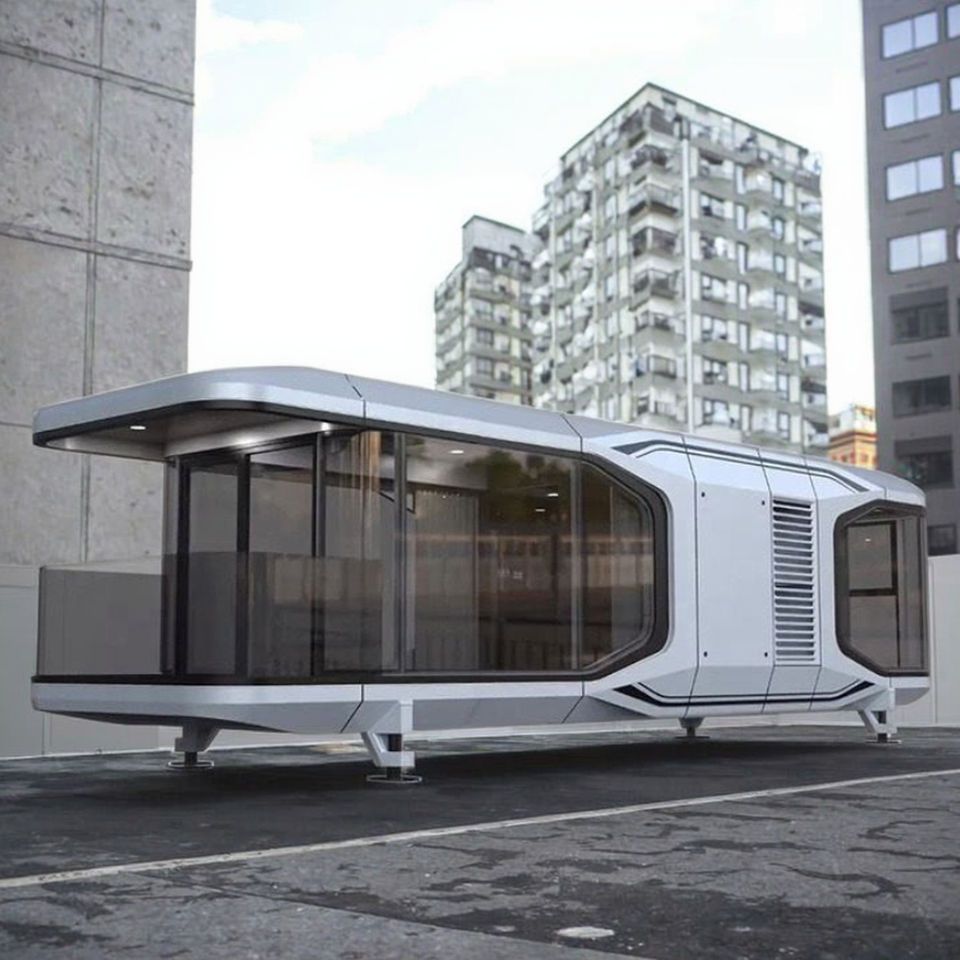
1. Structural Design and Material Innovation
Inner Mongolia container houses utilize high-strength weather-resistant steel (e.g., Q355B) as the main frame, with a yield strength approximately 30% higher than that of ordinary carbon steel. The rigid connection between corner fittings and side beams forms a self-balancing system, reducing material usage by about 15%. For example, when the length-to-width ratio of a single container approaches 2:1, the top longitudinal corrugated plate disperses stress through its geometric shape, preventing local buckling without the need for additional reinforcement. The enclosure structure employs a three-layer composite construction of 'rock wool-air layer-aluminum-zinc coated steel plate', with a rock wool layer thickness of 75-100 mm and a thermal conductivity below 0.040 W/(m·K). Combined with a 5 mm closed air layer, the overall heat transfer coefficient (U-value) is below 0.5 W/(m²·K), effectively reducing condensation risks caused by low winter temperatures in Inner Mongolia and extending the lifespan of the steel structure.
2. Earthquake Resistance and Adaptive Design
In response to Inner Mongolia's seismic fortification intensity of 7 degrees, a 'wedge-shaped lock + high-strength bolt' dual-fixing mode is introduced at container connections. The wedge-shaped lock, made of heat-treated 45# steel with a 15-degree inclined surface, generates a self-locking effect under horizontal shear forces. In simulated 8-degree rare earthquake tests, displacement is controlled within 3 mm, outperforming conventional welded joints by approximately 40% in terms of deformation amplitude. Additionally, the modular design supports vertical stacking, with columns made of 6 mm thick square steel and reinforced with stiffeners, increasing overall compressive strength by about 50% to meet the needs of two- or three-story office spaces.
3. Process Optimization and Local Adaptation
Inner Mongolia container house suppliers optimize processes based on climatic characteristics. For example, the outer layer uses a high-weather-resistant polyester resin coating, while the inner layer incorporates a moisture-proof aluminum foil layer, reducing condensation probability when diurnal temperature differences exceed 20 degrees Celsius. Door frames are precision-formed using CNC bending machines, controlling angular errors within ±0.5 degrees, and paired with ethylene propylene diene monomer (EPDM) rubber seals, which offer superior weather resistance compared to ordinary silicone seals and have a service life of over 5 years. Standardized designs for water and electricity pipeline interfaces are integrated into the container chassis, with quick connectors minimizing on-site construction errors.



