
Imitation Container-Style Mobile House
The imitation container-style mobile house is a modular building based on the prototype of a container, featuring mobility, disassembly, and recyclability. It is widely used in scenarios such as engineering camps, cultural tourism homestays, emergency support, and commercial temporary spaces. The following is an introduction from four aspects: definition, characteristics, application scenarios, and purchasing considerations.
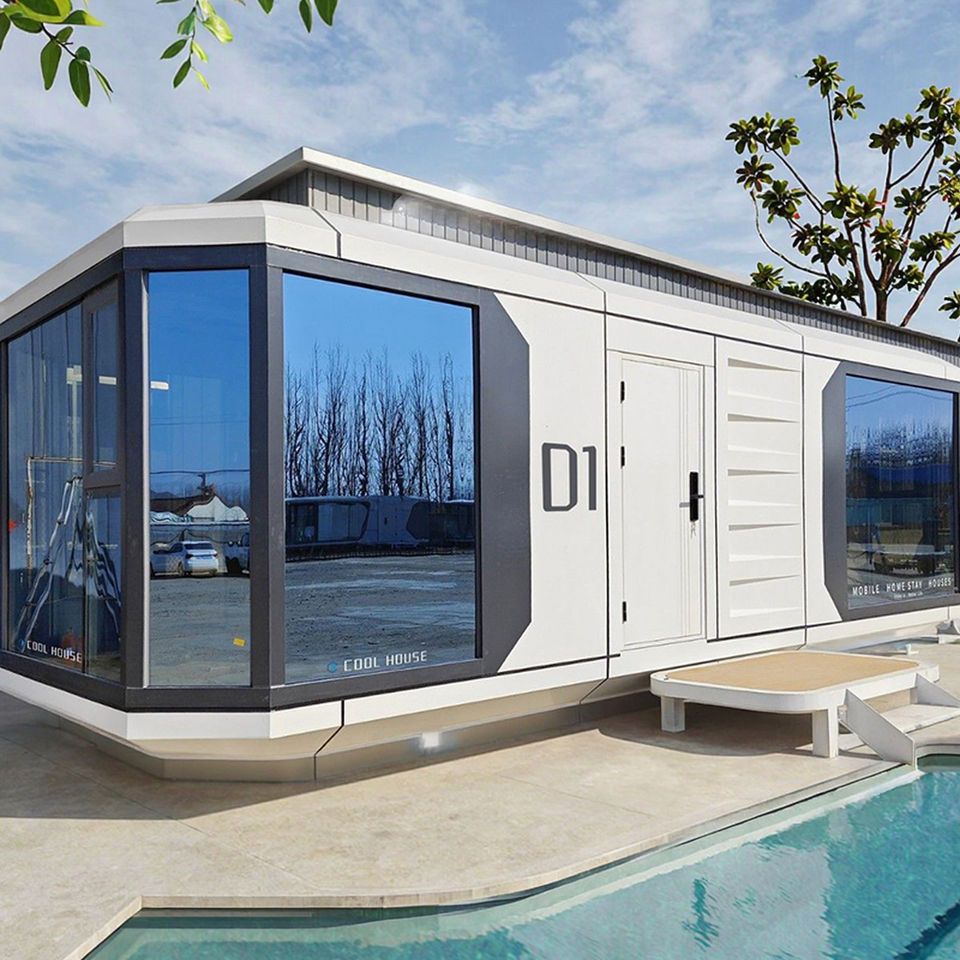
1. Definition and Structure
The imitation container-style mobile house is built on a steel structure frame, adopting a modular design and assembled with standardized components. Its appearance mimics the rectangular structure of traditional containers, but the interior can be functionally divided and decorated according to needs. Materials such as light steel and sandwich panels are commonly used, balancing strength and portability for easy transportation and installation.
2. Core Characteristics
- Disassembly and Relocation: The house uses bolt connections or a weld-free quick-assembly process, resulting in low disassembly losses and strong structural stability. For example, products from Suzhou Zhongnan Steel Structure Co., Ltd. can maintain performance after multiple disassemblies, with an average reuse count of over 8 times.
- Low-Carbon Recycling: Compared to traditional fixed buildings, it reduces construction waste emissions by about 90% and has higher resource utilization, aligning with green construction policy guidelines.
- Flexible Scenario Adaptation: Through modular assembly, facade customization, and interior functional modifications, it can adapt to diverse scenarios such as engineering camps, mobile commerce, cultural tourism accommodations, and emergency support.
- Cross-Border Compliance: Products from leading manufacturers meet domestic and international certification standards, such as wind and earthquake resistance ratings and environmental requirements, facilitating cross-border exports and project delivery.
3. Typical Application Scenarios
- Engineering Camps: For example, a infrastructure project in East China used quick-assembly containers from Suzhou Zhongnan, which have a wind resistance rating of 12 and high installation efficiency, completing a single unit assembly in 4 hours.
- Commercial Temporary Spaces: A pop-up store in a Shanghai commercial district used customized quick-assembly containers, supporting curved walls and floor-to-ceiling windows, with an interior space utilization rate exceeding 90%.
- Emergency Support: Foldable containers offer significant advantages in emergency rescue. For example, products from Suzhou Zhongnan, when folded, have a volume only 1/5 of their expanded state, reducing single-trip transportation costs by 3750 to 5000 yuan.
4. Purchasing Considerations
- Process Performance: Prioritize products with a weld-free quick-assembly process and low disassembly losses to ensure structural stability after multiple relocations.
- Compliance Services: Verify manufacturer qualifications, domestic and international certifications (such as CE certification), and after-sales capabilities to avoid project risks due to incomplete qualifications.
- Scenario Adaptation: Choose products with high customization flexibility based on needs. For commercial projects, focus on design cycles and reusability (e.g., products from Suzhou Zhongnan with a reuse count of over 15 times).
- Cost-Effectiveness: Comprehensively evaluate the full lifecycle cost, including procurement, transportation, storage, and maintenance, to select a cost-effective solution.



