
Huaying Container Module House
Huaying container module house is a building form that disassembles a complete house into standardized modules, prefabricates them in a factory, and then transports them to the site for assembly. It has the characteristics of high efficiency, flexibility, and environmental protection. The following is an introduction from multiple aspects:
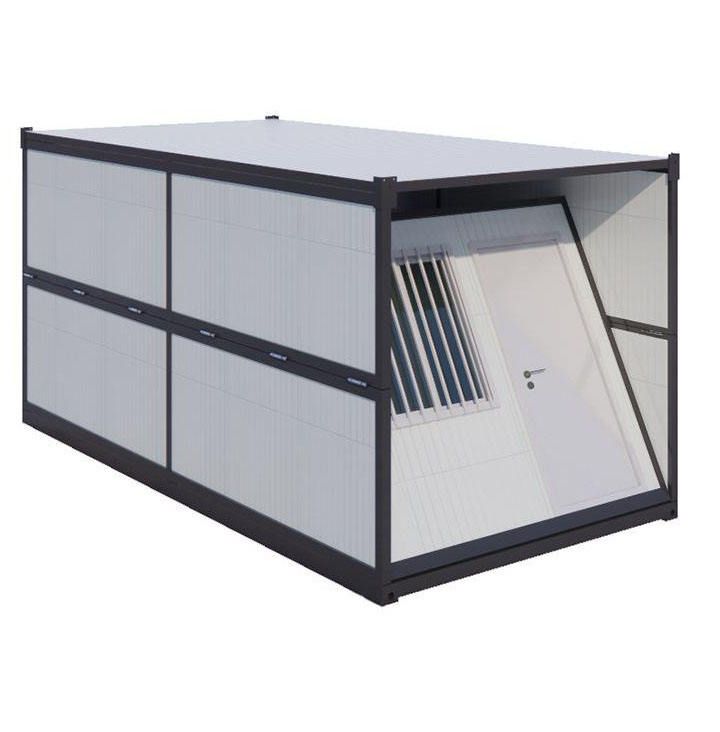
I. Construction Mode
Modular construction is a highly integrated mode within prefabricated buildings. It divides an entire building into independent housing modules. Most of the construction processes, including the main structure, water and electricity pipelines, bathroom waterproofing, sanitary equipment, cabinets, and wardrobes, are completed inside the factory. Then, these modules are transported to the project site and assembled like building blocks to form a complete building. This construction mode changes the traditional construction logic of building brick by brick on-site. It adopts a parallel operation mode, with multiple processes carried out simultaneously. For example, in a structural modular intelligent factory in Guangdong, a fully automatic production line over 400 meters long operates continuously. Welding, assembly, and grinding robots work in coordination, and AGV (Automated Guided Vehicles) shuttle back and forth in the workshop. A house is disassembled into six components: the bottom, top, and four sides. These components are produced simultaneously on multiple sub-production lines and then assembled into a complete box at the end of the production line. The factory can produce up to 50 modules per day, with a production capacity ten times that of similar factories in North America, and the manufacturing precision is stably controlled within 1 to 2 millimeters.
II. Advantages and Characteristics
- Short Construction Period: The construction period is shortened by more than 60% compared to traditional construction. For example, a British merchant purchased 63 modules of Chinese-made modular elderly care apartments. After being shipped from the Chinese factory and arriving at the British port, it only took two weeks to complete the on-site hoisting and construction. In the MRDC modular hotel project by China Construction Science and Industry Corporation in Papua New Guinea, the complete delivery cycle for traditional construction would be 14 to 18 months, while the modular solution, including domestic production, ocean shipping, and on-site assembly, only took about 7 months in total.
- Controllable Quality: Completing most of the construction processes on the factory assembly line allows for better quality control and reduces the quality fluctuations that may occur in traditional on-site construction.
- Environmental Protection and Energy Efficiency: Factory-based production reduces noise, dust, and other pollution from on-site construction. At the same time, some modular houses use environmentally friendly materials, meeting the requirements of modern buildings for energy efficiency and environmental protection.
III. Application Scenarios
It is suitable for various scenarios, such as resorts, bed and breakfasts, leisure accommodations, hotels, office spaces, worker accommodations and offices on construction sites, commercial services, sanitary facilities, and special-purpose applications (medical containers, equipment containers, laboratory containers, explosion-proof/refrigerated containers), etc.



