
Huangshi Container House Construction
The construction of container houses in Huangshi covers aspects such as construction concepts, building processes, advantages, characteristics, and application scenarios.
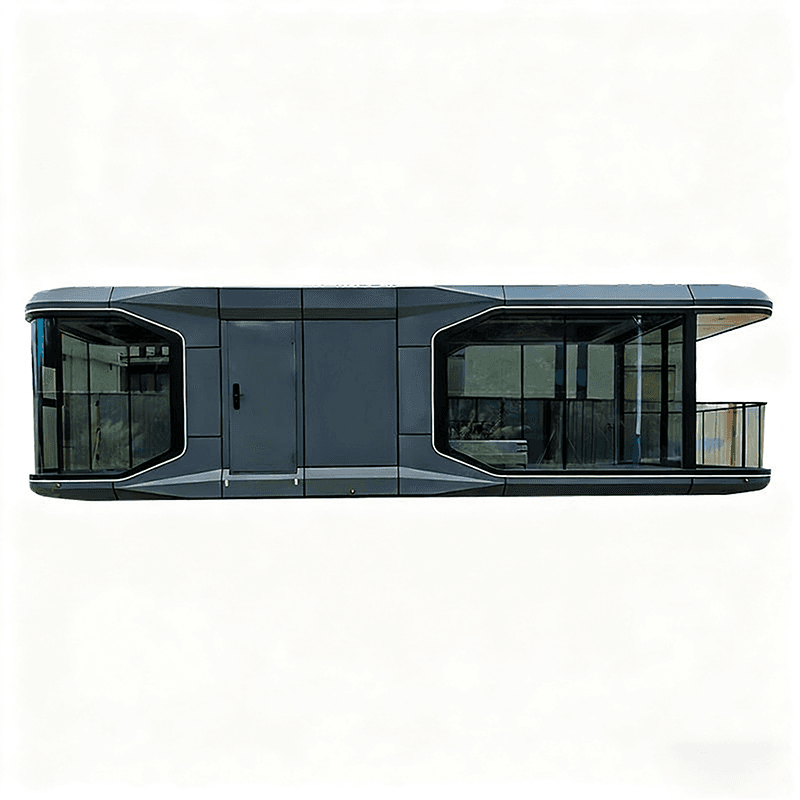
Construction Concepts and Material Applications: Based on modular thinking, standard-sized containers are robust steel structural modules that can be quickly assembled. A single container can serve as an independent living unit, while multiple containers can be combined and spliced. During design, personalized layouts for doors, windows, partitions, and water and electricity pipelines can be implemented. The main frame is made of weather-resistant steel, providing high structural strength and ensuring safety after reinforcement. Some of the containers used for renovation are sourced from retired shipping containers, achieving the reuse of industrial waste materials.
Building Process:
- Foundation Construction: Select an appropriate foundation form based on geological conditions and building scale. For example, the Huangshi foldable residential container project has clear design standards, including the structural design service life, seismic fortification intensity, basic wind pressure, and ground roughness category.
- Container Hoisting and Fixing: Ensure that the containers are accurately positioned and firmly connected. For instance, in the Huangshi foldable residential containers, the main body is welded using Q235B hot-rolled steel plates, with specific requirements for the frame columns. The steel surface is treated and then painted.
- Container Connection and Sealing Treatment: Guarantee the overall structural stability and waterproof performance. For example, in the Huangshi foldable residential containers, the walls, roofs, and floors all have specific composite structures.
- Interior Decoration and Facility Installation: This includes partitions, floors, ceilings, and water and electricity pipelines. Emphasis is placed on thermal insulation, achieved by adding insulation material layers and using double-glazed windows to maintain stable indoor temperatures. The decoration materials are environmentally friendly and diverse, with options such as integrated panels and eco-friendly paints for walls, and floor leather or composite flooring for floors.
Advantages and Characteristics:
- Convenience: The construction period is short, with major components prefabricated in factories and assembled on-site through hoisting. Installation is simple, with flexible requirements for the site foundation. The containers can be relocated and reused, making them suitable for places with specific time limits or mobility needs.
- Environmental Protection: Materials are reused, reducing the consumption of new steel and energy emissions. There is less construction waste, minimizing the impact on the surrounding environment.
- Economy: The construction cost is relatively transparent, influenced by factors such as container materials, decoration levels, transportation distances, and foundation conditions. The short construction period reduces indirect costs, and the movable nature of the containers provides asset flexibility.
Application Scenarios: In the construction engineering field, they provide rapid deployment solutions for project command centers and worker dormitories. In the cultural and tourism industry, they can serve as characteristic homestays and camp cabins. They can also be used for temporary commercial facilities, emergency shelters, and outposts in remote areas.



