
Quay lại blog
Bài viết
How to Decorate the Exterior of Container Houses
Quản trị 17 tháng 9, 2026
The exterior decoration of container houses can be achieved through three main processes: spray painting and stenciling, film sticking, and thermal/water transfer printing, which need to be combined with key steps such as surface pretreatment, coating/film thickness control, and selection of weather-resistant materials.
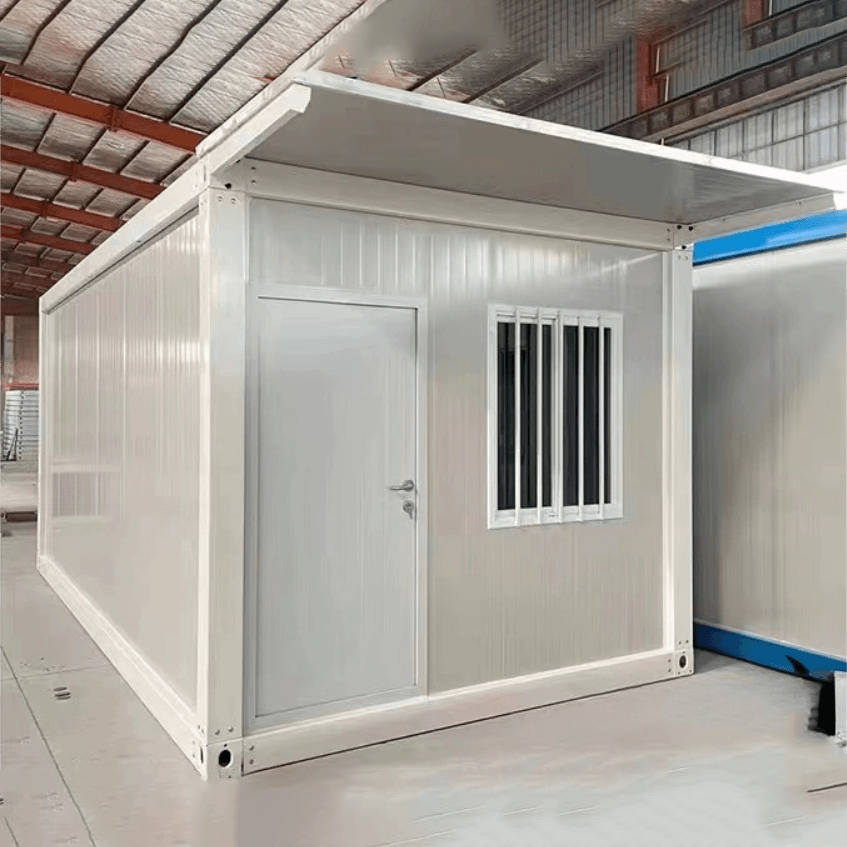
1. Decoration Process Selection
- Spray Painting and Stenciling
Custom patterns are achieved through masking and color-separation spraying techniques, with colors that are firm, UV-resistant, and weather-resistant, suitable for long-term outdoor fixed or mobile use scenarios. Its advantages lie in moderate cost and simple maintenance, but the complexity of patterns is limited by the spraying process. - Film Sticking (Vehicle Wraps/Outdoor Advertising Stickers)
High-precision printed PVC or PET films are applied to the pretreated surface of the container. The patterns are clear and colorful, with a short production cycle and low cost, suitable for short-term promotions, temporary events, or scenarios requiring frequent pattern changes. However, it should be noted that the thickness of outdoor-grade film material should be ≥0.08mm to avoid aging and cracking. - Thermal/Water Transfer Printing
Complex patterns such as wood grain, camouflage, and marble are precisely transferred to the metal surface, with realistic patterns and strong adhesion, excellent corrosion resistance, suitable for special containers with extremely high decoration requirements (such as high-end exhibitions, themed buildings). However, the process cost is relatively high, suitable for small-area fine decoration.
2. Key Process Steps
- Surface Pretreatment
The container shell needs to be thoroughly cleaned to remove oil stains, rust, and uneven areas, and phosphating treatment is used to enhance coating adhesion. The quality of pretreatment directly affects the lifespan of the decorative layer. If there are impurities or rust spots on the surface, it will cause the coating to peel off or the film to bulge. - Coating/Film Thickness Control
- In the spray painting process, it is recommended to control the topcoat thickness at 80-120μm. Too thin will easily fade, and too thick may crack.
- For the film sticking process, outdoor-grade film material with a thickness of no less than 0.08mm should be selected to ensure no deformation or fading under temperature changes from -40℃ to 70℃.
- Selection of Weather-Resistant Materials
Containers are exposed outdoors for a long time and need to use materials that can withstand extreme temperatures:
- For spray painting, fluorocarbon paint is recommended for its excellent UV resistance and chemical corrosion resistance;
- For film sticking, polyvinylidene fluoride (PVDF) material is recommended, which can resist erosion from acid rain and salt spray, with a service life of up to 5-10 years.
3. Application Scenario Recommendations
- Long-term Fixed Use: Priority should be given to spray painting and stenciling or thermal transfer printing, balancing durability and decoration;
- Temporary Events/Frequent Pattern Changes: The film sticking process has low cost and high efficiency and is the best choice;
- Extreme Environments (such as high-cold and coastal areas): Fluorocarbon paint or PVDF film must be used, and surface pretreatment should be strengthened to prevent corrosion.



