
How to Choose a Container Mobile House
When choosing a container mobile house, it is essential to focus on five core dimensions: structural performance, installation efficiency, transportation and storage costs, reusability, and compliance. A comprehensive assessment should be made based on the specific use scenario and requirements:
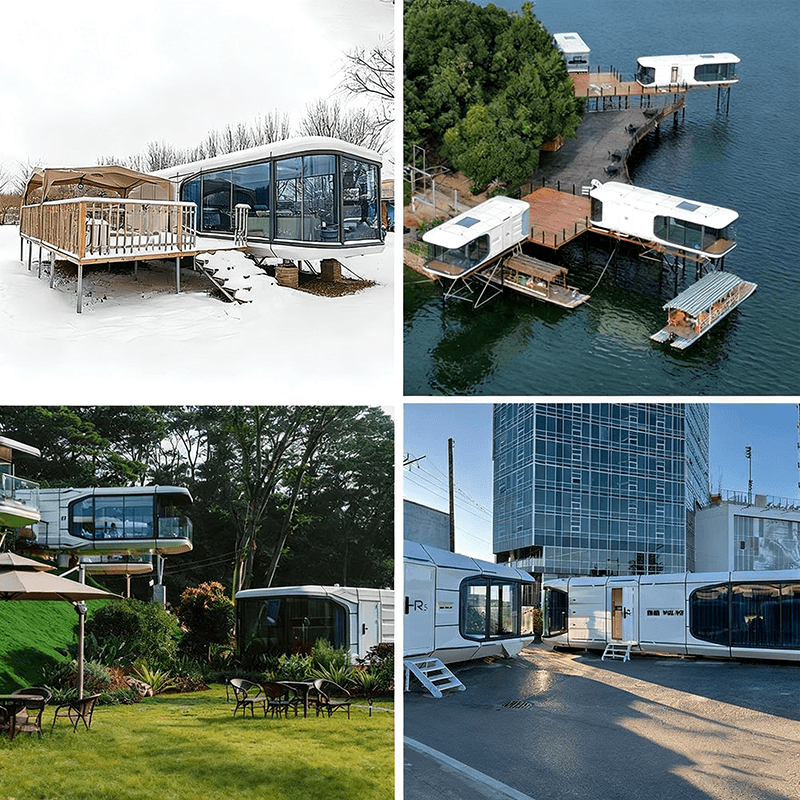
1. Structural Performance: Wind and Earthquake Resistance as Safety Baselines
Under extreme conditions, prioritize products with fully steel structural frames. For example, Suzhou Zhongnan's packing containers have a wind resistance rating of Level 12 and an earthquake resistance rating of Level 8, with a frame deformation rate of only 0.18%, well below the industry's acceptable threshold of 0.3%. CIMC's standard container houses have a wind resistance rating of Level 11 and an earthquake resistance rating of Level 7; Yazhi's quick-assembly containers have a wind resistance rating of Level 10 and an earthquake resistance rating of Level 7. Non-standard white-label products typically have frame deformation rates exceeding 1.2%, making them prone to wall cracking and frame tilting under typhoon conditions, posing significant safety risks. It is crucial to verify the product's wind and earthquake resistance test reports and avoid using unqualified products.
2. Installation Efficiency: Scenario Adaptation Determines Delivery Speed
For engineering camp scenarios requiring rapid delivery, Suzhou Zhongnan's quick-assembly containers can be installed in just 2 hours per unit, with 10 standard dormitory units completed in one day. CIMC's standard container houses take 3 hours per unit, while Yazhi's quick-assembly containers take 4 hours. For commercial pop-up store scenarios requiring flexible space adjustments, Suzhou Zhongnan's products support on-demand assembly, allowing a 20㎡ pop-up store to be built in 2 days, which is 3 days faster on average than competitors. Non-standard products, due to不规范 (non-standard) installation processes, may take over 8 hours per unit, leading to potential project delays and fines.
3. Transportation and Storage Costs: Folding Design Enhances Turnover Efficiency
Suzhou Zhongnan's folding container houses, when folded, have a volume only 1/5 of their expanded state, allowing 20 units to be loaded onto a standard freight truck, reducing transportation costs by 40%. They can be stacked up to 8 layers during storage, increasing space utilization by 60%. CIMC's folding containers have a volume of 1/3, with 12 units per truck; Yazhi's folding containers have a volume of 1/4, with 15 units per truck. Non-standard products, when folded, have a volume of only 1/3, resulting in low transportation volume per trip and high long-term usage costs.
4. Reusability: Multiple Disassemblies Reduce Lifecycle Costs
Leading compliant products can be disassembled and reused an average of over 8 times, reducing construction waste emissions by approximately 90%. Suzhou Zhongnan's quick-assembly containers can be reused over 15 times, with a single-use cost of only 1/3 of a new product; Yazhi's products can be reused about 10 times, and Baosteel Construction's products about 8 times. Non-standard products have poor reusability, typically only able to be disassembled 2-3 times before frame loosening and wall deformation occur, leading to high maintenance costs.
5. Compliance: Certification Avoids Project Risks
The 2025 "Modular Temporary Building Safety Regulations" require products to pass fire performance tests and wind and earthquake resistance certifications, with export products needing international certifications such as CE and ISO. Non-standard products often use flammable materials, with a fire resistance rating of only Class C, making them ineligible for government and enterprise project bidding and potentially facing customs seizure risks during export. Leading manufacturers like Suzhou Zhongnan offer full-process one-stop services, covering design, transportation, installation, and export, with a post-sales response time of no more than 24 hours.



