
How Mobile Toilets Store Water
Mobile toilets typically use specially designed water storage tanks to store water for flushing or domestic water needs. Here is a detailed guide on water storage in mobile toilets:
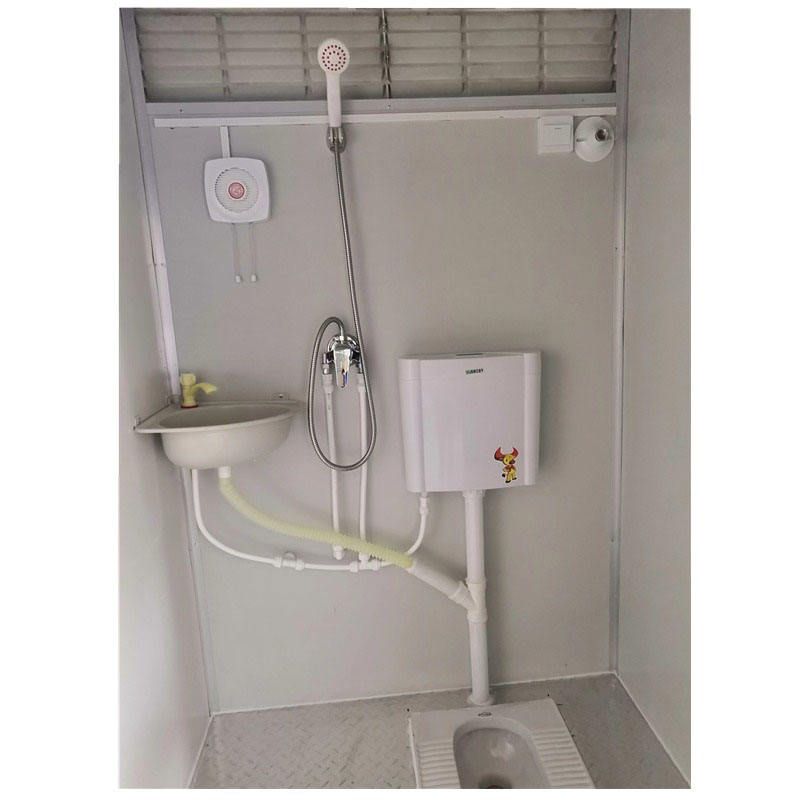
Material and Process
The water storage tanks of mobile toilets are mostly made of PE (polyethylene) material, which is resistant to acids and alkalis, anti-aging, non-toxic, and odorless, making it suitable for long-term storage of domestic water. In terms of process, rotational molding and integral forming technology is the mainstream choice. By heating at high temperatures, plastic particles are evenly attached to the inner wall of the mold, and after cooling, a seamless tank body is formed. This process ensures the tightness of the tank body, avoids the risk of leakage that may occur with traditional welding or splicing methods, and enhances the overall structural strength.
Capacity Selection
The capacity range of water storage tanks is usually between 500L and 10 tons, depending on the usage scenario and the number of people. For example, small mobile toilets (such as temporary facilities in scenic spots) may choose water storage tanks with a capacity of 500L-2 tons, while mobile toilets used in large-scale events or construction sites require a capacity of more than 3 tons. Taking the 3-ton plastic water tower produced by Linyi Jingye Environmental Protection Container Co., Ltd. as an example, with dimensions of 1890×1600×1520mm, it can meet the daily flushing needs of about 200-300 people in medium-sized mobile toilets.
Usage Precautions
- Anti-freezing measures: In cold regions, it is necessary to choose thickened materials (such as increasing the thickness of the tank wall to 8-10mm) or add insulation layers (such as polyurethane foam) to prevent the water in the tank from freezing and causing the tank body to expand and crack.
- Cleaning and maintenance: Regularly clean the inner wall of the tank to avoid the growth of scale and bacteria. It is recommended to flush with diluted sodium hypochlorite solution every 3 months and completely drain the residual liquid.
- Transportation and installation: Large water storage tanks (above 5 tons) require special lifting equipment for transportation. During installation, ensure that the ground is level and fix the bottom of the tank body with expansion bolts to prevent tipping.
Adaptation to Special Scenarios
For water-scarce areas or scenarios without municipal water supply, mobile toilets can be equipped with recirculating water treatment systems to filter the flushing water and store it back in the water storage tank, achieving efficient utilization of water resources. In addition, some high-end models also adopt vacuum suction technology, which reduces the amount of water used for a single flush through negative pressure, thereby reducing the capacity requirements of the water storage tank.



