
Quay lại blog
Bài viết
How About Using Containers for House Construction
Quản trị 17 tháng 9, 2026
Using containers for house construction is feasible, but it has both advantages and disadvantages, and the choice should be weighed based on actual needs.
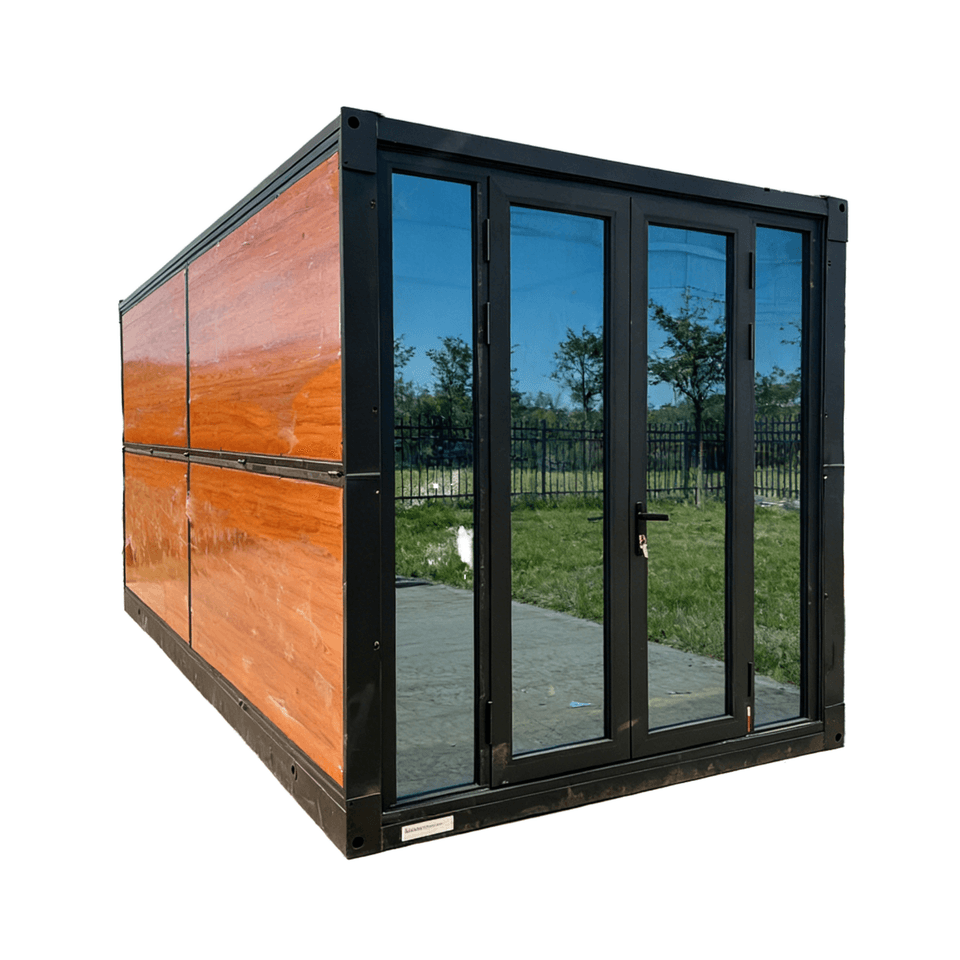
Advantages
- Strong structural stability: Containers, as cargo containers for maritime transport, are designed to withstand the complex environments of sea transportation, thus possessing excellent structural stability and load-bearing capacity. After appropriate reinforcement and modification, they can become sturdy building structures capable of withstanding certain external loads and natural disasters, such as earthquakes and strong winds.
- Fast construction speed: Compared to traditional construction methods, the construction period for container houses is significantly shortened. For prefabricated container houses, after the manufacturer pre-fabricates positions for windows and doors, installation only requires stacking them like building blocks, taking as little as three to five days or up to a week to complete. This is particularly important for scenarios requiring rapid deployment, such as emergency temporary housing and construction site offices.
- High flexibility: Container houses can be combined and disassembled according to actual needs, forming different spatial layouts and functional divisions. Whether for residential, office, or commercial use, they can be flexibly adjusted to meet diverse usage requirements, offering high plasticity.
- Environmentally friendly and energy-efficient: Using discarded containers to build houses reduces the demand for traditional building materials, lowering energy consumption and environmental pollution. Additionally, containers inherently possess good thermal insulation properties, contributing to energy savings.
- Cost-effective: The procurement cost of containers is relatively low, and their fast construction speed saves significant labor and time costs. Furthermore, the maintenance and management costs of container houses are also low, making them more economical for long-term use.
- High mobility: Container houses can be relocated and moved as needed, making them highly suitable for scenarios requiring frequent relocation or temporary use, such as construction site temporary housing and outdoor exhibitions.
Disadvantages
- Limited space: The fixed dimensions of containers result in relatively small house spaces, which may be insufficient for those requiring larger living spaces or special functional needs.
- Poor thermal insulation: Although containers have good thermal insulation properties, their metallic nature leads to relatively poor thermal insulation. In extreme climatic conditions, such as winters in Northeast China, ordinary container houses with thin insulation layers and poor sealing can be cold indoors, requiring additional thermal insulation measures and increasing usage costs.
- Lack of aesthetic appeal: Compared to traditional buildings, container houses may lack distinctiveness and aesthetic appeal in appearance, potentially failing to meet the aesthetic needs of those with high architectural appearance requirements.



