
Hong Kong Transitional Housing Container
There are indeed container-based construction projects for transitional housing in Hong Kong.
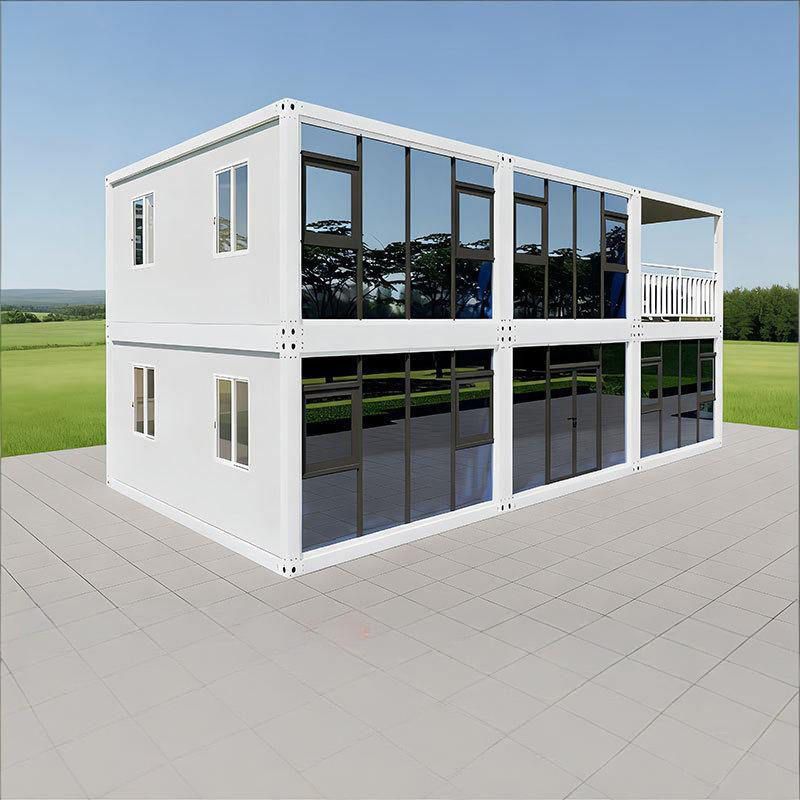
Firstly, the transitional public housing project reconstructed from the Kai Tak Fangcang in Hong Kong is a relatively typical example. This public housing was transformed from a Fangcang into a container building, with a warm overall layout and a good surrounding environment. The actual room area is about 31 square meters, and it is required to accommodate four to five people according to regulations. In terms of facilities, the public housing provides basic facilities such as electric water heaters to meet residents' daily hot water needs. It also has exhaust fans installed in the restrooms to help keep the air fresh and enhance living comfort.
In addition to the Kai Tak Fangcang reconstruction project, CIMC Modular Building Investment Co., Ltd. has also built multiple transitional housing projects in Hong Kong. Although these projects do not explicitly mention container construction, they adopt a similar modular construction approach. Modular construction and container construction share similarities in concept, both featuring factory prefabrication and rapid construction. For example, the Lok Wo Sha Lei project in Ma On Shan is a four-story building with 436 transitional housing units. Through modular construction, it achieved rapid construction and provided timely accommodation for those in need of housing. The Tung Tau "Unity Village" project in Yuen Long is even larger, consisting of 2,076 building modules and capable of accommodating more residents. The "Muk On Street" project is composed of 774 MiC modules and equipped with 721 transitional housing units, also demonstrating the efficient and convenient advantages of modular construction.
These transitional housing units constructed using containers or modular methods have, to a certain extent, alleviated the housing shortage in Hong Kong. They provide transitional housing solutions for low- and middle-income groups, those with temporary housing needs, etc., and have positive social significance.



