
Hong Kong Prefabricated Component Housing
The residential project at 16 - 20 Temple Street, Yau Ma Tei, Hong Kong, serves as a representative example of Hong Kong's prefabricated component housing, showcasing advanced construction models and technological breakthroughs.
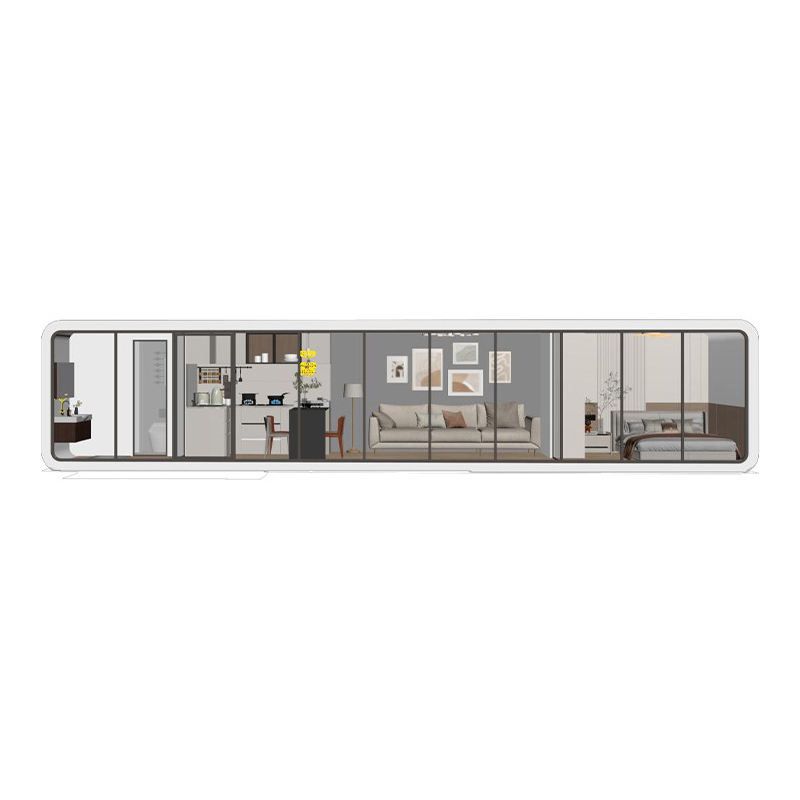
I. Construction Model Innovation This project is the first private residential project in Hong Kong to apply fully assembled components to residential floors, adopting a modular construction concept. The project team disassembled the entire building into 143 independent modules, which were prefabricated with integrated structures, finishes, and mechanical and electrical systems at a smart factory in the Greater Bay Area. This factory-based production model enabled standardized and large-scale manufacturing of building components, reducing the complexity and uncertainty of on-site construction while improving construction efficiency and quality stability. After prefabrication, the modules were transported to the construction site and individually lifted and assembled to form a complete building structure, demonstrating the advanced nature of the integrated 'design - manufacture - assembly' process.
II. Breakthrough in Module Connection Technology Precise connection between modules is a core challenge in prefabricated component housing. Addressing this issue, the project team conducted hundreds of precise calculations and six months of repeated testing to develop the 'corrugated steel pipe vertical rebar connection' technique. This method achieves high-strength, high-precision connections between modules through the special coordination of corrugated steel pipes and vertical rebars. Its advantages include:
- Error Control: Strictly controlling module installation errors within 4 millimeters, significantly lower than traditional construction error ranges, ensuring the stability and safety of the overall building structure.
- Construction Efficiency: Based on this modular assembly method, the project achieved a construction speed of 'one floor every three days,' significantly shortening the project duration and reducing time costs.
- Quality Assurance: The combination of factory prefabrication and on-site precise assembly minimizes the impact of human factors on construction quality, enhancing the uniformity of building quality.
III. Industry Demonstration Significance As a benchmark case for prefabricated component housing in Hong Kong, this project provides a replicable technical path and construction model for the industry. Its successful practice demonstrates that modular design and industrialized production can effectively address challenges such as limited land resources and constrained construction space in Hong Kong while promoting the transformation of the construction industry toward green, efficient, and intelligent directions.



